



In the depths of a flooded cave in the Maya Jungle, specialized divers advance through narrow passages illuminated only by flashlights.
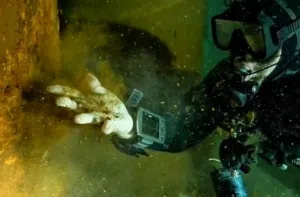
As they delve into the underground system, they discover columns covered with rust and cement dust emerging from the rocky bottom. These structures support the elevated viaduct of the Tren Maya’s section 5, a railway project built on the fragile karstic soil of Quintana Roo.
Various environmental organizations warn that the deterioration of some pillars could cause pollution in one of the region’s most important aquifers.
They also point out that the intervention on caves and cenotes could alter a key underground ecosystem for the water balance of the Mexican Caribbean.

An infrastructure crossing cenotes and caves
The Tren Maya’s section 5 spans about 80 kilometers between Cancún and Tulum. Initially, the project was to be built alongside the existing highway, but it was later shifted several kilometers into the jungle interior.
This change led to the railway infrastructure being erected over an extensive network of caves, underground rivers, and cenotes. To support the viaduct, thousands of metal and concrete columns were installed, traversing the cave system.
According to environmentalists’ estimates, the total number of pillars could exceed 15,000 across the entire area. These structures cross one of the most complex and sensitive aquifers in Latin America.
Concern over the condition of some columns
Explorations conducted by divers and activists detected deteriorated structures within the flooded caves. Some columns show layers of rusted metal and areas where the concrete appears not to have set properly.
In certain cases, the material crumbles easily, releasing cement dust that disperses in the underground water. This phenomenon raises concerns about the potential contamination of the aquifer that supplies numerous communities in the region.
Additionally, specialists point out that corrosion is a natural process that could intensify over time in humid environments. For this reason, they call for permanent environmental monitoring and technical evaluations of the structures’ stability.
What are underwater columns and why are they used in this type of construction?
The underwater columns are support structures built with steel and concrete installed in unstable or flooded terrains. Their main function is to support elevated infrastructures, such as bridges or railway viaducts, when the ground does not allow for a traditional base.
In karstic regions, where caves and underground rivers exist, these pillars allow the weight of the construction to be distributed at specific points. However, their construction requires detailed geological studies to avoid damage to the cave and aquifer system.
They also need materials resistant to corrosion and sealing techniques that prevent leaks of cement or other compounds. When these conditions are not met, degradation processes can occur, affecting both the structure and the surrounding ecosystem.
Underground ecosystems at risk in the Maya Jungle
The Yucatán Peninsula hosts one of the most extensive underground river systems on the planet. This network of caves and cenotes is part of the aquifer that supplies fresh water to a large part of the regional population.
Moreover, these environments are home to species adapted to darkness and very specific ecological conditions. The alteration of water flow or chemical pollution could severely affect these underground ecosystems.
For this reason, scientists and environmental organizations emphasize the importance of protecting the region’s ecological balance. The challenge, they point out, is to reconcile infrastructure development with the conservation of one of Mesoamerica’s most fragile natural landscapes.



