



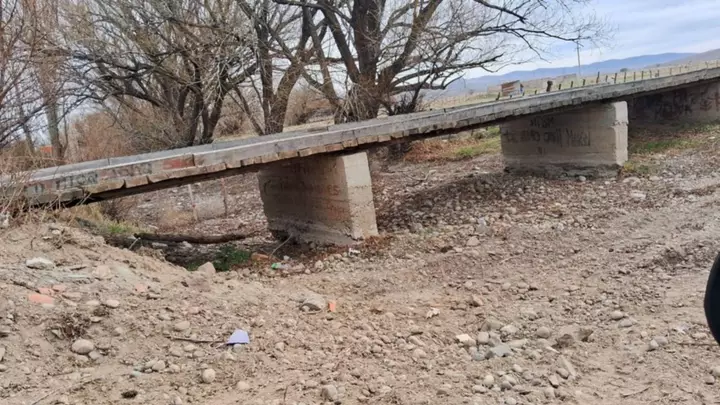
The start of summer found Gobernador Costa and its area of influence in a critical water situation. The absence of rain and the lack of precipitation prospects deepen an already delicate scenario: the extreme drought.
Thus, concern grows before going through the most demanding months of the year. The watercourses that historically fed the valley show an alarming deterioration. Meanwhile, some streams stopped flowing years ago and others barely contribute flow.
Therefore, downstream producers face a daily emergency. In this scenario, improvised solutions multiply in the territory. However, artificial waterholes last only a few days and water becomes scarce again. In this way, the fragility of the water system is exposed.
Exhausted tributaries and a system at the limit
The lack of snow and floods is not a recent phenomenon in the region. On the contrary, it has been dragging on for several years and weakens the local basins. Consequently, the Genoa stream barely receives significant contributions.
Additionally, part of the scarce flow available is diverted upstream. This further reduces the volume that reaches the locality and nearby farms. Thus, the balance between human and productive use becomes increasingly fragile.
As a result, the pressure on underground sources increases relentlessly. Each drilling represents an immediate solution but also a future risk. Therefore, concern about the resilience of the water tables grows.
Potable water underground
Currently, the supply of potable water depends almost exclusively on drillings. The municipality advanced with new works to sustain urban supply. Even so, demand quickly exceeds the available reserves.
The drillings reach depths greater than 30 meters. At the same time, residents and producers resort to this alternative in a generalized manner. In this way, the subsoil becomes the last water guarantee.
However, overexploitation raises doubts in the medium term. If the water tables are depleted, there will be no margin for new extractions. Therefore, planning becomes urgent.
Less water, less production
The drought also fully impacts livestock activity. Establishments located to the south, along Route 40, already feel the consequences. Thus, investment in drillings and cleaning of waterholes becomes constant.
However, the available water is not enough to sustain the animal load. Therefore, many producers consider reducing the number of cattle and sheep. This decision compromises the regional economy and rural settlement.
Additionally, the lack of water accelerates the degradation of soils. Without sufficient vegetation, the risk of desertification increases. Consequently, the productive system loses resilience.
A river that goes to the sea
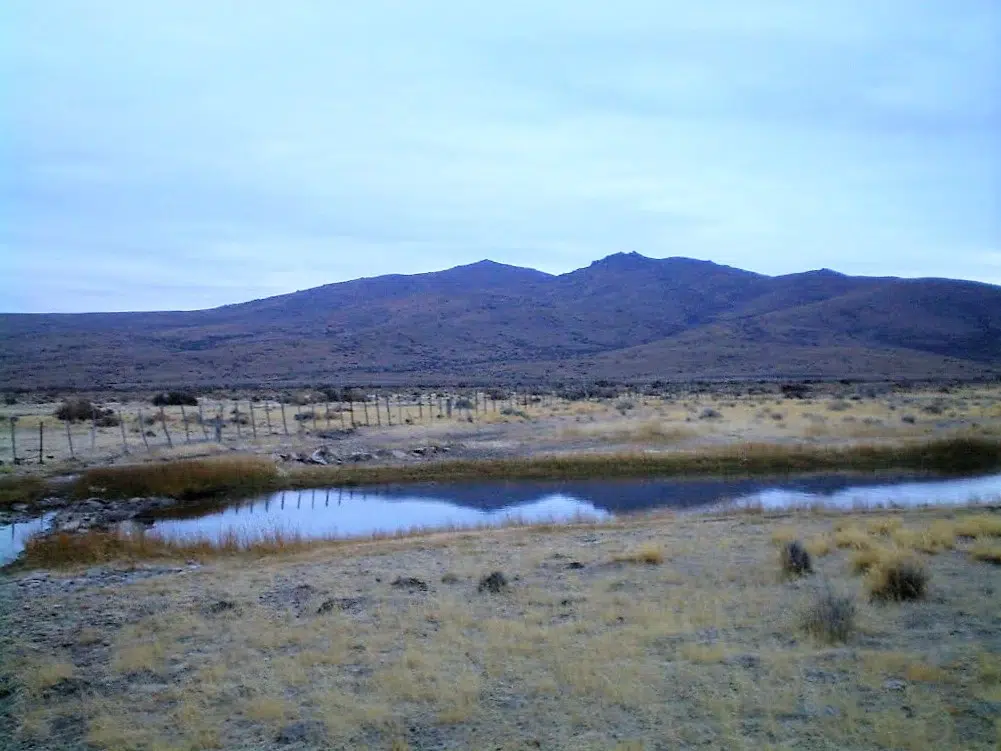
In the face of the emergency, the debate over a historic transfer project resurfaces. The initiative proposes diverting a small flow from the Corcovado River or Carrenleufú. In this way, the tributaries of the Genoa Valley would be reinforced.
It is a reduced volume but of high strategic impact. Currently, those waters flow towards the Pacific without regional use. Meanwhile, in the plateau, the resource is scarce even for human consumption.
The project was studied for decades and never materialized. Although it involves international waters, the proposed flow is minimal. Therefore, it is reinstated as a structural alternative.
The project returns to the agenda
In recent months, the transfer has regained presence in official discussions. Technical bodies and provincial authorities reopened the dialogue. Thus, the issue begins to regain political visibility.
The work would allow sustaining hundreds of thousands of productive hectares. Without it, the advance of desertification seems inevitable. Therefore, the decision exceeds the local level and acquires an environmental dimension.
If no action is taken, the valley could become a degraded territory. Less water would mean fewer trees, more pests, and loss of biodiversity. Consequently, the time to define a solution is running out.
Possible causes of persistent drought
Among the main factors is the sustained decrease in snowfall. Rising temperatures reduce snow accumulation in the mountains. Thus, thaws are increasingly weak and irregular.
Additionally, climate change alters precipitation patterns. Rainfall is scarcer and more concentrated, making basin recharge difficult. Therefore, the plateau rivers lose continuity.
Added to this is human pressure on watercourses. Diversions, drillings, and lack of planning exacerbate the water deficit. In this way, the drought ceases to be only natural and becomes structural.


