



High temperatures and lack of rain are once again putting the territory of Entre Ríos at risk. In the middle of summer, two large-scale forest fires keep firefighters and rural populations on alert. The active hotspots are concentrated in areas near Villaguay and in sectors close to National Route 18.
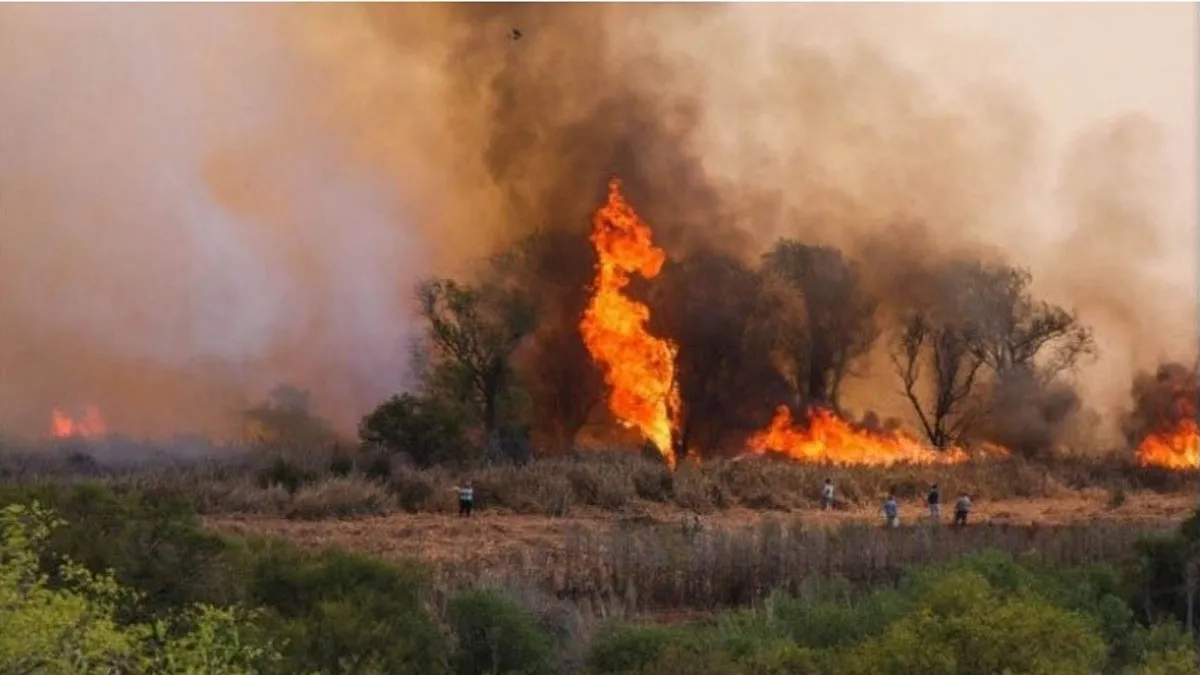
In both cases, the fire advances over fields, dry forests, and grasslands degraded by drought. As a result, large columns of smoke can be seen from kilometers away. Additionally, the risk extends to roads, rural homes, and productive areas.
This scenario reflects an increasingly frequent combination of extreme climatic factors and pressure on ecosystems.
Operations in Villaguay and rural areas
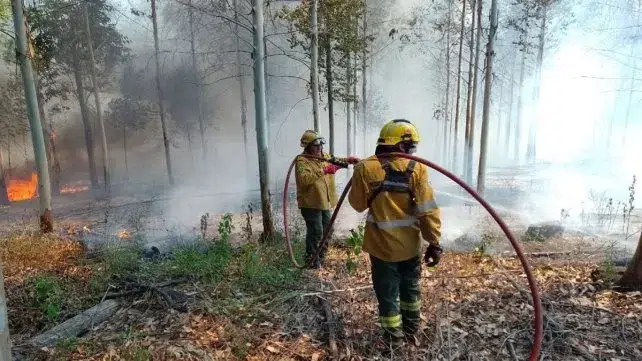
In the rural environment of Villaguay, the fires are not concentrated in a single point. On the contrary, the active fronts require constant surveillance and rotation of teams. Local volunteer firefighters work alongside forest brigades from neighboring towns.
Meanwhile, in areas near National Route 18, fighting the fire presents greater difficulties. The lack of adequate access limits the entry of fire trucks and heavy machinery. Therefore, tasks rely on manual firebreaks and direct attack on the most critical points.
From dawn to night, tanker trucks and specialized personnel attempt to contain the flames. The main goal is to stop the spread and protect inhabited areas.
Forest fires: a recurring threat
Every summer, forest fires cease to be an exceptional event. The repetition of heat waves, combined with prolonged drought, transforms large regions of the coast into highly flammable areas. Thus, any spark can trigger a large-scale fire.
Moreover, many of the causes are linked to human action. Uncontrolled grassland burning, poorly extinguished campfires, or carelessness in rural areas are often at the origin of these outbreaks. Then, the wind and dry vegetation do the rest.
This pattern highlights the need to review productive practices and social habits in more extreme climatic contexts.
Environmental and social consequences
When the fire advances, the damage is not limited to the visible. The soil loses nutrients, fauna is displaced, and ecosystems take years to recover. Additionally, large amounts of polluting gases are released into the atmosphere.
The air quality deteriorates and affects the health of nearby communities. For rural families, the fire represents a direct threat to animals, crops, and homes. Therefore, the impact extends long after the flames are extinguished. These consequences reinforce the urgency of land management policies and environmental restoration.
Prevention, the pending challenge
In this scenario, prevention appears as the most effective tool. Avoiding the use of fire during drought periods and respecting environmental regulations is crucial. It is also essential to alert immediately to any incipient outbreak.
While teams continue working in Villaguay and National Route 18, the situation reignites a central discussion. Caring for the environment is no longer just a slogan, but a collective responsibility in the face of increasingly frequent and destructive fires.



