



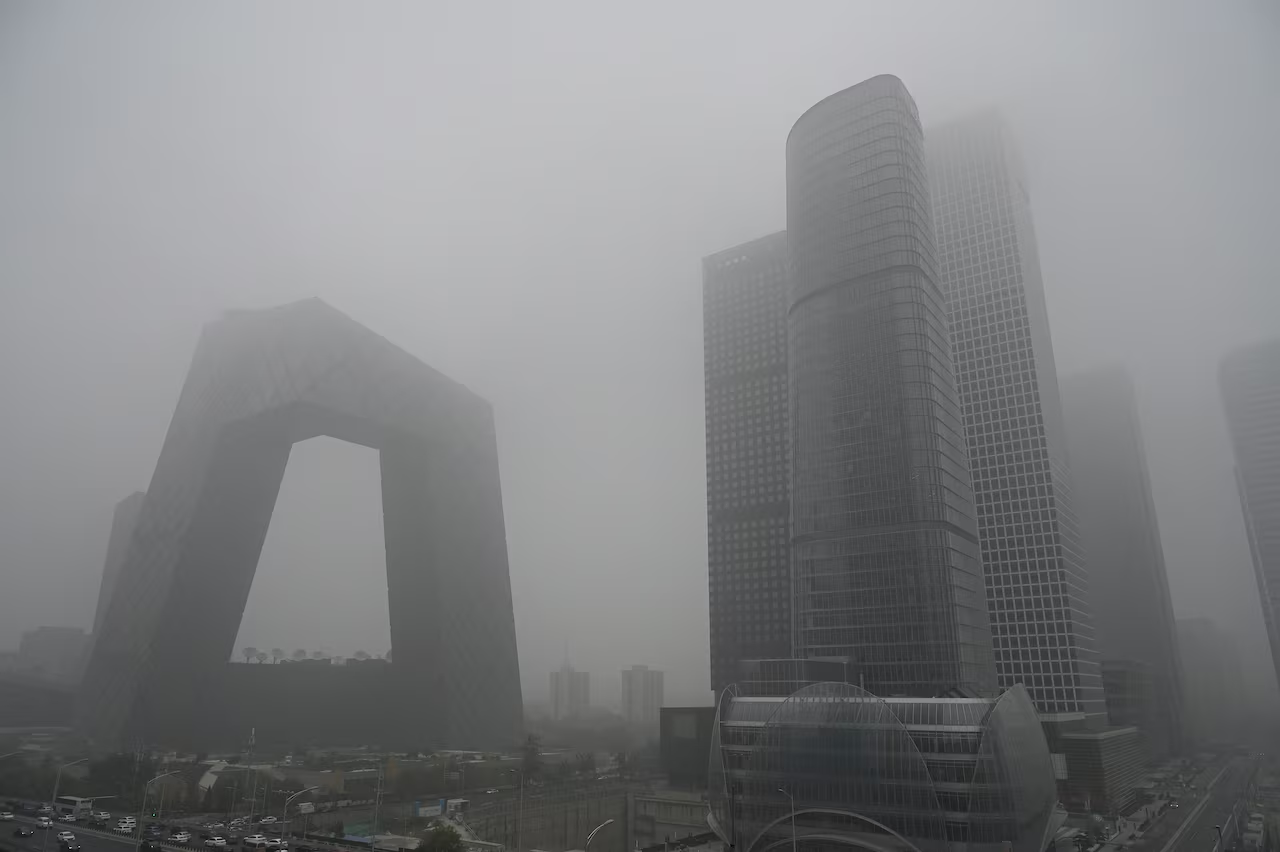
The air pollution in Beijing dropped 98% in just 12 years, an achievement that positions the capital of China as a striking case study in urban environmental management.
This is according to the latest data from the city’s Municipal Ecology and Environment Office.
Apparently, the levels of PM2.5 particles decreased from 89.5 micrograms per cubic meter in 2013 to just 27 micrograms in 2025.
This figure marked a historic record for the city, as it is the first time the annual concentration falls below the threshold of 30 micrograms.
This data represents a key reference in the national air quality standards.

From permanent smog to 311 days of clean air
During 2025, Beijing recorded 311 days with low or acceptable levels of air pollution, the highest figure since the start of systematic monitoring.
This data contrasted with the situation in 2013, when dozens of days a year experienced severe episodes of pollution.
Only one day in 2025 reached levels considered severe by China’s Air Quality Index.
The PM2.5 microparticles, capable of penetrating lungs and bloodstream, represent the main health indicator in these types of measurements.
Mayor Yin Yong highlighted in his annual report that the average density fell 11.5% compared to the previous year.
“The blue sky has become a daily reality,” the official stated when presenting the management results.
The measures that eliminated air pollution in Beijing
The turning point came in 2013, when the central and municipal governments launched a specific plan against atmospheric pollution.
The authorities implemented traffic restrictions, industrial control, and a comprehensive renewal of the vehicle fleet.
The main measures included:
- Gradual removal of old vehicles and requirement of Euro 6 standards for new cars
- Traffic limitation through odd and even license plate systems during critical episodes
- Significant expansion of the public transport network: metro, buses, and alternative mobility
- Mass electrification of the vehicle fleet with specific incentives for new energy vehicles
Air pollution in Beijing decreased thanks to the accelerated adoption of electric vehicles.
In 2025, these surpassed 50% of new registrations, compared to just 5% in 2020.
Electric revolution and green energy in Beijing
The Chinese capital currently has more than 1.3 million new energy vehicles in circulation.
Sales in 2024 reached more than 640,000 units, a figure that continued to increase during 2025.
The energy matrix also underwent a profound transformation. Green energy —wind, solar, and hydroelectric— now represents 36% of the total electricity consumption of the metropolis.
Chinese environmental authorities emphasized that the result was not explained by isolated meteorological factors, but by a constant reduction of emissions from traffic and heavy industry.
To sustain this progress, the mayor announced the installation of 30,000 new public electric chargers this year.
The goal is to eliminate the remaining barriers for users who still own internal combustion vehicles.
Although air pollution levels in Beijing still exceed those of European cities like Madrid, Paris, or Berlin, the speed of the decline had no recent precedents.
The World Health Organization sets a reference of an annual average exposure below 10 micrograms per cubic meter.
This achievement is part of China’s national effort to reach its peak emissions targets by 2030 and carbon neutrality by 2060.


