



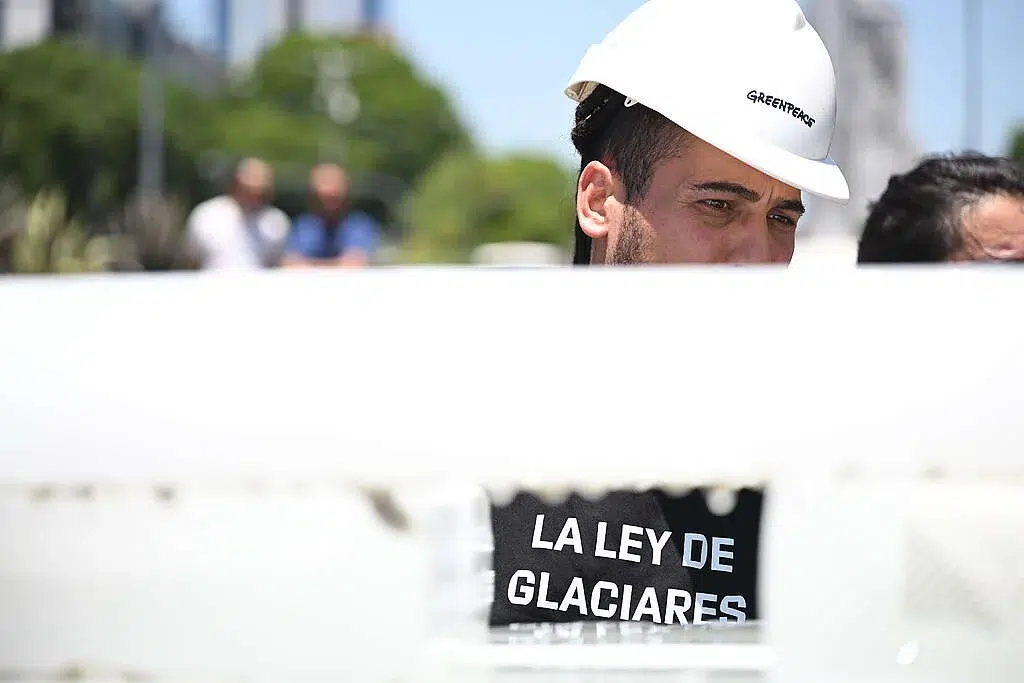
The intervention staged by Greenpeace in front of the Obelisk gathered dozens of people surprised by a tower made of blocks of ice. The structure mimicked a large game of unstable pieces and carried a sign at the top with the message: “They are playing with everyone’s water. The Glacier Law is untouchable.”
The aim of the action was to warn about the consequences of loosening a law considered key for the protection of freshwater in Argentina. The initiative reignited the debate on the integrity of high mountain ecosystems in a context of accelerated glacier retreat.
The environmental organization emphasized that any regulatory change that weakens current limits would expose essential water reserves, in addition to favoring extractive activities in areas where they are currently prohibited.

A strategic norm for water security
The Glacier Law establishes the protection of glaciers and periglacial environments, which function as natural water reserves and regulate river flows. Its compliance is fundamental to preserving water availability in regions where melting ice sustains the life of communities, ecosystems, and productive activities.
Environmentalists warn that allowing interventions in these areas would alter the natural water regime, affect the balance of basins, and generate additional pressures on areas already vulnerable due to the climate crisis.
They also argue that the current law supports the environmental commitments assumed by the country internationally and is an indispensable tool to prevent irreversible damage.
An urgent call to halt setbacks
The action carried out in the heart of Buenos Aires served as a reminder of the fragility of Andean ecosystems and the importance of maintaining policies that prioritize conservation. According to Greenpeace, weakening the law would mean facilitating the expansion of projects with high risk to water sources that supply millions of people.
For the organization, the comprehensive protection of glaciers is a minimum condition to face the effects of the climate crisis and ensure the availability of water in the coming decades.
The request focuses on the State maintaining the prohibition of activities that could affect the glaciers and periglacial environments, considered strategic for the country’s water security.
What changes are being proposed to the Glacier Law
Various projects promoted in recent years have proposed modifications that concern specialists and socio-environmental organizations. The most questioned points are:
1. Redefining what is considered a periglacial area
Some drafts propose narrowing its definition, which would reduce the protected area and open zones currently non-intervenable to extractive activities.
2. Allowing exceptions for mining projects
It is proposed to allow activities in sectors where studies demonstrate “low impact,” a category considered ambiguous and difficult to control.
3. Changing inventory and monitoring criteria
The proposals include methodological reviews that could exclude small or discontinuous ice bodies currently under protection.
According to specialists, these modifications would generate a regulatory setback and leave part of the country’s most important water reserves unprotected.
Why the law is key for the environmental future
The protection of glaciers not only guarantees water supply in arid and mountainous areas. It also helps to regulate the local climate, supports unique biodiversity, and preserves landscapes essential for sustainable tourism.
The law acts as a barrier against activities that could accelerate the loss of ice, increase pollution, and alter basins fundamental to the national water system.
In a scenario of global warming, keeping glaciers intact is one of the most effective measures to ensure water availability in the coming years.



