



A new private neighborhood being built in Hudson, Berazategui, has environmental organizations on alert for encroaching on a protected area.
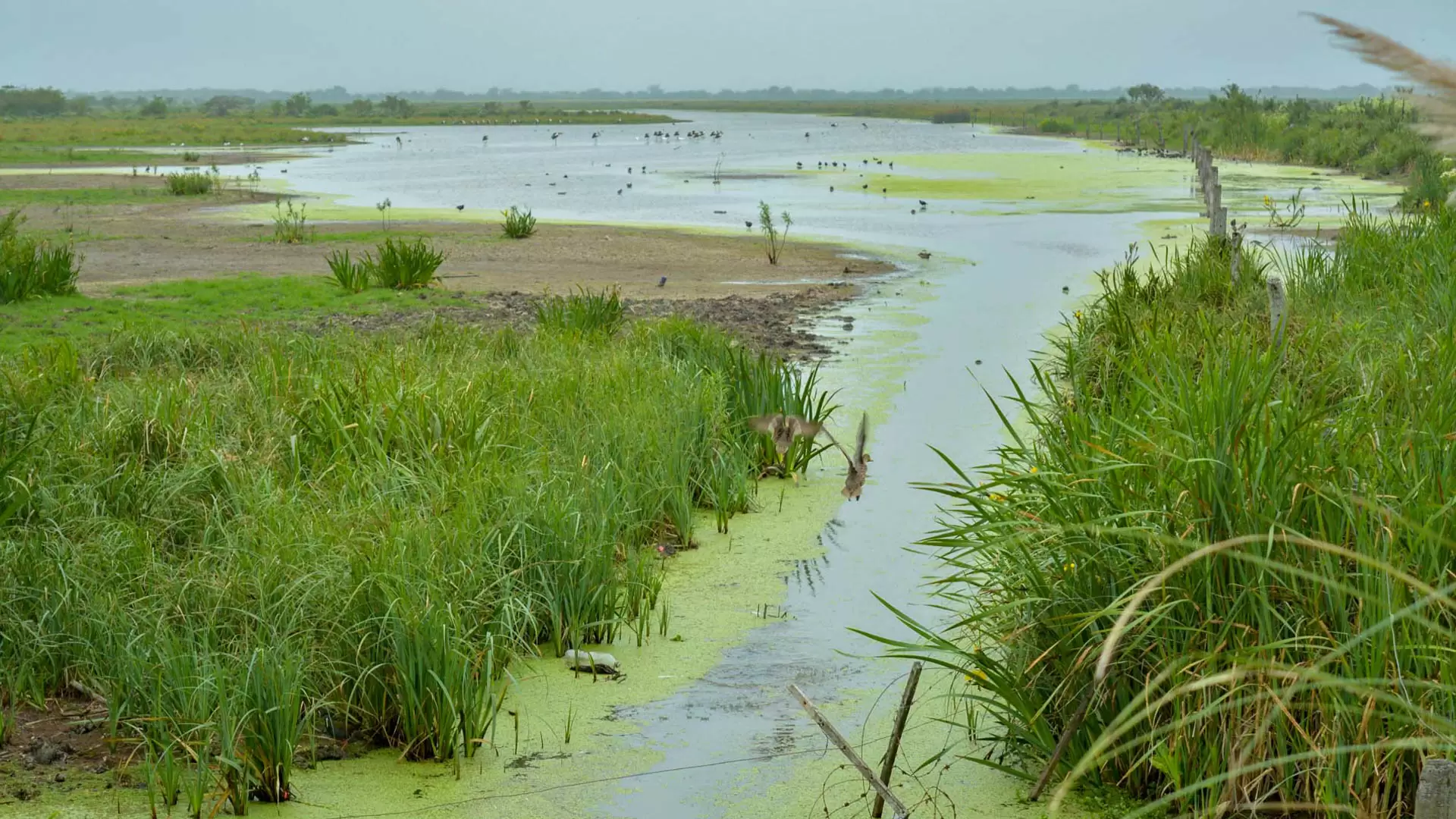
This would occupy about 170 hectares of wetlands, native forest, and jungle key to preserving the biodiversity of the Buenos Aires coast.
It should be noted that just over a year ago, Berazategui declared by municipal ordinance the “Hudson Native Forests” as a Protected Natural Area.
The land was acquired by the developer Puerto Nizuc, which plans a new private neighborhood in this unique ecosystem.
Therefore, various local NGOs are calling on both the municipality and the Buenos Aires provincial government to intervene to preserve these spaces.
However, in recent weeks bulldozers have already begun working on one of the last relics of marginal jungle on the Buenos Aires coast.

Hudson: the southernmost area of the marginal jungle at risk due to a new private neighborhood
“This place is unique. It is the southernmost relic of marginal jungle,” said Abril Navarro, naturalist and member of Biodiversity of the Hudson Coast in an interview with Clarín.
This territory includes natural grasslands with native species such as cina-cina, molle, tala, espinillo, and coronillo.
This last plant is the food of the Argentine flag butterfly, recently declared of municipal interest by the Berazategui Deliberative Council, making it especially relevant.
Despite its importance in the Buenos Aires ecosystem, the machines have already started to raze the land.
Even knocking down ancient Coronillo specimens that housed nuclei of these emblematic butterflies.
In this way, the local fauna is also affected by the development.
Birds, opossums, herons, owls, guinea pigs, lizards, capybaras, and wildcats inhabit the area and are now at risk of being displaced.

Conflict with the Native Forests Law
The development would advance over an area protected by the provincial Native Forests Law 14.888, which classifies territories according to their conservation value.
The category I (red) indicates high value and prohibits transformations. The category II (yellow) allows sustainable use, and the III (green) authorizes partial transformation.
The territory of the Hudson wetlands is crossed by all three categories.
In this context, residents report that machines have already intervened in areas with protected vegetation, violating the current environmental regulations.
The project even plans to continue the clearing up to the river.
This would completely eliminate a section of marginal jungle of very high environmental value for water regulation and biodiversity in the area.
The ignored technical warnings for urbanizing in the Hudson wetlands
A study by the National University of La Plata and CONICET, requested by the Ministry of Environment itself, strongly advises against urbanization on the floodplain of the Río de la Plata.
The report warns that urbanization trends modify natural runoff patterns.
There, the soil fillings and earth movements would alter the topography and hydric behavior of the territory, increasing the risk of flooding.
Conflicting positions and municipal silence over the new private neighborhood in Hudson
Puerto Nizuc assured Clarín that they have “all the required environmental permits and authorizations”.
They also added that the project incorporated “sustainable planning criteria” and revegetation programs with native species.
In this context, environmental organizations met with officials from the provincial Ministry of Environment.
In particular, the Forum in Defense of the Río de la Plata, Biodiversity of the Hudson Coast, and Preserving Hudson participated.
From the ministry, they explained: “The commitment of the Province of Buenos Aires to the protection of wetlands is total“.
And they reinforced: “It is the first province that supported the Wetlands Law in Congress”.
Environmentalists point out that the Municipality must rezone the sector to allow constructions of this magnitude.
This step has not been completed and requires provincial approval.
The Municipality of Berazategui did not respond to inquiries about this situation.
In a previous case, the local government accused the organizations of acting “guided by a blindness against progress and urbanization”.
“We are witnessing an ecocide. One of the last relics of the southernmost marginal jungle is being destroyed,” expressed the local organizations.
The entities submitted a request for public environmental information to the Ministry, which has not yet received a response.
“We are not asking for a favor: it is a right enshrined by law”, emphasized the residents.


