



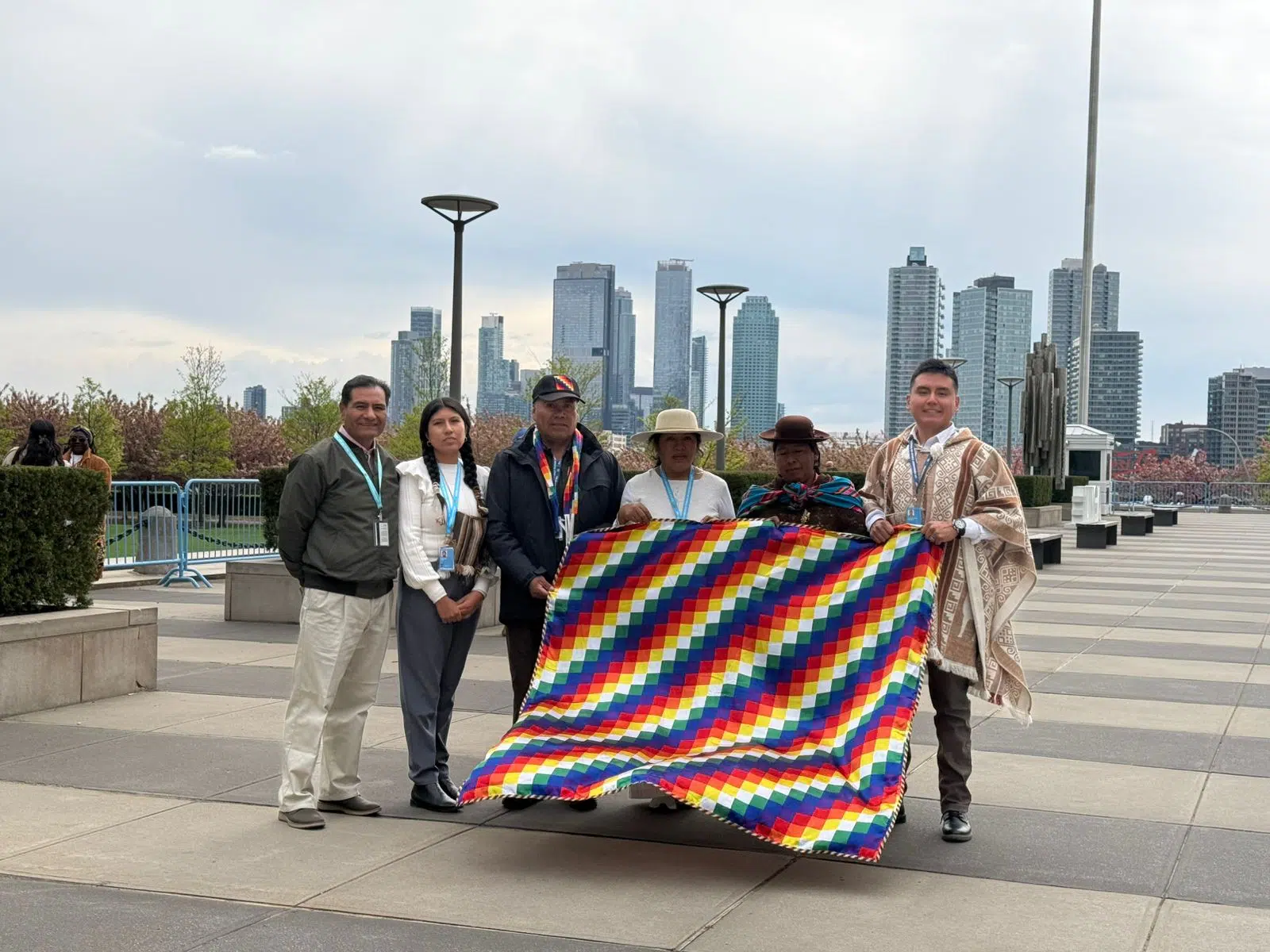
Representatives of indigenous communities from Bolivia, Chile, and Argentina participated in the 25th United Nations Permanent Forum on Indigenous Issues, held in New York. There, they denounced the violation of their collective rights in the face of lithium exploitation in the so-called “Lithium Triangle”.
The delegation presented a proposal articulated in three axes and seeks to influence international recommendations towards the involved States.
Three axes of the proposal
- Criticism of the extractivist model
- Williams Colque, representative of communities near the Coipasa salt flat (Bolivia), pointed out that the current model degrades collective rights and limits the free determination of peoples.
- He denounced that the exploitation affects fragile ecosystems and endangers community life.
- Lack of prior, free, and informed consultation
- The communities claim they have not been consulted about agreements signed with Chinese companies and Russian consortia.
- Colque emphasized the need for participation to understand the environmental impact and water use in lithium exploitation.
- In Chile, Faviola Gonzáles Soto, from the Atacameña community of Toconao, denounced that after more than 30 years of exploitation in the Atacama Salt Flat, the lagoons have decreased and the groundwater has been affected, impacting even the nesting of the Andean flamingo.
- Regional articulation and international pressure
- The delegation seeks to strengthen networks among communities from the three countries and generate influence in international organizations.
- Colque explained that they are working with UN rapporteurs to ensure that the demands are included in official reports.
Environmental and social impacts
Lithium exploitation in the Atacama Salt Flat is carried out through brine evaporation, a process that consumes enormous volumes of water in a hyper-arid desert. This affects aquifers, flora, and fauna, and generates territorial conflicts, pressure on basic services, and a lack of structural benefits for the communities.
In Gonzáles’ words: “Indigenous consultations are not binding… most of the communities’ observations are not taken into account”.
Expectations at the United Nations
Indigenous organizations recognize that UN mechanisms usually have long-term effects, but they consider it crucial to position their demand in international scenarios. They hope that the forum’s conclusions will include recommendations that oblige States to guarantee:
- Collective rights.
- Transparency in extractive agreements.
- Environmental protection in future lithium exploitations.
The case of the “Lithium Triangle” reflects the tension between the development of a strategic resource and the defense of indigenous rights. The communities insist that lithium cannot be exploited without their participation nor at the expense of their territories, and warn that the impacts observed in areas with a longer extractive history foreshadow risks for other regions of the continent.


