



Argentine Naval Prefecture intensified controls on the Uruguay River this week after detecting illegal fishing by boats coming from the Buenos Aires metropolitan area.
The operation resulted in the seizure of items valued at more than $100 million.
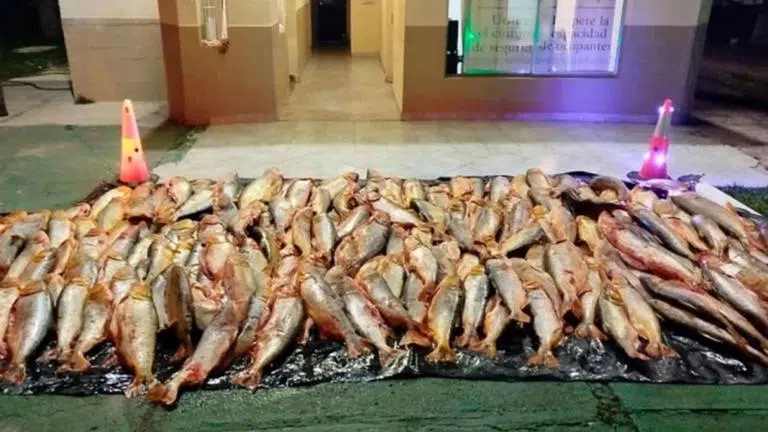
During a recent nighttime operation at the confluence of the Uruguay River and the Santos Grande stream, force personnel intercepted a boat manned by fishermen from Quilmes.
The crew found on the Uruguay River were conducting illegal fishing activities without authorization, outside the permitted hours, and not complying with the current regulations.

The irregularities that confirmed illegal fishing in the Uruguay River
The inspection revealed multiple violations that worsen the environmental impact on the Uruguay River. Among the irregularities found were:
- Use of large-sized fishing nets
- Mass capture of sábalo specimens
- Absence of entry and exit clearance
- Lack of mandatory safety certifications
- Use of a high-power engine
The use of high-capacity equipment increases the risks for others conducting lawful activities in the area.
Million-dollar seizure and denaturalization of fish
As a result of the procedure, the Prefecture ordered the preventive seizure of the vessel and the confiscation of fishing gear.
Provincial authorities for natural resource oversight also intervened in the operation.
Additionally, a significant amount of fish caught illegally in the Uruguay River was denaturalized.
The total appraisal of the seized items exceeded $100 million, reflecting the magnitude of the damage caused to the river ecosystem.
From areas related to river control, it was highlighted that these operations aim to discourage the actions of groups that irregularly exploit the resources of the Uruguay River.
Illegal fishing, both in the Uruguay River and elsewhere, has a direct impact on artisanal fishermen who comply with regulations and depend on this activity for their livelihood.
The key to reinforcing patrols in strategic areas
The Argentine Naval Prefecture confirmed that it will continue to reinforce night patrols and controls in sensitive areas of the Villa Paranacito river corridor.
This sustained strategy is aimed at preventing predation, ensuring navigation safety, and enforcing the law.
The ultimate goal is the defense of natural resources and the regional economies that depend on the Uruguay River as a source of livelihood.



