



A key part of the native forest of Córdoba is facing an unprecedented crisis: it is the espinal, an ecoregion that crosses the center of the country.
Recently, researchers from the Fundación Ambiente Argentino warned that only 0.1% of the original surface of the espinal survives in Córdoba, cornered between monocultures and roads.
In particular, its modest survival is explained solely thanks to the Estancia Yucat, located on the outskirts of Tío Pujio.
This space represents the last homogeneous relict of the espinal ecosystem in Córdoba.
With more than 600 hectares of native forest, this territory maintains its structure, biodiversity, and ecological cycles intact and is key to preserving the ecoregion in the province.
The espinal also covers the center of the province of Corrientes and the north of Entre Ríos, the center of Santa Fe, a large part of San Luis, and ends in La Pampa. However, it is in Córdoba where it is most threatened by agro-industrial advancement.
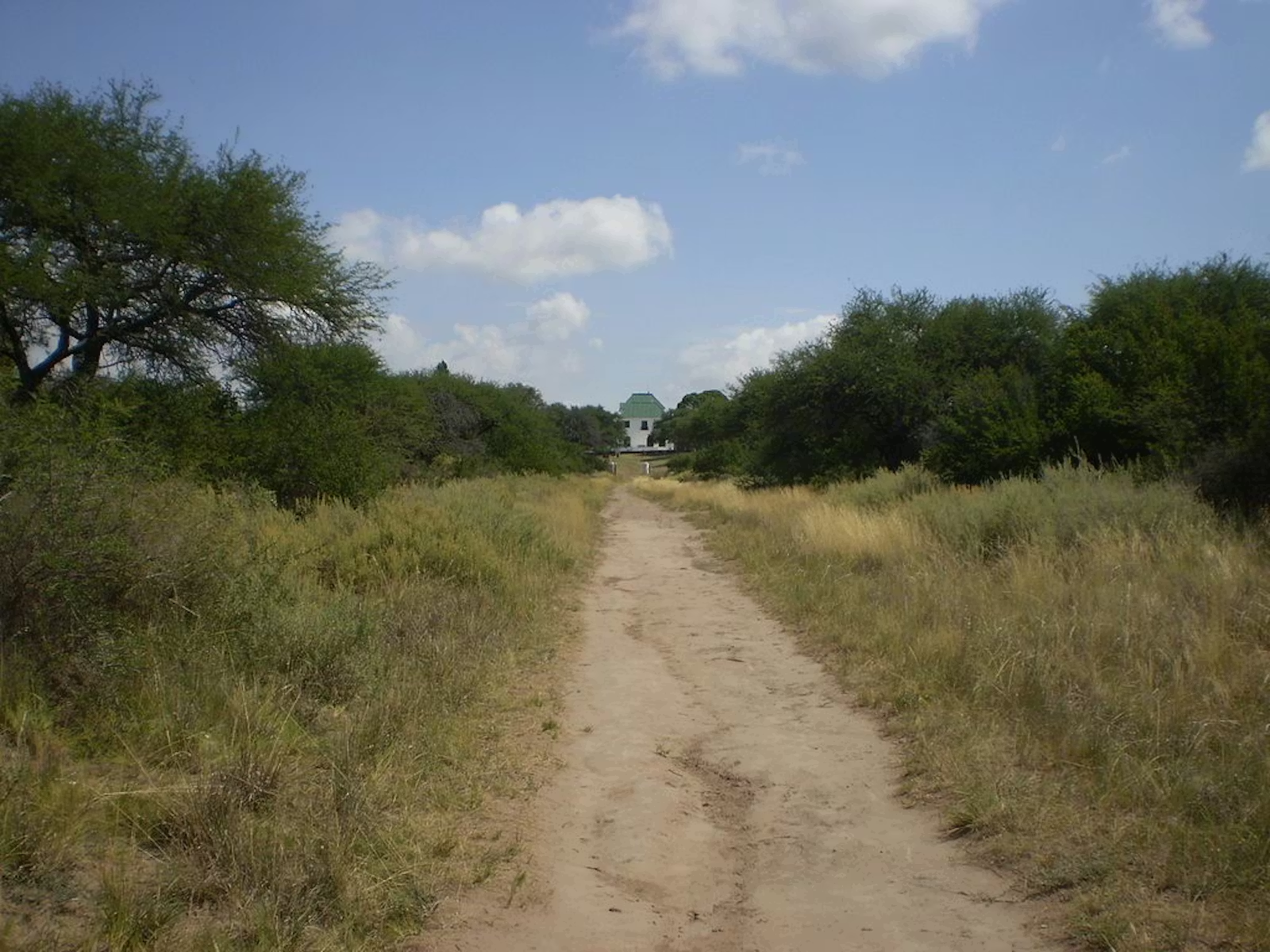
The keys to the espinal in Córdoba, a unique area
The espinal of Córdoba is not just a forest. As biologist Tamara Maggione points out, it constitutes an “ecotone,” that is, a meeting zone between the Humid Pampa and the Chaco Forest.
“In this transition territory, species typical of arid environments, open grasslands, and more closed forests coexist,” detail from Ambiente Argentino.
The unique biodiversity of the espinal of Córdoba includes flora such as:
- Chañares;
- espinillos;
- tuscas;
- quebrachos;
- algarrobos;
- grasses;
- herbaceous plants, and;
- shrubs
All these species sustain a unique biodiversity in the province
Moreover, this ecosystem functions as a natural bridge, refuge, and biological corridor where birds, mammals, insects, and reptiles find food and habitat.
The vital functions of the espinal for people
The Córdoba espinal fulfills essential ecological functions. Following the concept of Nature’s Contributions to People proposed by Córdoba researcher Sandra Díaz, the espinal provides:
- Climate regulation: trees and soil store carbon and regulate local temperature
- Soil and water protection: roots prevent erosion and recharge aquifers
- Pollinator shelter: sustains key ecological networks for food production
- Resource provision: food, fibers, and local woods like the carob tree
- Recreational spaces: a place of belonging and connection for communities
“When these ecosystems disappear, not only do the species disappear, but these vital functions that sustain our daily life also disappear,” expressed the members of the Foundation.
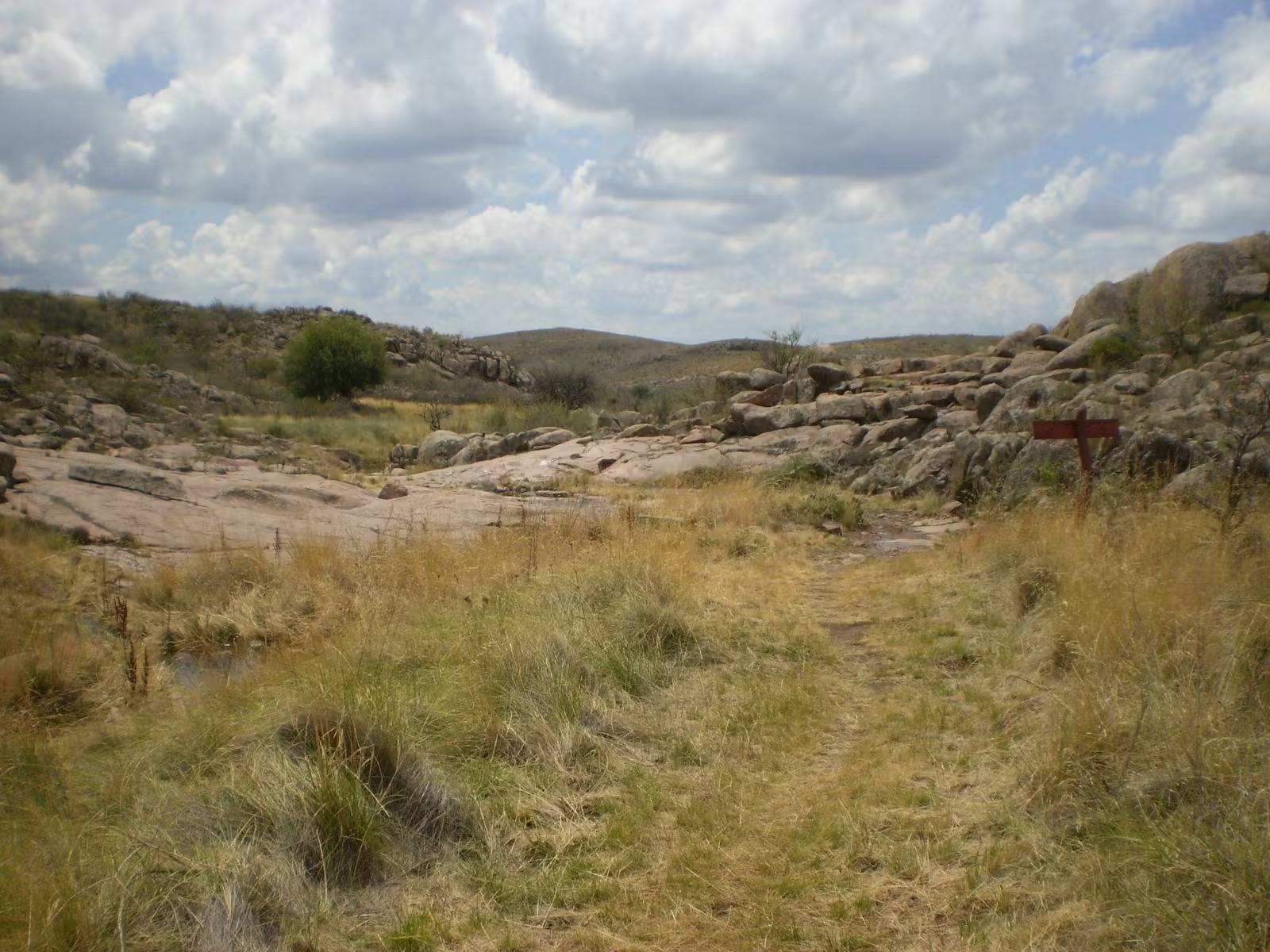
The challenge of Yucat in the face of the disappearance of the espinal in Córdoba
For over 100 years, these lands have been under the protection of the Order of Mercy, a religious institution that protected this territory from the pressures that ravaged everything around it.
However, the native forest now faces silent threats. For example, the invasion of exotic species such as the mulberry tree, the evergreen, and the black acacia advances on its edges and alters the natural dynamics.
Therefore, the restoration project of Estancia Yucat seeks to remove the exotic species that alter the dynamics of the espinal, allowing nature to regain prominence with its own seeds and winged allies.
“Our mission and challenge is to conserve this patch of espinal that still remains intact in Córdoba, restore its invaded sectors and stop the colonization of invasive exotic species before it’s too late,” the experts stated.
Therefore, Maggione asserts that Yucat is “a key space for the future of the espinal, a unique opportunity to demonstrate that, with concrete actions, it is possible to stop the collapse of ecosystems.”


