



The fire in Puerto Patriada, a locality in Chubut, was declared contained after devastating 14,770 hectares of native forests, plantations, and grasslands since January 5. The fire also destroyed 34 homes in Epuyén and El Hoyo.
According to the Provincial Fire Management System (SPMF), a contained fire remains active but without advancing. The next state is “controlled,” when there is no possibility of reactivation, and then “extinguished,” after the ash watch.
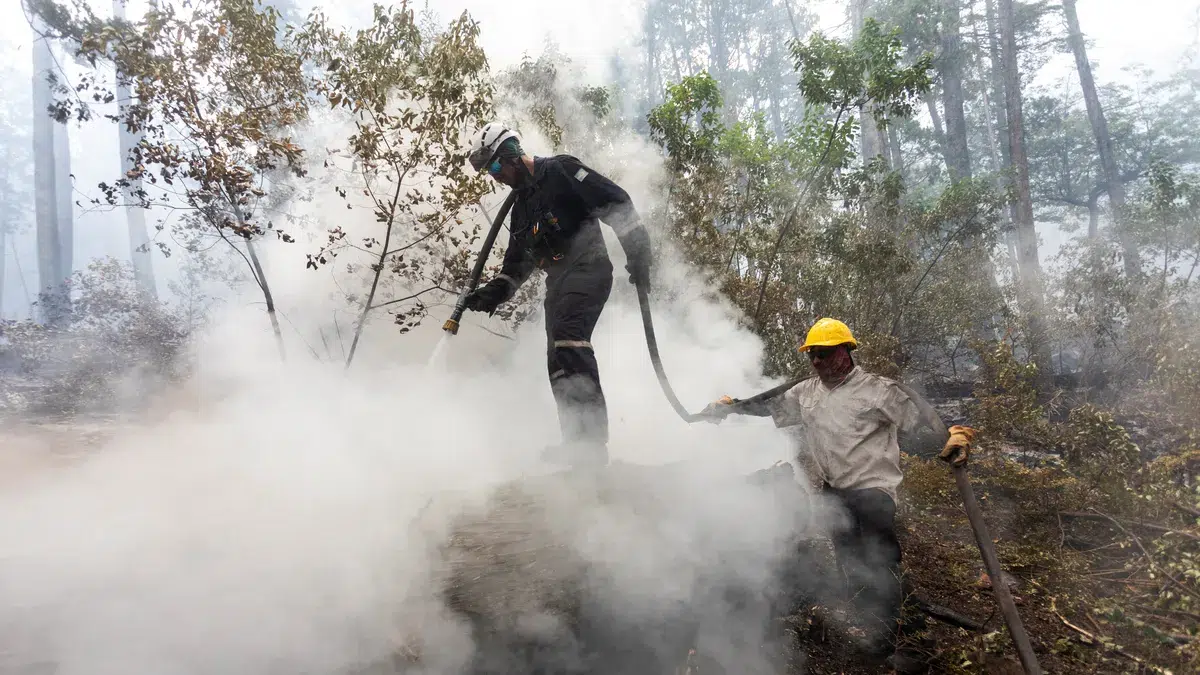
The Minister of Security and Justice of Chubut, Héctor Iturrioz, warned that minor hotspots persist and that the fire can remain “underground, in the roots.” Therefore, the work of brigades and rapid attack teams continues, with 551 people deployed.
Brigade Operation
During the day, provincial brigades and volunteer firefighters patrolled critical sectors:
- La Burrada and the Puerto Patriada Brigade.
- La Angostura and Mayorga alley.
- El Coihue, where hot spots were detected.
- Bahía Las Percas – La Condorera, with active hotspots in the high area.
The mayor of El Hoyo, César Salamín, invited tourists to continue their vacations, assuring that services are ready to receive visitors. The Prosecutor’s Office confirmed that the fire was started by human causes, possibly due to negligence.
Los Alerces: five active hotspots
The Los Alerces National Park has five active hotspots and about 11,000 hectares affected. The researcher from CONICET, Thomas Kitzberger, warned about a “new normal” in Patagonia: fires of tens of thousands of hectares, longer droughts, and more frequent heatwaves. The burned areas become fuel for future fires.
A drone captured the desperate escape of animals near Lago Rivadavia: wild boars, birds, and deer fleeing towards Cholila. Neighbors requested careful driving to avoid hitting them.
Frontline Testimonies
The brigadier Hernán Mondino recounted that the fire began on December 9 due to a lightning strike and spread northward in the National Park, affecting iconic areas such as the Río Arrayanes footbridge, Lago Verde, and Lago Rivadavia.
Although it rained in the province, Mondino explained that the precipitation is not enough to stop the fronts, although it does create a more comfortable climate for working. The SPMF warned that the danger conditions have not changed: strong winds and rising temperatures are expected.
The brigadiers’ days are exhausting: they start at 8 am and can extend until dawn. With a base salary of 860 thousand pesos, they demand better wages and working conditions, denouncing that the national government under-executed 25% of the 2025 budget for the National Fire Management Service.
El Abuelo under threat
In the Park is El Abuelo, a 2,600-year-old larch, the oldest tree in Argentina and one of the oldest in the world. A National Natural Monument and declared a World Heritage Site by UNESCO, it is 18 kilometers from an active hotspot.
For now, the fire is moving away, but the brigadiers warn that fires are dynamic and depend on winds and topography. If the danger approaches, more resources will be allocated to protect it. “If more is lost than what has already been lost, it would be tragic,” Mondino acknowledged.
The fire in Puerto Patriada is contained, but the emergency continues in Los Alerces and other areas of Chubut. The situation reflects the vulnerability of Patagonian ecosystems to extreme droughts, heatwaves, and human negligence. The protection of natural symbols like El Abuelo and recognition of the brigadiers’ efforts are key in a season marked by risk and resilience.


