



The connectivity between Argentina and Chile through the historic Andean Crossing has been reestablished after the completion of the road restoration and stabilization works at the Vicente Pérez Rosales International Pass. The intervention allowed for the recovery of a section affected by landslides related to the climate and the geology of the territory.
In this way, the Intendancy of Nahuel Huapi National Park confirmed the completion of the works that once again ensured transit in one of the most prominent tourist corridors of the binational Patagonia. Additionally, the improvement keeps the link between Puerto Frías and the international border operational.
Furthermore, the road recovery represents progress for a route that combines nature, landscape, and conservation, as it crosses environments of great ecological importance within protected areas shared between Argentina and Chile.
Sustainable engineering for a territory of high environmental sensitivity
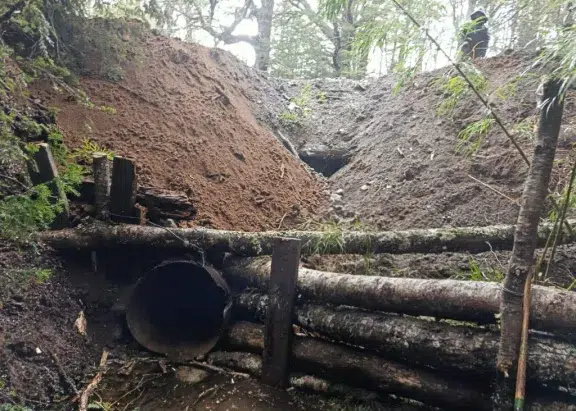
The tasks were carried out in areas where soil movements had compromised the road safety. Therefore, the technical teams repaired the road drainage system and built a containment structure to reinforce the stability of the terrain.
Among the solutions applied was the installation of a sheet pile retaining wall, designed to withstand the extreme humidity conditions, abundant rainfall, and soil changes typical of the mountainous region.
Additionally, the work incorporated materials adapted to the natural environment, such as coihue logs combined with steel pipes and tensioning systems using cables. In this way, the aim was to extend the durability of the infrastructure and reduce possible impacts on the Valdivian rainforest ecosystem.
The intervention also prioritized construction methods compatible with an area of high environmental value, where the conservation of biodiversity requires balancing human needs with the protection of the natural landscape.
Binational cooperation to preserve a historic route
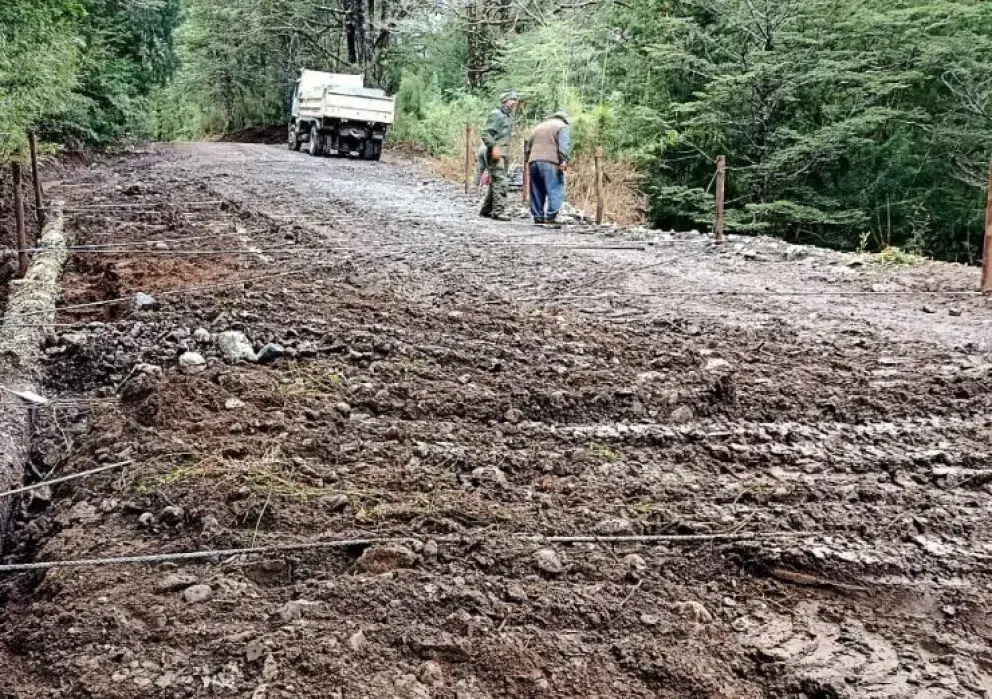
The project was made possible thanks to the coordinated work between public agencies and private companies from Argentina and Chile. In this regard, the Nahuel Huapi National Park provided specialized personnel, logistics, and transportation through boats to transport materials across Lago Frías.
For its part, the Chilean company Turistour collaborated with road machinery and specialized workers, while the Argentine firm Turisur provided materials, supplies, accommodation, and operational support during the development of the tasks.
As a result, the collaboration allowed for the completion of the works in just seven days, reducing interruption times and ensuring the safety of visitors and residents who use this tourist corridor.
The ecological importance of the Andean Crossing
The Andean Crossing not only functions as an international tourist route but also as a journey of enormous environmental significance. The crossing connects San Carlos de Bariloche, in Argentina, with Puerto Varas, in Chile, crossing lakes and protected landscapes of the mountain range.
The route includes navigation through the Nahuel Huapi, Frías, and Todos los Santos lakes, as well as passing through ecosystems where native species and forests essential for the water and climate regulation of the region reside.
Therefore, maintaining this connection through environmentally adapted works allows for the promotion of responsible tourism, strengthening local economies, and preserving one of the most valuable natural corridors in South America.
The recovery of the Vicente Pérez Rosales International Pass reaffirms that infrastructure and conservation can advance together, promoting a development model based on cooperation, respect for nature, and regional integration.



