



The **Yellowstone National Park**, an icon of biodiversity in the United States, is once again the protagonist of a surprising scientific discovery.
After more than **80 years without forest regeneration** in certain areas, the **quaking aspens (Populus tremuloides)** are sprouting again, thanks to an indirect process triggered by the **reintroduction of the gray wolf (Canis lupus)**.
## The imbalance caused by the absence of predators
During the 1930s, wolves were **eradicated from Yellowstone** due to federal policies and [intensive hunting campaigns](https://noticiasambientales.com/animales/juicio-historico-por-la-caza-de-un-yaguarete-en-formosa-por-primera-vez-este-delito-llega-a-un-proceso-oral-en-argentina/).
Their disappearance caused a **trophic imbalance**: the **elk (Cervus canadensis)**, with no natural predators, multiplied to over **18,000 individuals**.
This overabundance of herbivores had devastating consequences for the vegetation:
– Constant browsing on shoots and bark
– Absence of regeneration in key species like the quaking aspen
– Aging forests without new tree generations
## Ecological restoration: the impact of reintroducing wolves
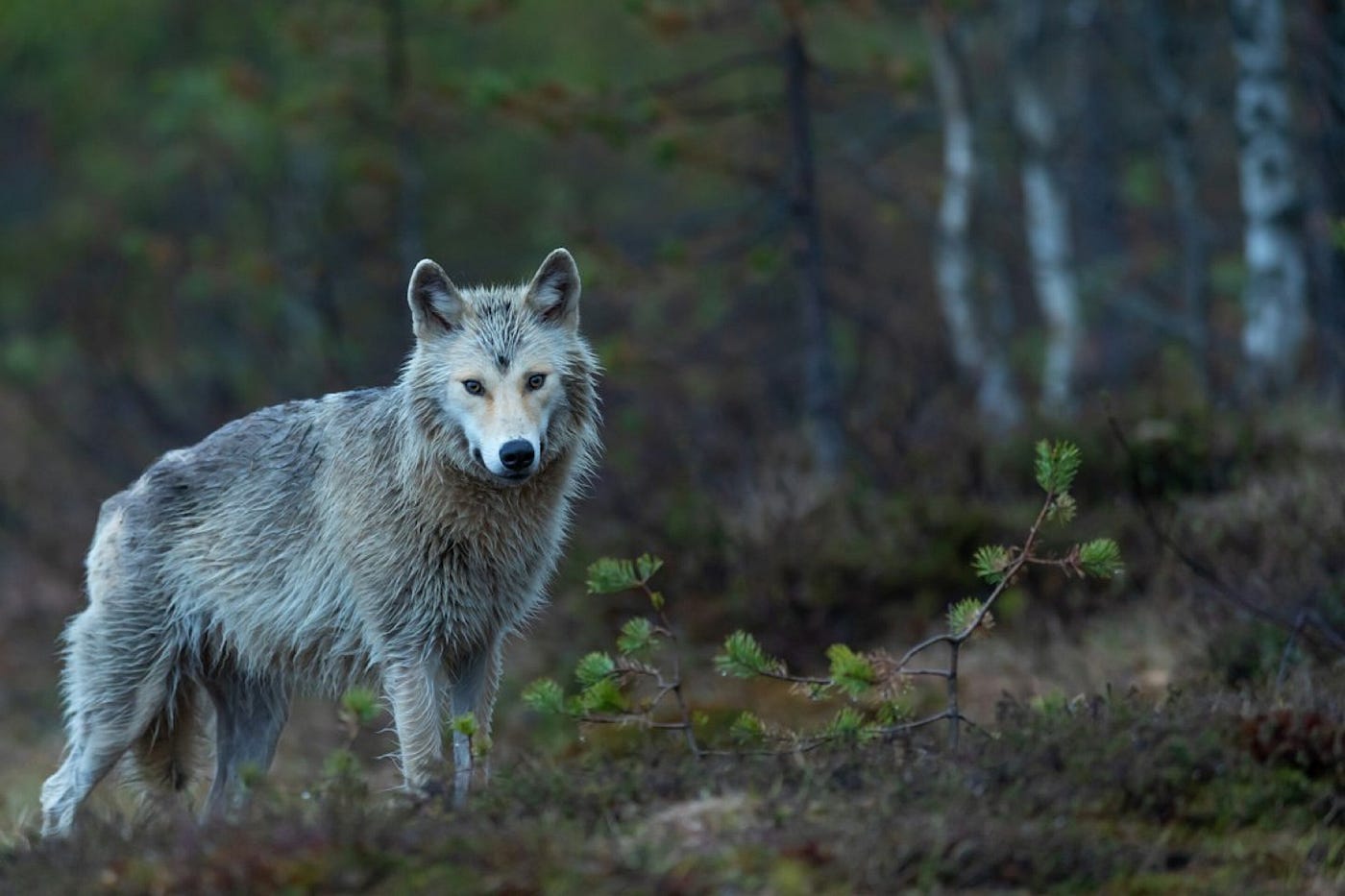
In **1995**, Yellowstone implemented a **wolf reintroduction project**, with compelling results.
The elk population decreased to around **2,000 individuals**, which **alleviated pressure on the vegetation** and allowed the quaking aspens to begin regenerating.
A study published in *Forest Ecology and Management*, led by **Luke Painter**, an ecologist at Oregon State University, analyzed **87 aspen stands** and found that in **one-third of them**, **young and healthy aspens** were growing, something unprecedented in over eight decades.
“Many of these trees already exceed five centimeters in diameter, indicating promising development,” Painter notes.
## Quaking aspens: key to Yellowstone’s biodiversity
The return of the quaking aspen has **profound ecological implications**:
– Shelter and food for birds, insects, and beavers
– Increased light penetration favoring shrubs and flowers
– Rebound in bear and mountain lion populations, linked to the [restored balance](https://noticiasambientales.com/medio-ambiente/restauracion-ecologica-instalan-islas-flotantes-artificiales-en-la-laguna-rodrigo-de-freitas-para-atraer-aves/)
This tree acts as a **keystone species**, creating optimal conditions for multiple forms of life and **promoting ecosystem resilience**.
## New challenges: the role of bison in forest regeneration
Despite the initial success, **new ecological pressures** persist. The increase in **bison**, less vulnerable to wolf predation, could become an **obstacle to forest regeneration** in certain areas.
“Bison could become a new threat to the aspens,” warns Painter.
## Predators as ecosystem restorers
The case of [Yellowstone](https://www.nps.gov/yell/espanol/index.htm) demonstrates that **reintroducing key predators** can **restore complete food chains**.
According to **Dominick Spracklen**, a professor of biosphere-atmosphere interactions at the University of Leeds, these impacts can be **more significant than those of climate change** in some ecosystems.
“Conserving key species is essential to achieve functional and resilient landscapes,” concludes Spracklen.



