



The Superior Court of Justice (STJ) demanded the Rio Negro Government to define and complete the Native Forest Territorial Planning (OTBN), which has not been carried out for over a decade. The highest court gave the provincial government a 30-day deadline to submit a work plan detailing how it will fulfill this obligation.
This ruling addressed the mandamus filed by Asociación Árbol de Pie and Fundación Ambiente, Desarrollo y Hábitat Sustentables, where the update of the territorial planning was demanded in accordance with the provisions of the Native Forest Law (26.331).
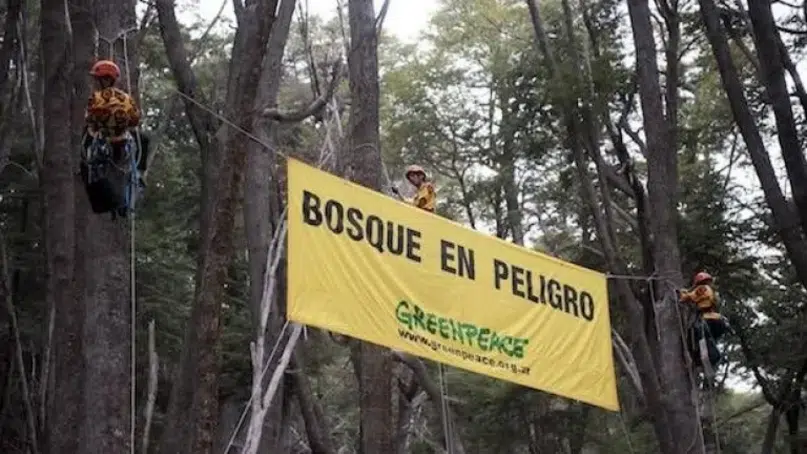
Non-compliance with the Forest Law
“We are pleased to see that the judges understood the urgency of updating the cartography accompanying the Forest Law. The deforestation authorizations in these years have not affected individual trees, but large areas of native forest. In some cases, even protected areas by law,” stated Ana Wieman, a representative of Árbol de Pie, to NoticiasAmbientales.
In 2010, a first map was created in Rio Negro to categorize forest areas (red, yellow, and green) according to their conservation value. This initial cartography was developed after the approval of provincial Law 4.552, which is in line with the Forest Law.
Although the regulation established updates every five years, they were never carried out. In 2015, the Consultative Council, composed of officials, environmentalists, architects, presented a new map, but the provincial authorities did not process its approval.
The lack of updated maps has impacted the preservation of native forests in the province. Wieman points out that even the 2010 map had left critical areas blank. All of this was exploited for urban expansion. “Massive deforestations are authorized for real estate developments, and there are also ski resorts,” the activist notes.
Article 7 of Law 26.331 states that jurisdictions that have not updated their OTBN “shall not authorize deforestation or any other type of use and exploitation of native forests.”
Therefore, Wieman states that all authorizations for deforestation in the last decade “have been illegal.”
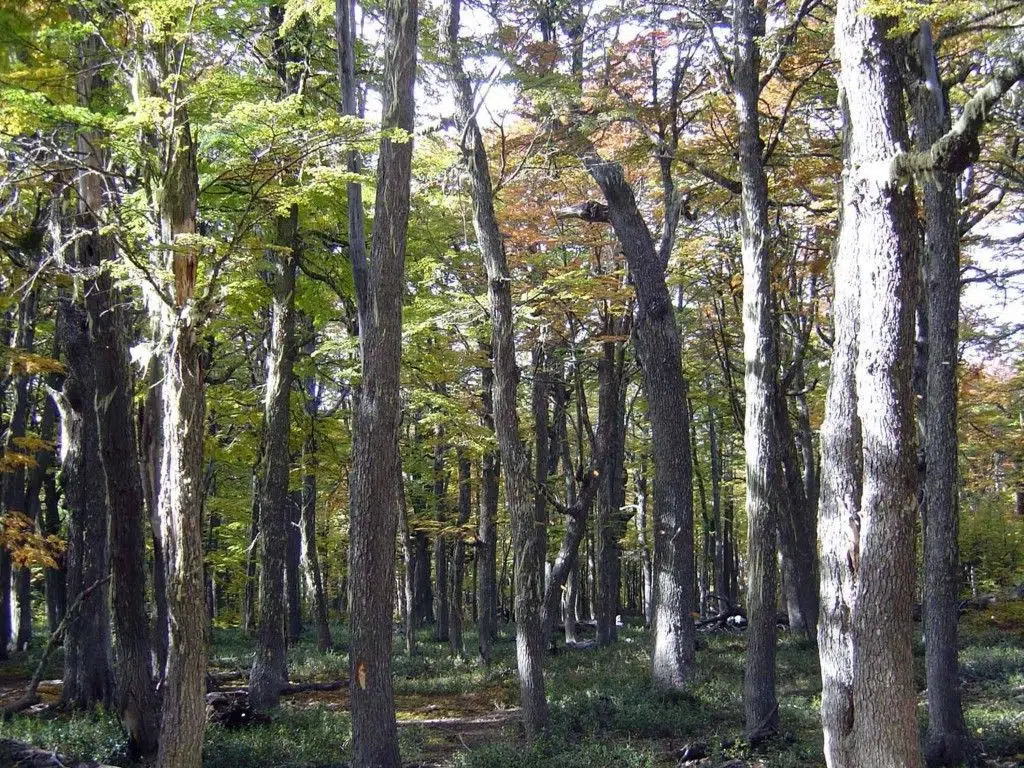
Urgent Map Update
In May of this year, the STJ requested a report from the provincial Executive for non-compliance with the Forest Law. The Government justified the delay by citing the difficulty in “complying with methodological guidelines” required to carry out territorial planning.
In the recent ruling, the Court discredited these arguments, stating that “there is no concrete impediment to the review” of the OTBN as mandated by the law.
The judicial resolution also demands that the Provincial Government describe the measures that will be taken to prevent environmental impacts until the OTBN update is approved.
For Wieman, it is important to establish measures to prevent new authorizations in the coming days. “It is urgent to protect the forests until the new planning is completed,” she emphasized.



