



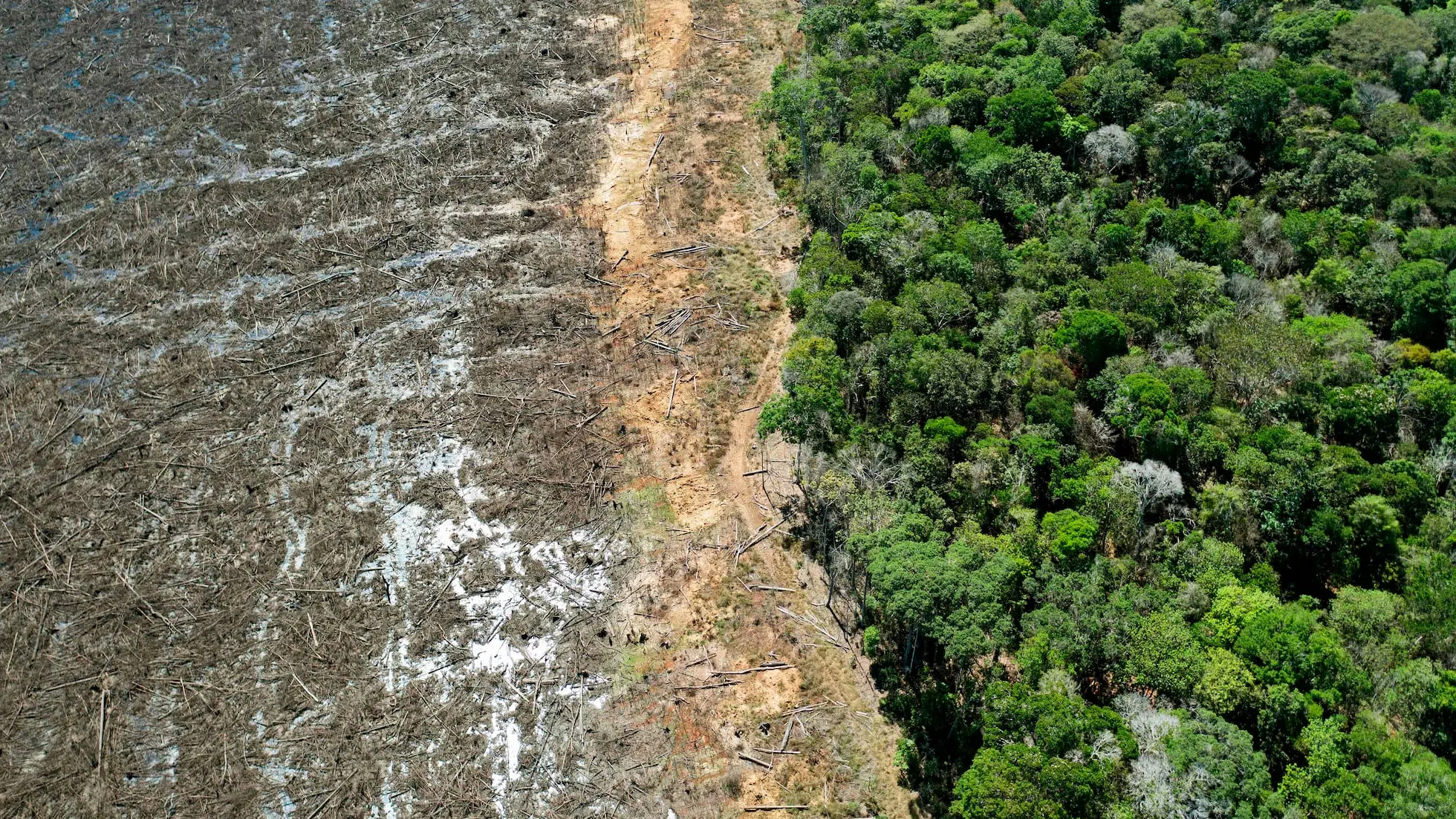
The **Brazilian Amazon**, considered the **[largest reservoir of biodiversity](https://noticiasambientales.com/medio-ambiente/saga-el-descubrimiento-de-un-oceano-subterraneo-en-la-amazonia-que-redefine-el-mapa-hidrico-del-planeta/)** and the planet’s climate regulator, has undergone **rapid transformation** in the last 40 years.
According to the report by **[MapBiomas](https://brasil.mapbiomas.org/)**, between **1985 and 2024**, **52 million hectares of native vegetation will have been lost**, representing **18.7% of the biome**, of which **15.3% is occupied by human activities**.
“We are approaching the critical threshold of 20-25% loss, identified by science as a possible point of no return,” warns **Bruno Ferreira**, a researcher from the study.
Expansion of agriculture and extractive pressure in the Brazilian Amazon
Livestock, agriculture, forestry, and mining are advancing into the tropical forest.
The conversion of vegetation cover has been drastic:
– **Pastures**: from 12.3 million hectares in 1985 to **56.1 million in 2024**
– **Agriculture**: from 180,000 hectares to **7.9 million**, with a growth of **44 times**
– **Forestry**: from 3,200 to **352,000 hectares**, an increase of **110 times**
– **Mining**: from 26,000 to **444,000 hectares**
These activities have mainly replaced **primary forests**, which represent **95% of the native vegetation eliminated**.
The advance of soybeans and the limits of the moratorium
**[Soybean cultivation](https://noticiasambientales.com/medio-ambiente/entre-rios-organizaciones-socioambientales-denuncian-el-cierre-de-escuelas-rurales-y-el-avance-del-agronegocio/)** occupies 74% of the agricultural area in the Amazon, with direct impacts on forest cover.
**Soybeans** have become the main crop in the biome, with **5.9 million hectares in 2024**. Although there is a **commercial moratorium** prohibiting the purchase of soybeans in deforested areas after 2008, the study reveals that **4.3 million hectares** were allocated to cultivation after that date.
Of these, **769,000 hectares** correspond to **direct conversion of forests**, while the rest was developed on **pastures and previously transformed lands**.
Droughts and loss of water bodies
Deforestation intensifies the **aridity of the biome and affects wetlands, mangroves, and alluvial areas**.
The loss of vegetation has generated **visible impacts on the water cycle**. Between 1985 and 2024, **2.6 million hectares of water-covered areas** were reduced, including **flooded forests, apicums, and dried mangroves**.
Eight of the ten driest years in the biome occurred in the last decade, showing a **worrying trend towards desertification**.
Regeneration and resilience: signs of hope
**Secondary vegetation** covers 2% of the biome and shows recovery capacity in non-deforested areas.
In 2024, there are **6.9 million hectares of secondary vegetation**, in the process of **ecological regeneration**. Although deforestation continues to affect primarily primary forests (88%), these areas show **recovery potential** if adequately protected.
Cover photo: EFE



