



In the heart of the Wasatch Mountains in Utah (United States), there stretches a unique plant organism in the world: Pando, considered the largest and heaviest plant on planet Earth.
Officially recognized by Guinness World Records in 1992, this gigantic clonal system of quaking aspens (Populus tremuloides) covers approximately 43 hectares and reaches an estimated mass of 6,000 metric tons.
A forest that is a single plant
What at first glance appear to be 47,000 individual trees are actually clonal stems emerging from the same root system, sharing identical genetic material. Pando does not measure its greatness in meters of height, but in hectares and tons, spreading silently and slowly thanks to natural cloning.
This phenomenon reminds us that a plant is not always a single trunk born from a seed, but can be a connected organism acting as a single entity. Its study allows for a better understanding of the dynamics of aspen ecosystems, plant colonization processes, and the conservation challenges of organisms that span such vast areas.
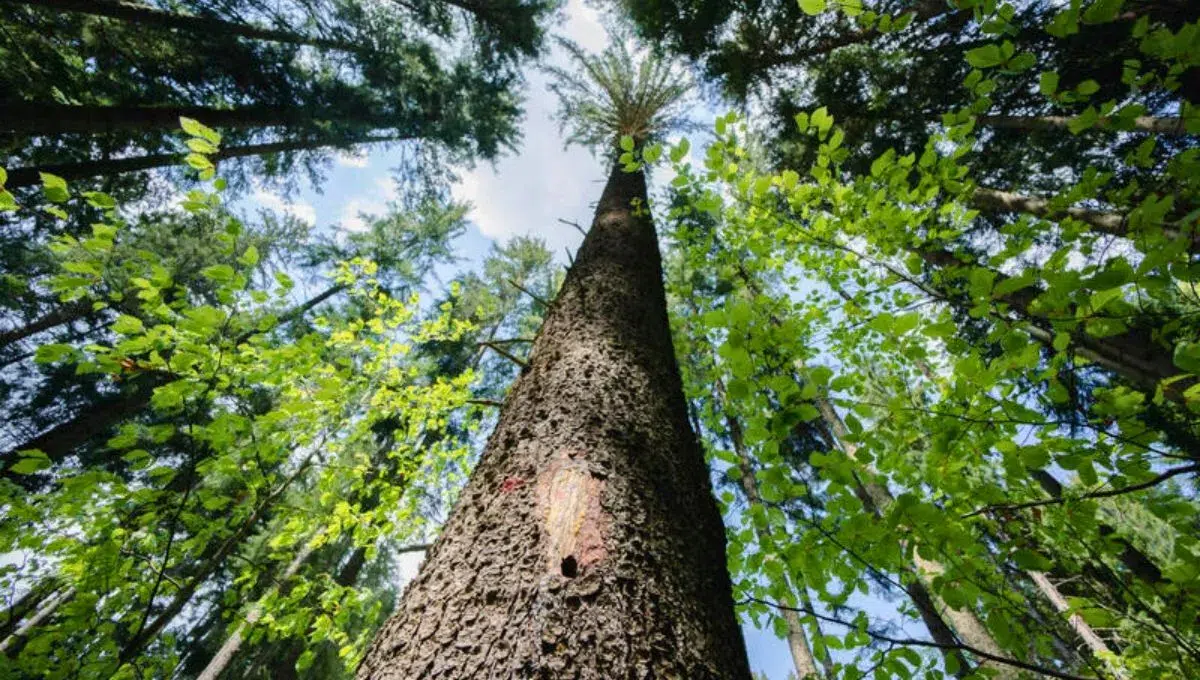
A demonstration of resilience and persistence
Pando is more than a botanical record: it is a demonstration of resilience over time. Its white, trembling bark rises to the sky, but its true strength lies beneath the surface, where the roots weave a plant empire that has survived for centuries.
However, its longevity does not make it invulnerable. The organism faces real threats:
- Climate change.
- Pests and diseases.
- Grazing pressure.
- Land alterations due to human activity.
Keeping this plant healthy poses a challenge for ecologists and forest managers, who seek to preserve both its mass and its diversity and ecological function.
The importance of the Wasatch Mountains
The environment where Pando thrives, the Wasatch Mountains, is a reserve of crucial biodiversity for the region and the planet. Its ecosystems provide vital services:
- Freshwater for communities and urban areas.
- Timber resources and medicinal plants.
- Environmental protection, by preventing soil erosion and preserving watersheds.
- Biological diversity, thanks to its altitude variations that create unique microclimates and habitats.
- Cultural and recreational benefits, boosting the local economy through tourism and outdoor activities.
The Wasatch Mountains are considered planetary biodiversity reserves, hosting a large number of species in a relatively small area.
A symbol of the connection between nature and humanity
Pando is not just a plant organism: it is a symbol of the interconnection of life on Earth. Its existence invites us to reflect on the fragility of ecosystems and the need to conserve them in the face of human and environmental pressures.
The preservation of Pando and the Wasatch Mountains is essential not only for science and biodiversity but also for the communities that depend on their ecosystem services.
The largest plant on the planet, Pando, represents a miracle of nature and a reminder that life can thrive in unexpected ways. Its conservation is an urgent challenge involving both scientists and local communities, in an effort to protect an organism that sustains life and symbolizes the resilience of the natural world.


