



The plastic pollution has become a global environmental and health emergency, but efforts to achieve an international treaty binding to halt its production continue to face serious political and economic obstacles.
Driven by the United Nations Environment Programme (UNEP), negotiations for a global treaty remain stalled, blocked by the pressure from petrostates and industrial conglomerates seeking to soften reduction targets.
Next month in August, Geneva will host a new round of negotiations in an attempt to unlock the dialogue.
The situation is complex: the last summit held in Busan, South Korea, ended without substantial progress due to the opposition of a group of countries led by Saudi Arabia, reluctant to any restrictions on plastic production.
Insufficient recycling and corporate lobbying hinder real progress
The numbers are alarming: in 2023, global plastic production exceeded 413 million tons, of which only 8.7% came from recycled materials. If firm measures are not implemented, this figure could reach 712 million tons annually by 2040.
Scientific and environmental organizations, such as the Scientist Movement for an Effective Plastic Treaty (SCEP), insist on the need to impose concrete limits on production, but denounce their exclusion from central debates.
In Busan, 220 corporate representatives attended the meeting, more than three times the number of accredited scientists.
The core of the disagreement lies in the approach of the treaty. Most countries, supported by over a thousand scientific experts, propose intervening upstream, meaning in the direct reduction of plastic manufacturing.
On the contrary, oil-producing states and plastic resin producers insist on downstream solutions, focusing solely on waste management and recycling, which many specialists consider clearly insufficient.
“We produce more plastic than we can handle. Thinking that recycling will solve it is a fantasy,” warned environmental lawyer David Azoulay, from the International Environmental Law Center.
A global emergency with visible impacts and marginal recycling rates
On a global scale, effective recycling remains marginal: only 9% of historically produced plastic has been recycled. In areas with advanced infrastructure, such as Europe, the rate for household waste reaches 24.5%, while in many regions of the world recycling is virtually non-existent.
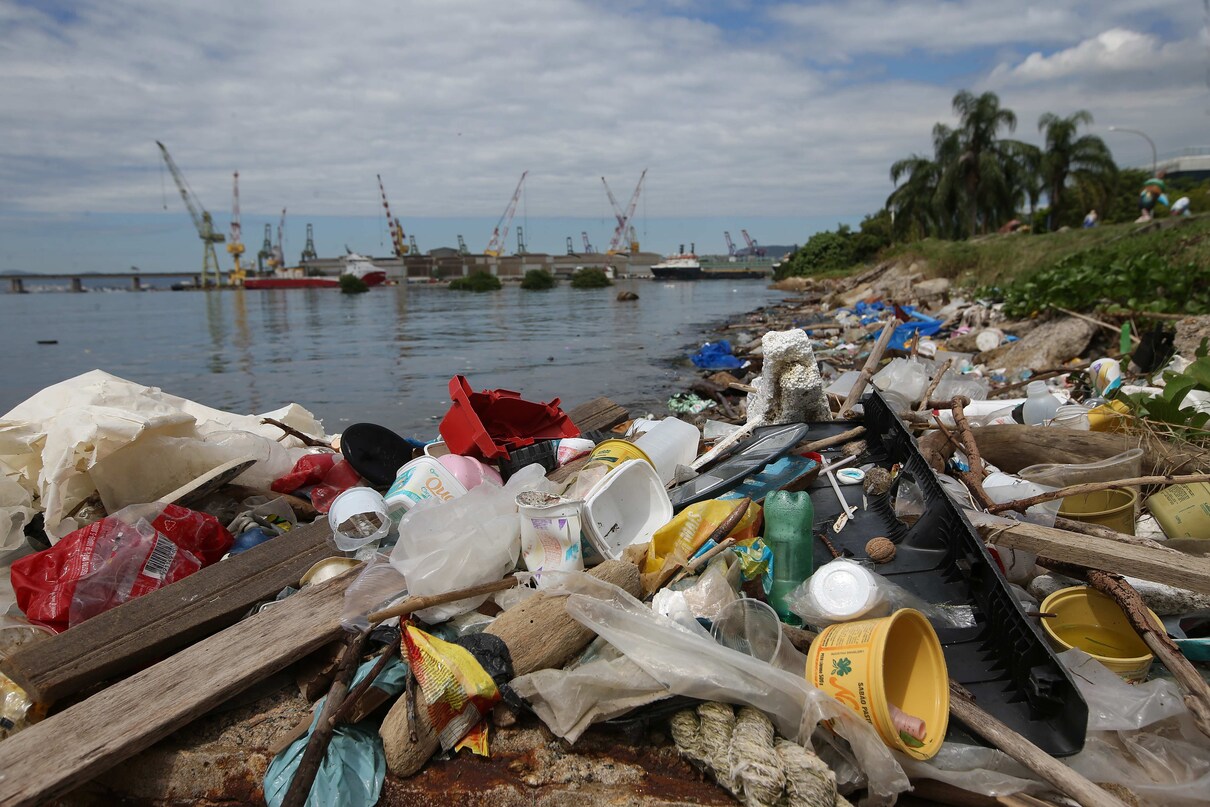
The presence of plastic has been detected in the most remote places: from the summit of Everest and the ocean floor, to breast milk and human tissues.
It is estimated that more than 11 million tons entered aquatic ecosystems during 2023, and this figure could triple by 2040 if a structural change is not achieved.
Disposable products and plastic packaging make up almost 66% of the total volume, with extremely low recycling levels. They represent the critical focus of a growing environmental crisis, whose approach depends on the outcome of international negotiations.


