



Researchers from the CONICET, in collaboration with the international foundation Schmidt Ocean Institute, are working on the project “Mar del Plata Submarine Canyon: Continental Slope IV”. An oceanographic campaign on a large scale that allows seeing live the bottom of the Argentine sea.
It takes place 300 kilometers off the coast of Buenos Aires and since it began, it has become a sensation on social media and captivates the entire country.
The expedition, which started on July 23 and will extend until early August, aims to explore deep ecosystems of the South Atlantic, study marine biodiversity, and analyze the impact of human activity in one of the least explored environments in the country.
## Cutting-edge technology: how the study that allows seeing the bottom of the Argentine sea is carried out
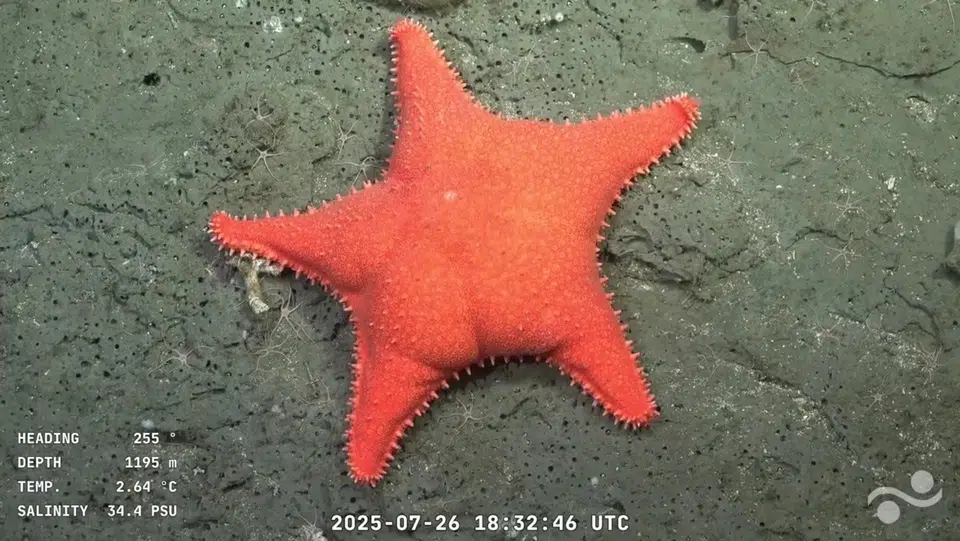
For the first time in the history of Argentine science, researchers have state-of-the-art oceanographic equipment.
The campaign is carried out aboard the research vessel Falkor (too), from where the ROV SuBastian is operated, a remotely controlled underwater robot that allows capturing images in ultra-high definition and collecting samples without altering the marine environment.
Thanks to this tool, scientists plan to reach depths close to 4000 meters, where they will study the distribution of species in relation to environmental, topographic, and oceanographic variables.
## The place: a key point in the South Atlantic
The Mar del Plata Submarine Canyon is located off the coast of Buenos Aires province, on the boundary between the Brazil and Malvinas currents, two oceanic flows with opposite thermal characteristics that form a fundamental biogeographic boundary for the marine ecosystem of the South Atlantic.
This area is particularly relevant due to its biodiversity richness and vulnerability to climate change and human action.
Another goal of the campaign, which lasts 19 days, is to detect human impact on these vulnerable ecosystems. The exploration revealed large amounts of trash and microplastics on the seafloor, especially plastic bags and some fishing artifacts.
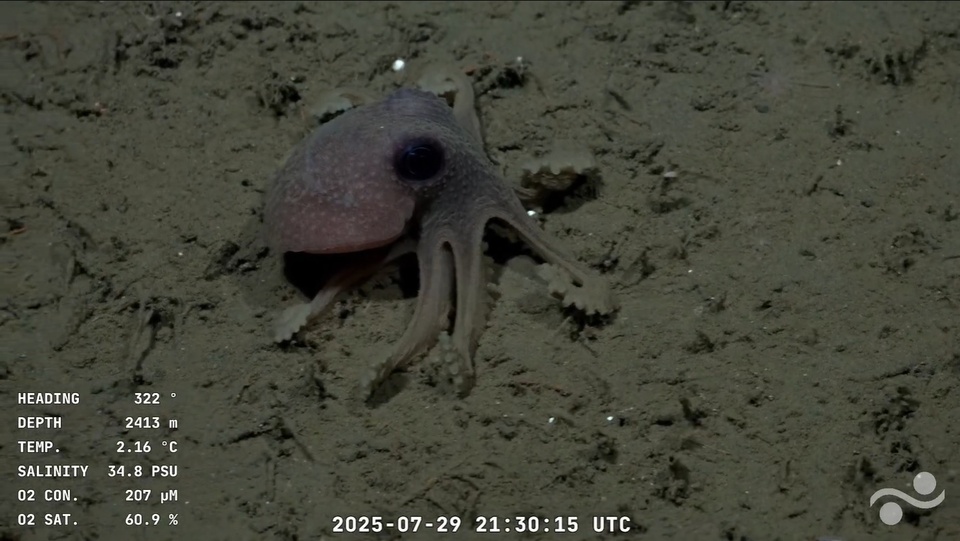
In the end, they hope to have an infinite number of images of new species and others that are already known, which they will study for 10-15 years.
## How to follow the expedition live
One of the most outstanding features of the mission is the possibility of following it in real-time: the live streams from the [YouTube channel of Schmidt Ocean Institute](https://www.youtube.com/@SchmidtOcean/videos) already attract around 24,000 people daily, on average.


