



The city of Kabul, with over seven million inhabitants, is facing an unprecedented water crisis.
According to a report by the NGO Mercy Corps, the groundwater levels have dropped up to 30 meters in the last decade, due to accelerated urbanization and climate deterioration. Nearly half of the wells have dried up, and water extraction exceeds natural recharge by 44 million cubic meters per year.
If this trend continues, all aquifers could be depleted by 2030, posing an existential threat to the urban population.
Water as a human right and strategic resource
The water crisis is already causing migration, indebtedness, and inequality.
” The lack of water forces people to leave their communities,” warns Dayne Curry, director of Mercy Corps Afghanistan.
The report also points out that up to 80% of groundwater is contaminated, with elevated levels of arsenic, salinity, and wastewater.
Access to water has become a daily struggle. Some households allocate up to 30% of their income to buy water, and more than two-thirds have incurred related debts. There is no good quality water. All households face difficulties, especially those with low incomes.
Privatization and speculation amid the water crisis
Companies extract public water and sell it at inflated prices.
The crisis has opened the door to private companies that dig new wells and commercialize public groundwater.
” We used to pay 500 Afghanis every 10 days. Now it costs double,” says a neighbor quoted in the report. The situation has worsened in recent weeks, and there are fears that prices will continue to rise.
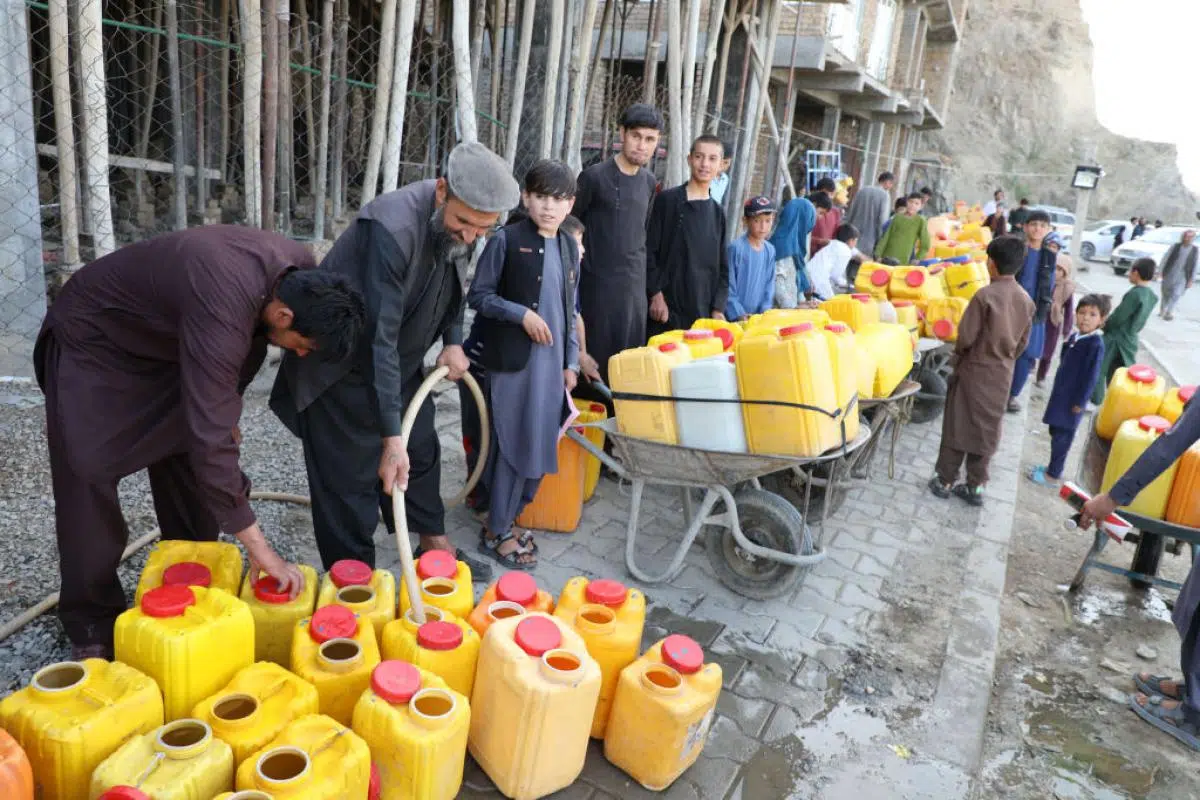 The water crisis is being felt in Kabul. Photo: Getty Images
Unplanned urban growth: a ticking time bomb
Population growth has been rapid, but the lack of water governance and regulation has perpetuated the problem.
In early 2025, the UN reported that its partners had only received 8.4 million dollars out of the 264 million needed to implement water and sanitation programs.
Furthermore, 3 billion in international funds remain frozen since the return of the Taliban to power in 2021. The recent decision by the United States to cut over 80% of its USAID funding has further exacerbated the situation.
The Panjshir River aqueduct: a paused hope
The Panjshir River aqueduct, designed to reduce dependence on groundwater, could supply water to two million inhabitants.
The design phases were completed in 2024, but the $170 million project is still awaiting additional investors. “We can’t stand by idly. We are trapped in a storm of no return if we don’t act now,” warns Dr. Najibullah Sadid, an expert in water management.
In Kabul, many families must choose between food and water. However, residents are still willing to invest what little they have in sustainable solutions.
Cover photo: Kate Holt/IRIN



