



The Environment Secretariat of Córdoba identified the cause of a persistent foul odor that residents reported in the neighborhoods of Alta Córdoba and Cofico, in the city of Córdoba.
According to the Director of Environmental Impact Assessment, Eduardo Sarríes, as reported to local media, the source was a dump located on private land. There, substances with a high sulfur content were found. What are the consequences?
Foul odor in Córdoba: responsible compounds
The odor characterization report released by the authorities determined the presence of Dimethyl disulfide and Dimethyl trisulfide. These are sulfur compounds with strong odor activity, capable of generating intense odors even at low concentrations.
 The consequences of open-air dumps.
Soil samples taken at the site yielded results below the maximum limits allowed by Law 24,051 on Hazardous Waste and current complementary regulations in Argentina.
Nevertheless, monitoring tasks and possible remediation work will be carried out by the landowner or responsible party.
Next steps in the investigation and technical analysis
The investigation involved the participation of the Environmental Control System (SICA), the National Technological University (UTN), and the laboratory of the National University of Córdoba (UNC).
The conclusions indicated that, while the substances detected in this case do not pose a health risk, they did cause significant discomfort to the population.
“The odor spread due to the prevailing wind from north to southeast, but the air quality sensors recorded normal parameters,” Sarríes stated.
The Environment Secretariat filed a criminal complaint with Dr. Garzón’s Prosecutor’s Office, which was already investigating other dumps in the city. They provided cadastral data of the lot to identify the owners, and it is expected that the justice system will conduct more thorough investigations to determine the specific waste dumped and their possible culprits.
The objective is to prevent these types of incidents from affecting the population again and to ensure proper waste management in Córdoba.
Open-air dumps: environmental impact
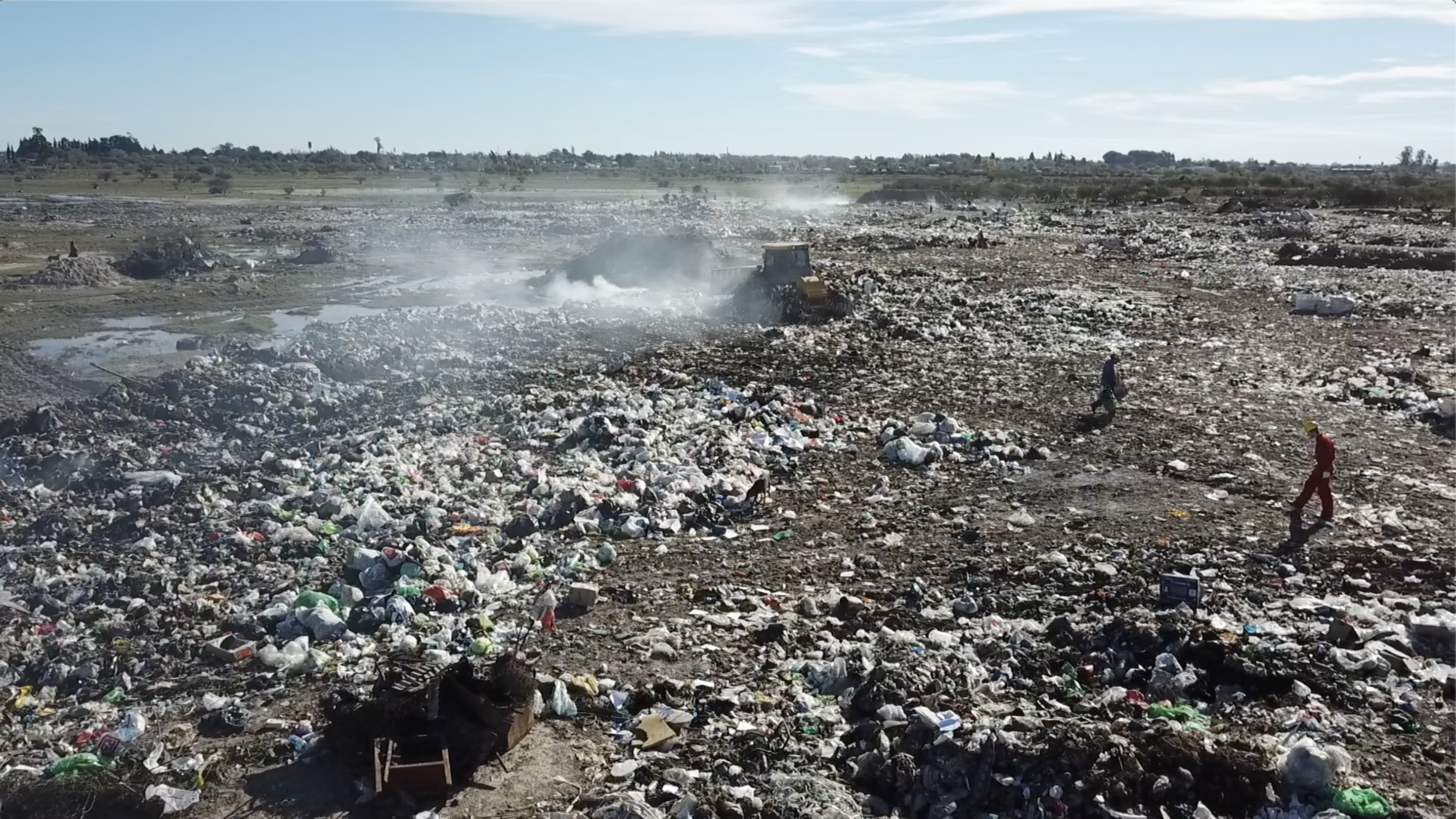 There are about 5000 cases of open-air dumps in Argentina.
While the Córdoba case is an isolated incident attributed to a particular situation, it is important to highlight the dangers of open-air dumps in general.
These are sites where solid waste is disposed of indiscriminately, without operational control and with limited environmental protection measures.
In Argentina, there are at least 5000 cases of open-air dumps. One-third of the urban waste generated in Latin America and the Caribbean ends up in these spaces, according to the United Nations.
The consequences are devastating, both for the environment in general and for human health. When not properly managed, this poses a risk to people’s health as it contaminates resources such as water, soil, and air.
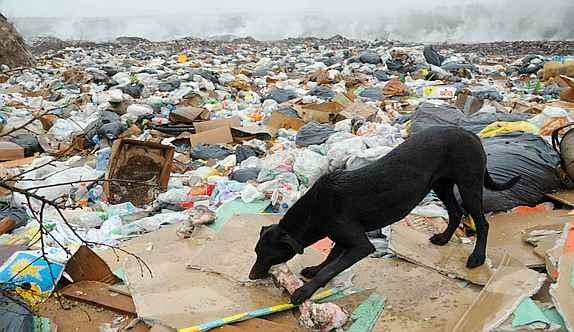 The consequences of open-air dumps.
The decomposition process that waste undergoes when left stagnant in dumps results in the emission of toxic gases. Thus, they generate 5% of global emissions of greenhouse gases (GHG), responsible for global warming.



