



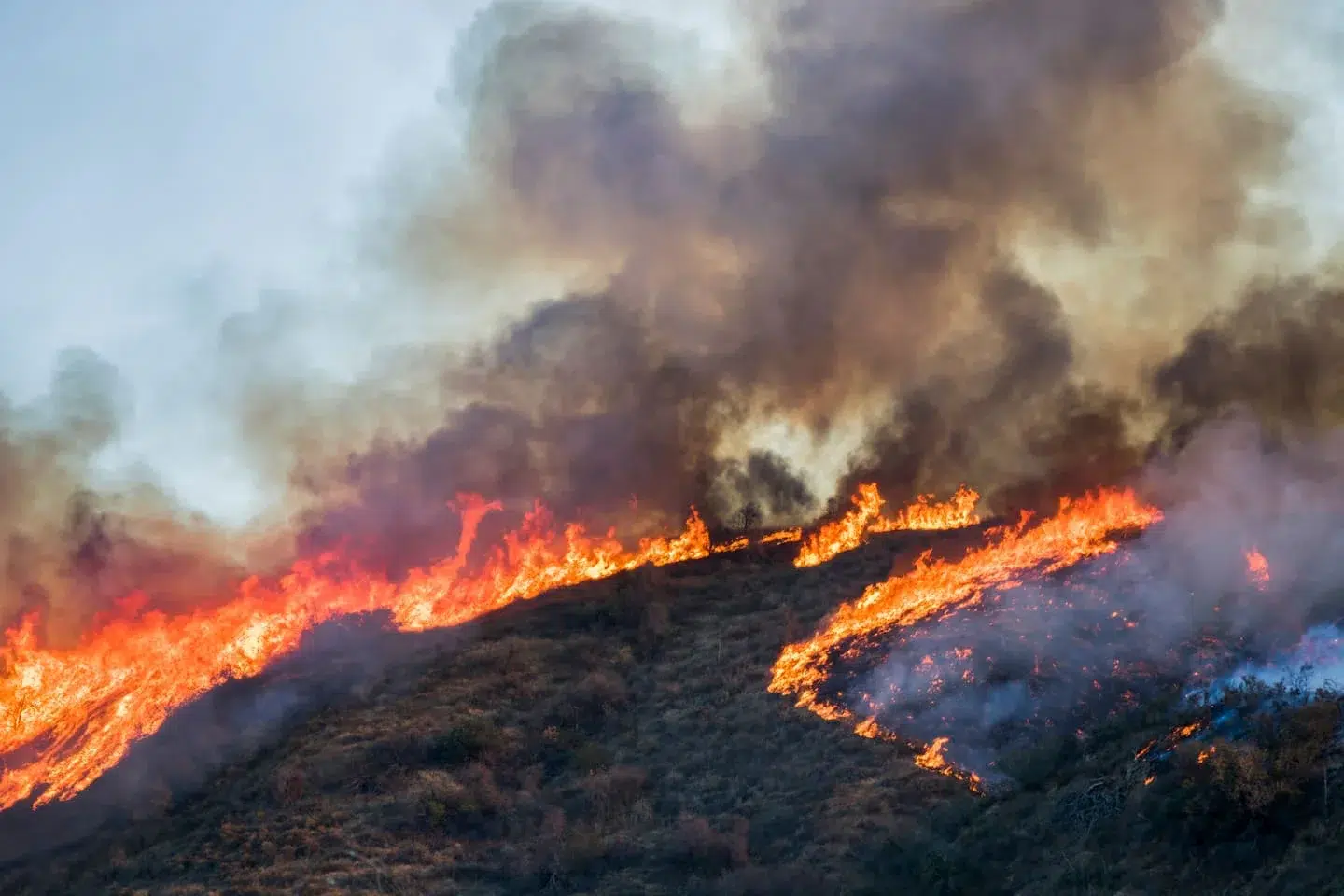
Wildfires have become an increasingly frequent and violent phenomenon in Argentina. Although national attention is focused on Patagonia, the province of Buenos Aires also faces such episodes and has a specific system to combat them.
Commissioner Pablo Polarolo, head of the first Buenos Aires Forest Fire Brigade, describes these events as having an “extreme behavior”, difficult to control quickly and which can last for days or even months.
Contingency Plan 2025-2026
The province implements the Contingency Plan for Operational Fire Management 2025-2026, which unifies action criteria in localities such as La Costa, Pinamar, Villa Gesell, Mar del Plata, Mar Chiquita, Miramar, Monte Hermoso, Tornquist, San Pedro, Junín, Tandil, Pehuajó, Berazategui, Quilmes, and La Plata.
Coordination is centralized in the Unified Command of the Provincial Firefighter System, which coordinates the Provincial Directorate of Civil Defense, the Superintendency of Disaster Security, and the three Federations of Volunteer Firefighters.
An organizational engineering
According to Fabián García, head of Buenos Aires Civil Defense, the system relies on an “organizational engineering” that coordinates 272 civil organizations, 135 municipalities, and the National Fire Management System.
In addition to the Security portfolio, the ministries of Environment and Agrarian Affairs participate, allowing for joint working groups and an institutionalization of the system.
Step by step in the event of a fire
- Initial detection: through 911, 103, or local firefighters.
- Local verification: the magnitude of the event is assessed.
- Activation of the COU: if necessary, additional resources are sent.
- Incident Command System (ICS): for complex fires, it is directly coordinated with mayors and local civil defenses.
Human resources
- 17,550 volunteer firefighters and 1,040 police firefighters throughout the province.
- 518 volunteer firefighters specialized in forest fires.
- 45 police brigadiers and 22 Civil Defense technicians with specific training.
Training is key: the Vucetich University Institute offers strengthening programs, while the Alert Directorate has specialized meteorologists whose forecasts reach municipalities directly.
Material resources
- Aerial fleet: 8 helicopters with 900-liter helibuckets, certified crew, and technical teams; in addition to support and observation helicopters.
- Surveillance technology: 3 drones with thermal sensors to detect active hotspots.
- Ground vehicles:
- 241 4×4 trucks for quick attack.
- 40 combat fire trucks.
- 6 15,000-liter tanker trucks.
- 69 support vehicles, including minibuses, trailers, and logistics trucks.
- Machinery and equipment: backhoe, skid steer loaders, jet skis, chainsaws, brush cutters, generators, and lighting towers.
Vocation and community contact
Beyond the technique, Polarolo highlights the bond with neighbors as the driving force of the work: “Adapting to the idiosyncrasy of the towns when it’s time to be with them for 10 or 15 days, that’s what I like”.
The Buenos Aires system for combating forest fires combines institutional organization, specialized training, and advanced material resources. With more than 17,000 firefighters and its own aerial fleet, the province positions itself as one of the best-prepared jurisdictions in the country to face this growing environmental challenge.



