



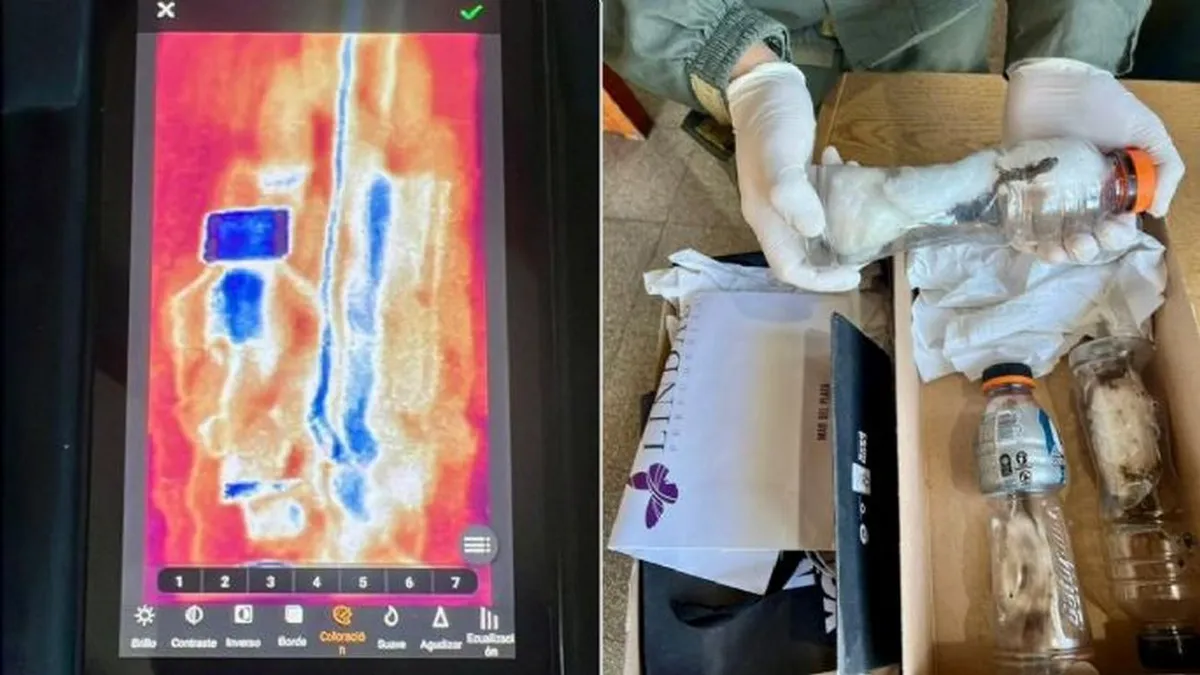
Durante un routine check at kilometer 1,308 of National Route 3, in the province of Chubut, officers from the “Sierra Grande” Road Safety Squadron of the National Gendarmerie made an unexpected discovery: three specimens of tropical house geckos were detected inside a package transported by a long-distance bus.
Exotic species in transit: a silent risk
The package, which had departed from the Retiro Bus Terminal in Buenos Aires bound for Comodoro Rivadavia, was inspected using a portable scanner.
The image revealed plastic bottles containing the reptiles, a species native to Africa, already recorded in Latin America due to accidental transfers on commercial ships.
The procedure was carried out under the Wildlife Conservation Law 22,421, with the presence of witnesses and legal protection.
Characteristics of gecko lizards
- Size: between 12 and 13 cm long
- Nocturnal habits: seeks food near artificial lights
- Diet: cockroaches, mosquitoes, moths, gnats, and scorpion offspring
- Ecological impact: considered an invasive species in Argentina
Although their presence in urban areas does not pose a direct risk to human health, their release into wild environments can cause ecological imbalances, affecting native species and altering the food chain.
Illegal wildlife trafficking: a persistent threat
The case highlights a serious issue in Argentina: the illegal wildlife trade, which generates:
- High mortality: 9 out of 10 trafficked animals die during transport
- Species extinction: like the yellow cardinal, affected by capture and habitat loss
- Ecological imbalances: the removal of animals disrupts the natural functioning of ecosystems
Causes of trafficking and its consequences
- Exotic pets: birds like the talking parrot, blue-black grassquit, and cardinal are highly demanded
- Fashion industry: skins of felines, foxes, caimans, and lizards are used in garments
- Crafts and curiosities: feathers, taxidermies, and animal parts are sold at fairs
Additionally, the transport of animals in precarious conditions can facilitate the spread of zoonotic diseases, such as COVID-19 or monkeypox, representing a health risk to the population.
Institutional actions and citizen responsibility
- Legal framework: Argentina prohibits the commercialization of wildlife and adheres to international treaties
- Conservation programs: organizations like WCS Argentina and Aves Argentinas work on rescue and reintegration
- Training and awareness: security forces are trained and the population is educated
- Citizen reporting: reporting illegal trade, even anonymously, is key
The found geckos will be under the care of the San Antonio Oeste Regional Wildlife Office in Río Negro while their legal fate is determined.
This episode reinforces the need to strengthen controls, educate about the impacts of wildlife trafficking, and promote a culture of respect for biodiversity. Every action counts to protect ecosystems and prevent exotic species from compromising the natural balance of our country.



