



In the Portuguese Atlantic, 20 kilometers off the coast of Viana do Castelo, operates the WindFloat Atlantic, the world’s first semi-submersible floating offshore wind farm. With 25 megawatts installed, it supplies 25,000 homes. The surprising aspect is not only on the surface: after eight years of monitoring, researchers documented the presence of 272 species around the platforms.
Octopuses, rays, sharks, common dolphins, orcas, and even a basking shark are part of an ecosystem that has consolidated around the submerged structures, turned into artificial reefs. Mussels, barnacles, and anemones colonized the metal walls, attracting predators and generating a rich biodiversity environment.
Reserve Effect and Fishing Exclusion
The area delineated by the wind turbines excludes commercial fishing, which has reduced pressure on the fauna. The data shows:
- Greater abundance of octopuses and fish biomass.
- Increase in elasmobranchs (rays and sharks).
- Increased activity of common dolphins during the operational phase.
In birds, 33 different species were recorded, compared to the 17 counted before construction. Three species of bats and several marine mammals were also detected, consolidating an active ecosystem.
Debate with the Fishing Sector
Ocean Winds assures that fish landings in Viana do Castelo have not decreased. However, the association VianaPesca reported the disappearance of species such as hake and bream within a radius close to the park. Fishing groups question the report and demand independent studies on long-term effects.
Researchers from the University of Lisbon acknowledge differences between the park area and the outer zones, especially in benthic invertebrates and fish communities, although they confirm that phytoplankton and zooplankton do not show negative impacts.
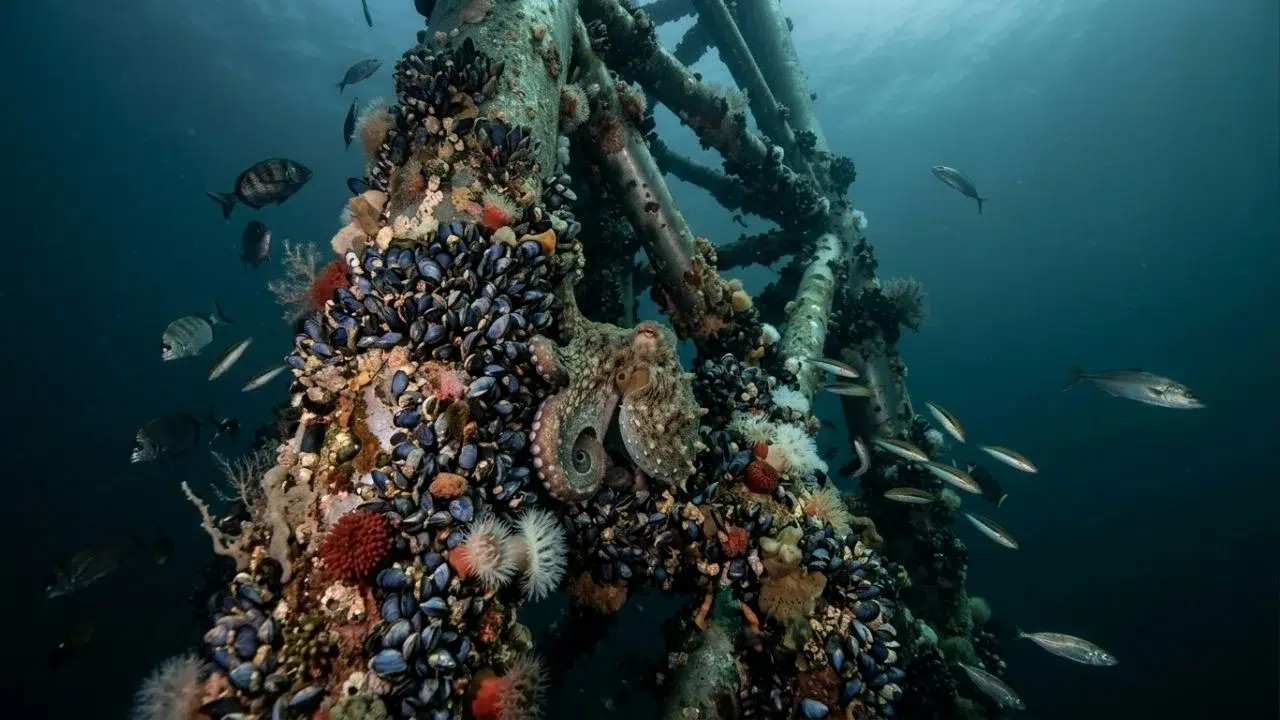
Benefits of Artificial Reefs
The artificial reefs are submerged structures that mimic the ecological role of natural reefs. Their benefits include:
- Habitat creation: facilitate the colonization of microorganisms and invertebrates.
- Increased biodiversity: attract fish and crustaceans, transforming sandy bottoms into biological oases.
- Nursing areas: act as safe nurseries for offspring of multiple species.
- Climate resilience: enhance underwater carbon storage.
- Relief of pressure on natural reefs: divert tourism and fishing to artificial areas.
- Protection against illegal fishing: serve as physical barriers against trawl nets.
Materials Used
They are constructed with concrete blocks, ceramic modules, or 3D printed structures. Sunken ships, decommissioned oil platforms, or treated tires are also reused.
The Society for Conservation of Marine Biology warns that they must be carefully planned to avoid pollution and ensure long-term effectiveness.
Positive Environmental Impact
Since its connection in December 2019, WindFloat Atlantic has produced 345 gigawatt hours, avoiding more than 33,000 tons of CO₂ per year. For Ocean Winds, the results are evidence that floating offshore wind can generate local ecological benefits in addition to clean energy.
The case of WindFloat Atlantic shows how an energy infrastructure can transform into an unexpected marine refuge. Although tensions with the fishing sector persist, the data suggests that floating wind farms can combine renewable energy production with ecosystem regeneration.
The challenge will be to ensure independent studies and management that balances conservation, fishing, and energy transition.


