



A team of scientists from the University of Tianjin presented a breakthrough that, if confirmed, could represent a turning point in the electric mobility industry.
It is a metallic lithium battery with an energy density of 600 Wh/kg, a figure that doubles the capacity of Tesla’s 4680 cells (270 Wh/kg) and quadruples that of BYD’s LFP (150 Wh/kg).
Extended electric mobility and improved efficiency
A leap of this magnitude would allow future electric vehicles to achieve autonomies between two and four times higher than current ones.
This would mean that an urban model could exceed 500 km per charge, and a Long Range model could approach 1,000 km, while maintaining similar recharge times to current ones. In addition, a higher energy density would allow vehicle weight reduction and improvement in overall efficiency.
The electrolyte, the great challenge overcome
Historically, the development of metallic lithium batteries has faced difficulties in the design of the electrolyte, the medium that facilitates the movement of lithium ions. Increased energy density used to compromise safety or cell lifespan.
The Chinese team claims to have overcome this barrier through a reconfiguration of the solvation structure, which allows for more flexible and stable interactions between the ions.
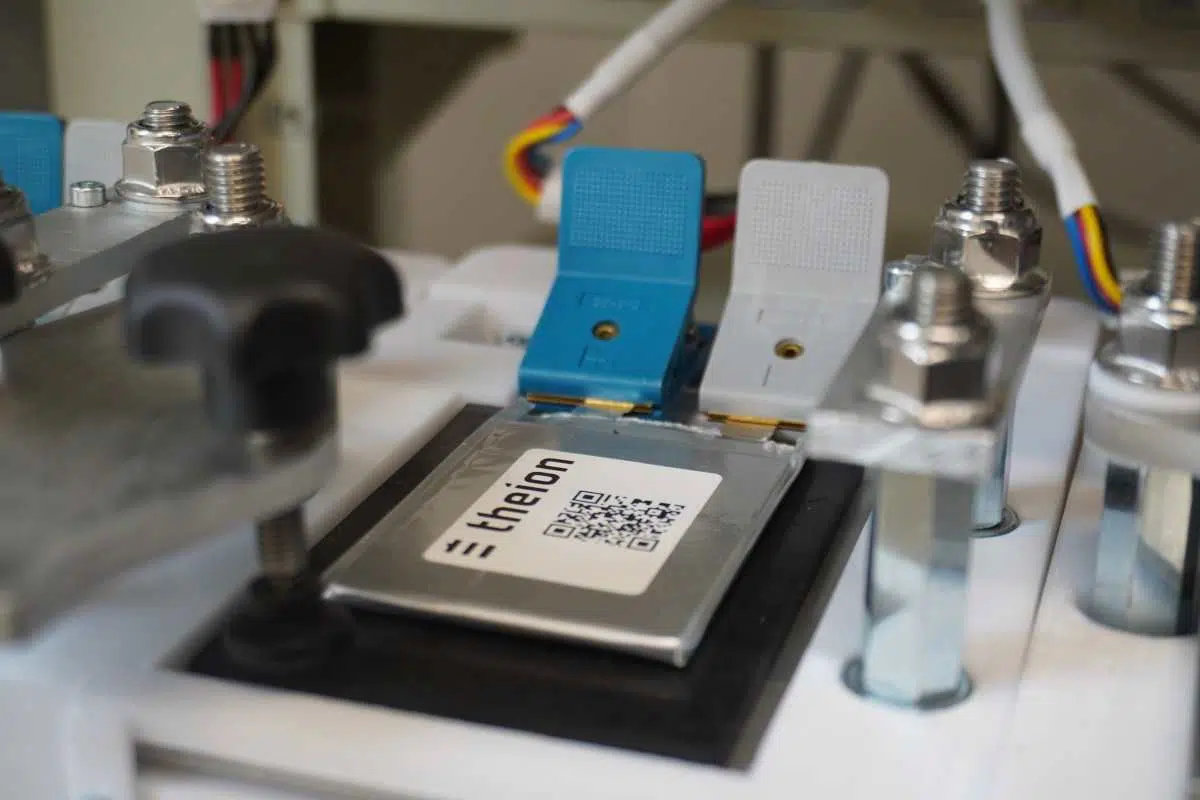 China announces a metallic lithium battery that could revolutionize electric mobility
Artificial intelligence and fluorinated compounds: keys to the new design
To achieve this breakthrough, researchers used simulation and machine learning techniques that allowed them to identify the best combinations of salts and solvents.
Additionally, they incorporated fluorinated compounds that give the electrolyte high thermal stability, capable of withstanding fire, extreme cold, and even nail penetration tests.
Initial results: safety and performance under extreme conditions
Preliminary tests yielded promising results. The battery operates stably at -60 °C, does not ignite upon contact with flames, and successfully passed penetration tests, which often cause explosions in conventional cells.
It also demonstrated acceptable durability, with 90 charge cycles without significant degradation, although this figure is still far from the thousands of cycles required for commercial applications.
Practical applications: drones and larger-scale prototypes
Researchers tested the battery in unmanned aerial vehicles, managing to increase their autonomy by 2.8 times.
In larger configurations, the prototype exceeded 25 full charge cycles without showing instability. Although the development is still in the concept testing phase, it confirms that it is possible to achieve unprecedented levels of energy density without compromising safety.
A paradigm shift in electric mobility
If the project progresses towards large-scale production, the automotive industry could face a transcendental change akin to the arrival of the jet engine in aviation.
For electric cars, this would mean fundamentally addressing concerns about autonomy, with usage ranges close to 1,000 km per charge and competitive recharge times.
Current limitations and strategic outlook
Despite the advances, the research still faces challenges. The limitation on lifespan, with only a few demonstrated cycles, indicates that commercial development is not immediate.
However, the progress positions China as a technological leader, aligned with its “Made in China 2025” strategy, aimed at strengthening its competitiveness in key sectors such as electric automotive and aviation.



