



The National Health Commission of China has approved for the first time a food ingredient based on mycoprotein, establishing national specifications that define how this type of fungal protein should be produced, labeled, and used.
The decision marks a shift in the country’s strategy, which seeks to diversify its protein sources and strengthen food resilience in a context of increasing pressure on natural resources.
The authorized ingredient comes from the fungus Fusarium venenatum, historically used in alternative protein products in other markets, but until now without its own regulatory framework in China. The measure is accompanied by the approval of new ingredients and additives, in line with a broader policy of modernizing the food system.
Fushine Bio and the Efficiency of Mycoprotein
The company Fushine Bio, responsible for the development, operates the largest mycoprotein plant in Asia-Pacific and markets its product under the brand FuNext. It is obtained from the mycelium of the fungus, cultivated through biomass fermentation with glucose and water as the main substrates.
The process is radically different from conventional agriculture and much more efficient: the approved strains, identified as A3/5 and TB01, double their biomass every five hours under optimal conditions, achieving productivity thousands of times higher than animal protein.
From a nutritional standpoint, mycoprotein presents a complete profile, with all essential amino acids, high fiber content, relevant micronutrients, and no cholesterol. It is low in fat, versatile, and functional, without the need for pastures, feed, or antibiotics.
Formats and Applications
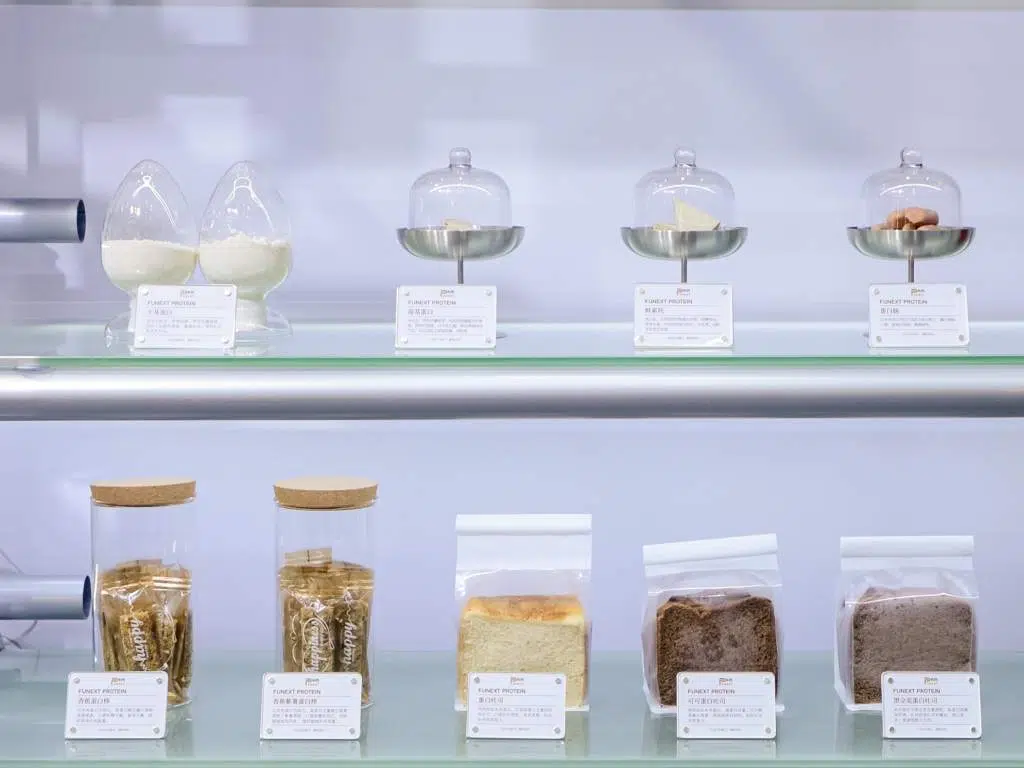
FuNext is marketed in three versions:
- A wet version, with a fibrous texture, intended for structured products like meatballs or nuggets.
- A dry powder version, aimed at functional nutrition and enriched foods.
- A “whole cut” format, with a structure similar to animal muscle, adaptable to strips, fillets, or blocks.
These options allow the integration of mycoprotein into different segments of the food industry, from everyday products to more elaborate preparations.
Detailed Regulation and Certainty for the Industry
Unlike other regulatory models, such as the U.S. model based on self-assessment of safety, China has defined explicit national criteria: composition, processes, limits, and labeling requirements, including warnings for sensitive populations like young children or pregnant women.
This level of detail provides regulatory certainty, a clear ground for investment and scaling, reducing the barriers that traditionally hindered the expansion of fermentation-derived proteins.
Environmental Impact and Technical Challenges
Mycoprotein is produced in controlled environments, with minimal use of land and water, and generates a fraction of the greenhouse gas emissions associated with livestock. By not relying on imported forage crops, it reduces pressure on distant forests and ecosystems. Additionally, it avoids risks such as soil contamination, water eutrophication, or intensive antibiotic use.
However, challenges remain. Recent research indicates that the rigidity of the fungal cell wall may limit protein digestibility. Proposed solutions include precision genetic editing techniques and combined physical or chemical processes to improve protein accessibility.
Scaling and the Future of Mycoprotein
Fushine Bio is already working on a new industrial line with an ambitious goal: to increase from 1,200 tons annually to 200,000 tons, reflecting confidence in applications beyond direct human consumption. These include pet food, specialized medical nutrition, and even space missions, where efficiency and stability are crucial.
Mycoprotein will not completely replace livestock or solve all food challenges, but it can alleviate key tensions: reducing dependence on imports, offering stable protein in dense urban contexts, and diversifying the diet without demanding more natural resources.
Integrated into everyday products and at competitive prices, it can become a practical tool to decarbonize food and move towards more sustainable systems.



