



In Western Australia, researcher Amin Mirabbasi, a PhD candidate at the Algae Innovation Hub at Murdoch University, has spent three years designing photobioreactors filled with microalgae that can be integrated into homes, urban buildings, and mining accommodations. His goal is to reduce air conditioning use, purify the air, and capture carbon, providing an architectural sustainable solution.
Perth’s climate offers favorable conditions for microalgae cultivation: high solar availability and minimal risk of freezing. However, controlling overheating is key to ensuring system efficiency.
Environmental and Energy Benefits
Microalgae stand out for their ability to capture carbon and reduce greenhouse gases. Studies indicate they can fix CO₂ between 10 and 50 times more efficiently than terrestrial plants, with rapid growth rates and high biomass productivity.
Additionally, photobioreactors provide thermal benefits:
- Absorb heat and filter solar radiation, reducing interior overheating.
- Decrease air conditioning dependence, generating energy savings and lower operational costs.
- Purify indoor air by producing oxygen and retaining pollutants.
Applications in Mining and Urban Environments
One of Mirabbasi’s focuses has been the design of prefabricated modules for mining accommodations, designed for extreme conditions. Photobioreactors installed on facades act as passive solar control systems, providing shade and coolness, as well as improving air quality.
The researcher also explores urban applications:
- Bus shelters and pedestrian shelters.
- Garages and streets with integrated artistic elements.
- Tubular photobioreactors on promenades and commercial facades, which light up with LEDs at night, becoming living sculptures.
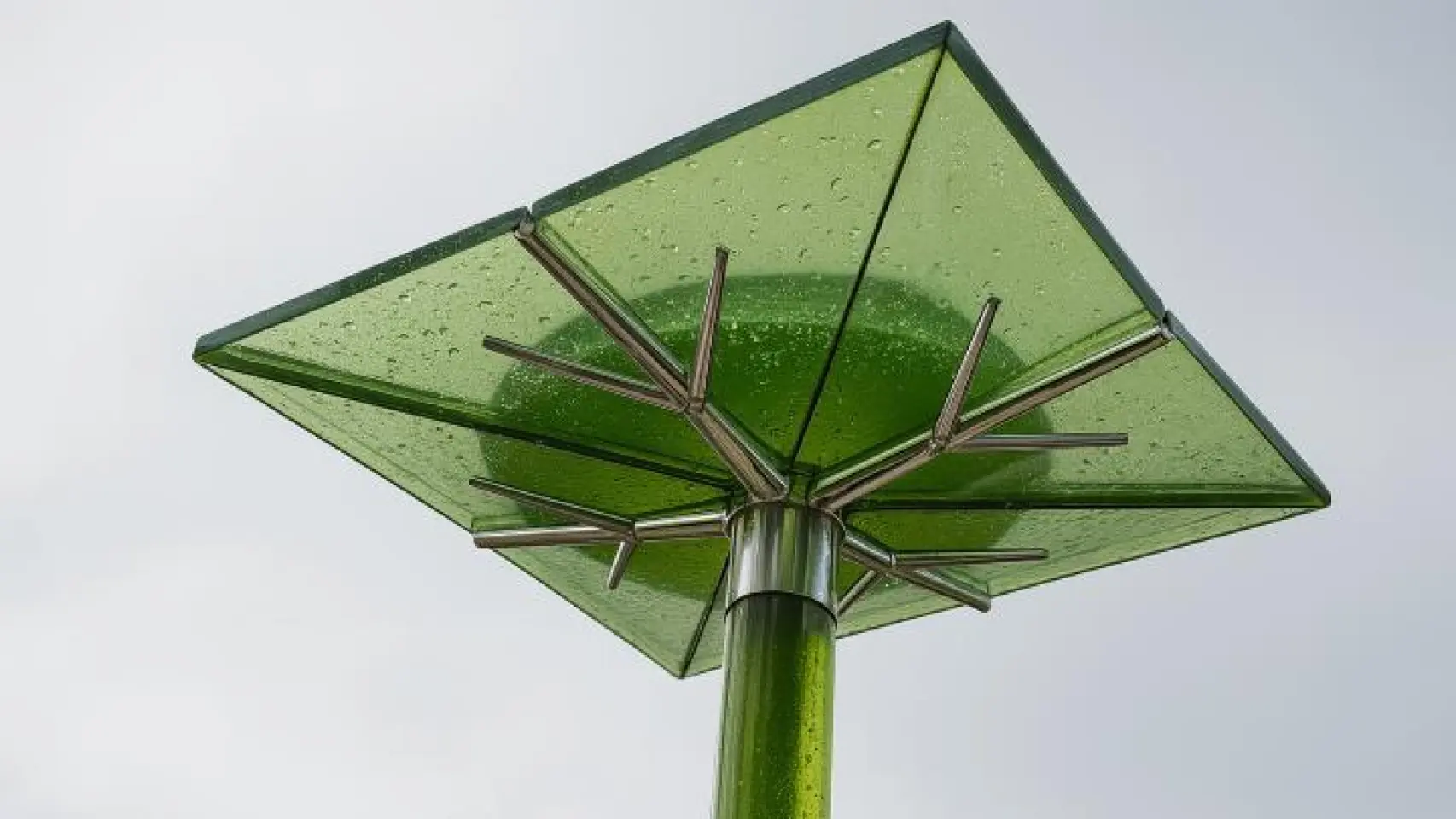
The Urban Algae Tree
Among his most striking prototypes is the Urban Algae Tree, a structure that mimics basic functions of natural vegetation:
- Provides shade and absorbs heat.
- Captures rainwater.
- Operates self-sufficiently with solar energy.
This “tree” can house 1,500 liters of culture, produce up to 700 kg of oxygen per year, and remove approximately 1,000 kg of CO₂ annually. Although these are not miraculous figures, they open the possibility of creating networks of these structures in neighborhoods, campuses, or industrial areas.
Human and Biophilic Impact
Mirabbasi emphasizes that the design seeks not only energy efficiency but also human well-being. Cooler spaces with references to nature help workers mentally disconnect from harsh conditions, creating healthier and more human environments.
The biophilic experience of watching microalgae grow and react to light connects people with natural processes without the need for speeches or signs.
Future Projection
With his PhD nearly completed, Mirabbasi seeks to take his ideas beyond the laboratory. In the medium term, this technology could be integrated into energy rehabilitation programs for public buildings such as schools and hospitals, where savings in air conditioning and improved indoor air have a direct impact on health and public spending.
In industrial and mining environments, prefabricated modules can reduce the energy footprint, while in cities they could complement traditional parks and trees, especially in places with limited space for planting.
Microalgae photobioreactors represent an innovative piece in the urban sustainability puzzle. They are not a magical solution, but a real alternative for more efficient buildings, healthier public spaces, and architecture inspired by nature to face the challenges of climate change.



