



A 14-year-old American student created with Artificial Intelligence (AI) a device that could completely improve the way we eat. This innovation with AI is a portable device that can detect pesticides in fruits and vegetables.
Sirish Subash, a ninth-grade student at the School of Mathematics, Sciences, and Technologies in Snellville (Georgia, United States), has devised Pestiscand, a revolutionary portable device that detects pesticide residues in agricultural products using artificial intelligence and spectrophotometry.
Innovation with AI in food: how it works
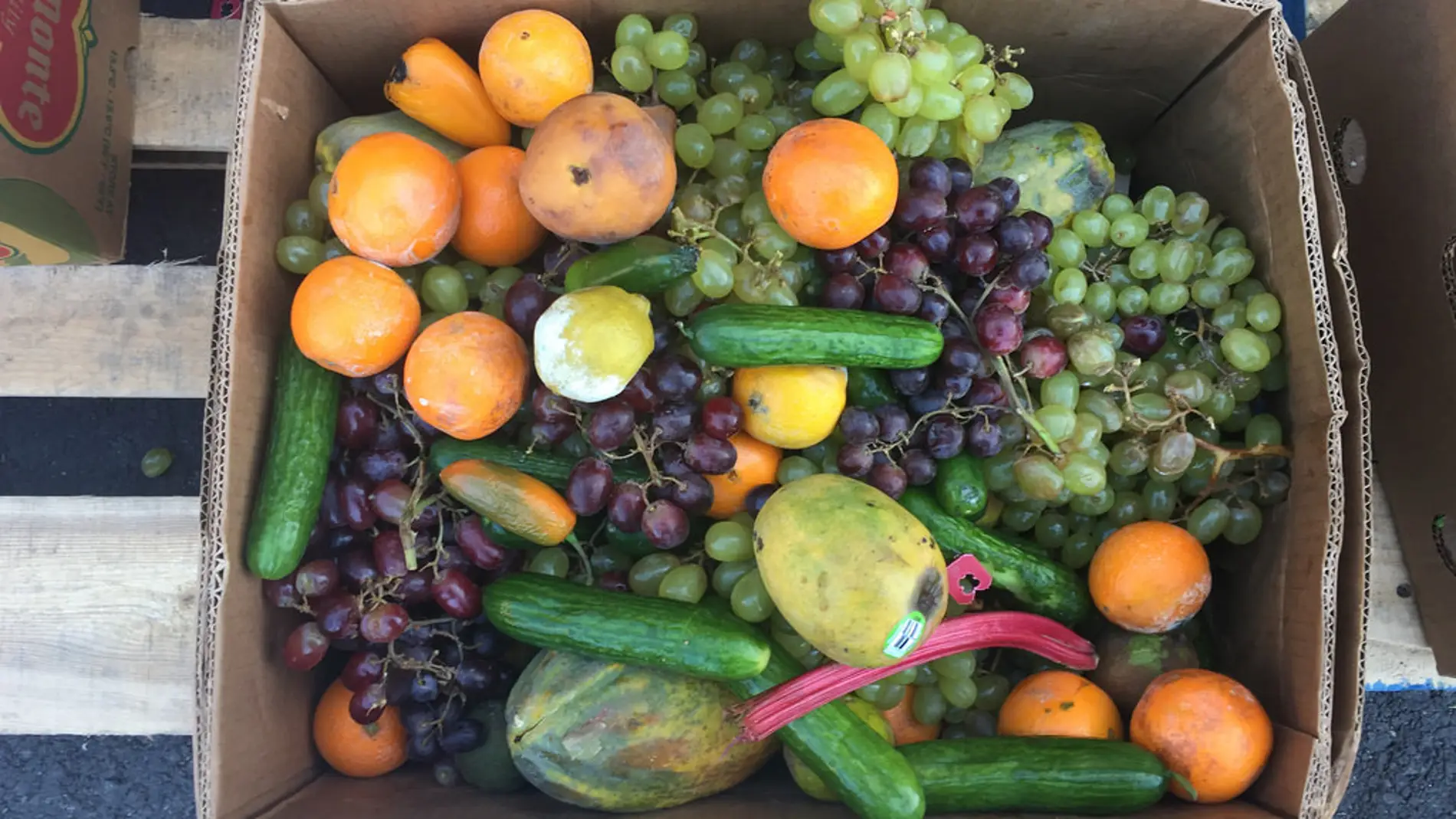 Innovation with AI in food: can detect pesticides.
This is an easy-to-use invention capable of detecting pesticide residues in agricultural products, such as fruits and vegetables, in a non-invasive way.
The device uses a technique known as spectrophotometry, which involves measuring how light of different wavelengths is reflected on the surface of the food.
Distinguished as the best scientist
The invention served the young boy to be crowned as the winner of the “3M Young Scientist Challenge,” held by 3M and Discovery Education. It is the main science competition for high schools in the United States.
He was hailed as the “Best Young Scientist in America.” He received a cash prize of $25,000 (approximately €23,000 at the exchange rate) for his innovative invention.
They faced a series of interactive challenges and were evaluated for their ingenuity, innovative thinking, applications of STEM principles (Science, Technology, Engineering, and Mathematics), presentation skills, and ability to inspire others.
Pestiscand met all the objectives of the project in terms of effectiveness and speed.
“My parents always insist on washing fruits and vegetables before consuming them. I wondered: ‘To what extent is this really necessary and how effective is washing?’,” said Sirish Subash, from an Indian family, in an interview with the Global Indian media.
The young student received support and mentoring from Aditya Banerji, a research engineer at 3M’s Corporate Process Lab, who helped him turn his idea into a functional prototype.



