



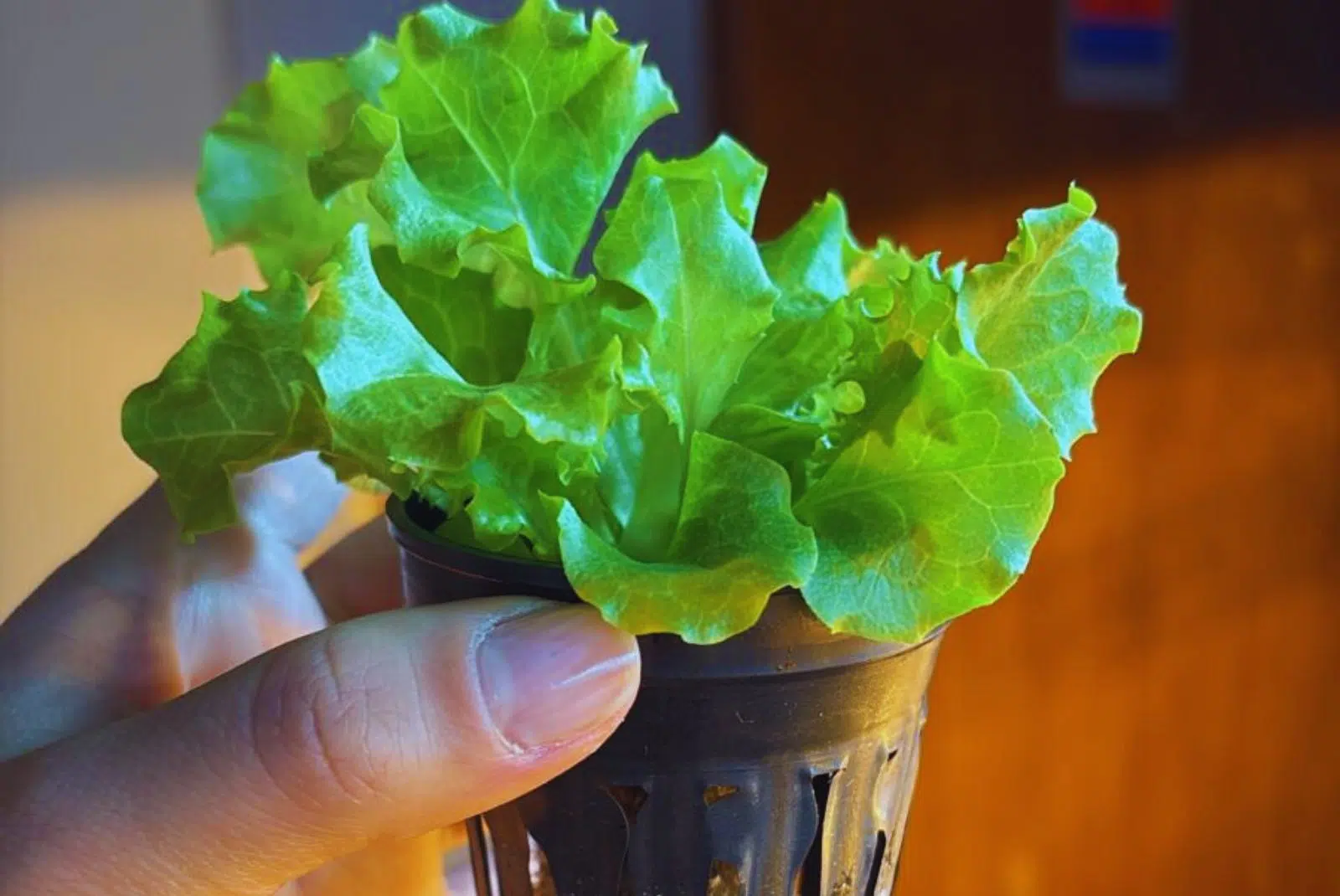
The INTA and the National University of La Matanza (UNLaM) are working on optimizing a compact and accessible hydroponic module that allows the production of fresh vegetables in small spaces and under variable climatic conditions.
The project is inspired by the experience of the Antarctic Hydroponic Production Module (MAPHI), designed to generate food in one of the most hostile environments on the planet.
The proposal seeks to transfer that knowledge to a smaller scale, aimed at domestic use. The goal is for any family to have an efficient and economically viable device to produce food at home.
A prototype adapted to everyday life
According to Jorge Birgi, a researcher at the INTA Santa Cruz Experimental Station, the new module is a “condensed” version of the technologies used in Antarctica, with additional functions designed to facilitate its handling in household settings.
The idea is to transform a complex system, designed for isolated environments, into a compact and accessible prototype that ensures stable vegetable production in any context.
Meanwhile, Martín Díaz, the project director, highlighted that the collaboration between both institutions will add technical tools that will enrich the prototype and turn it into a marketable product. “It is a module designed to produce vegetables isolated from environmental conditions, controlling all variables: temperature, light, and nutrients,” he noted.
Technology tested in extreme conditions
The MAPHI experience allowed the development of a complete technological package: compatible substrates, adapted seeds, treatment protocols, and specific nutrient solutions for extreme environments. Monitoring systems with sensors and electronic boards were also designed to collect and analyze data easily for operators.
The challenge is to transfer these technologies to a smaller and more practical format that can be used in homes and urban spaces. The prototype incorporates new functionalities that facilitate its handling and ensure the production of fresh food regardless of external conditions.
Towards a commercial product
The joint project between INTA and UNLaM includes the development of a business plan to turn the prototype into a commercial product.
A market study will be conducted to identify potential users and define the final price of the system. Additionally, work is being done on an intuitive interface that will allow the module to be managed through a mobile application.
The result will be a series of technical documents that characterize the users, detail the data collection platform, and define the construction materials.
A project with social impact
The initiative is part of the call for Technological and Social Development Project (PDTS), promoted by the National Interuniversity Council (CIN) and the European Union (UNIUEAR).
The objective is for the technology developed in the extreme conditions of Antarctica to become a useful tool for society and the productive sector, offering innovative solutions for food production in small spaces.
The domestic hydroponic module being developed by INTA and UNLaM represents a step towards the democratization of fresh food production.



