



An American company managed to transmit 1.1 kilowatts of electricity from space using laser technology.
This surpasses the previous record and opens a new era for satellite energy.
Star Catcher set a historic mark by demonstrating that wireless electricity transmission is viable with standard commercial equipment.
The test was conducted at the Kennedy Space Center in Florida during 2025, using conventional solar panels without special modifications.
How the technology that transmits electricity from space works
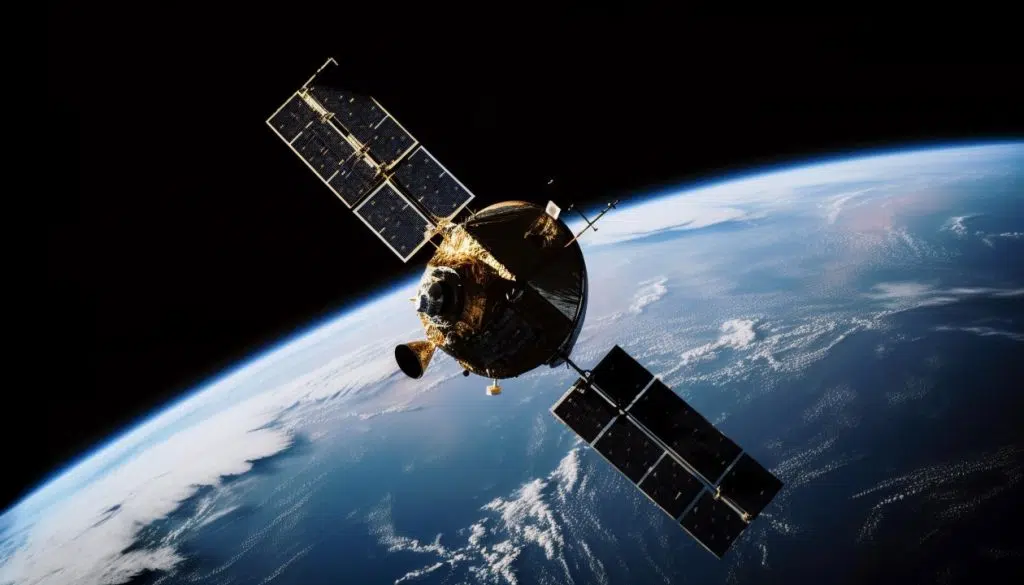
The system employs a multispectral optical laser powered by solar panels in orbit that concentrate energy towards other satellites.
In contrast to traditional microwave methods, this technology takes advantage of wavelengths that best capture commercial photovoltaic panels.
The company claims that the system can improve between two and ten times the original energy generation of a satellite, without the need for exotic hardware.
“Standard commercial solar panels were used in the tests,” confirmed the company.
Thus, compatibility with equipment available on the market is demonstrated.
In this way, the innovation allows for a significant reduction in the mass and costs of satellites by eliminating the need for large own solar panels.
The benefits include:
- More efficient propulsion systems with greater energy availability
- More powerful scientific instruments without consumption restrictions
- Telecommunications antennas with expanded capabilities
- Reduction of orbital debris by avoiding oversized designs
For satellite constellation operators, this means more economical launches and more scalable missions.
The environmental applications of the new development
The orbital electricity transmission opens possibilities to improve environmental monitoring through more powerful instruments.
Satellites could perform more effective monitoring of forest fires, droughts, and ocean currents with sensors that previously consumed too much energy.
The technology also contributes to optimizing launches with more compact satellites, reducing the carbon footprint of the space industry.
The next steps
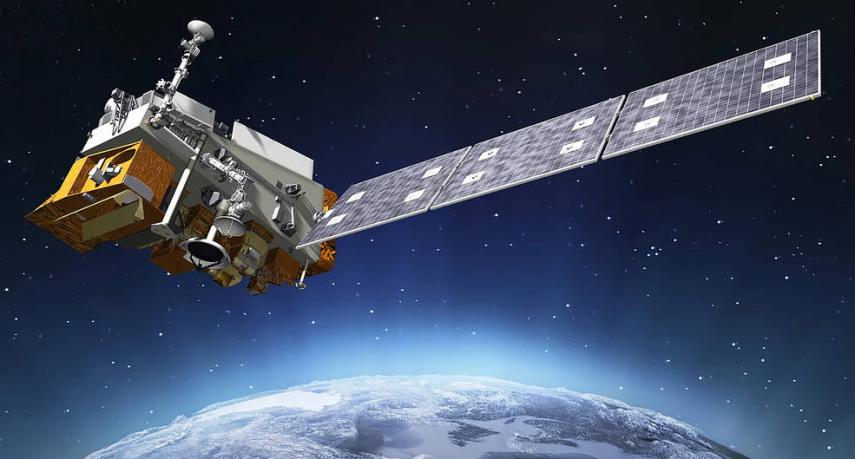
The 2025 test surpassed the previous DARPA record of 800 watts and set a new standard for wireless power transmission.
Now, Star Catcher plans an orbital demonstration in 2026 that will validate the laser beam’s stability and efficiency in real space conditions.
According to the company, there are already power purchase agreements with private operators, indicating commercial confidence in the system.
The shared electricity in orbit represents a step towards a more sustainable and efficient space infrastructure for the coming decades.



