



Adrián López and Marte Cásares developed nopal leather. They transform the iconic Mexican nopal into vegan leather, combating deforestation and animal cruelty since 2019 with their brand Desserto.
This innovative material, used in handbags, garments, and even automotive upholstery, was born after two years of research in Japan, where both young entrepreneurs — then under 30 years old — identified the devastating environmental impact of the textile and automotive industries.
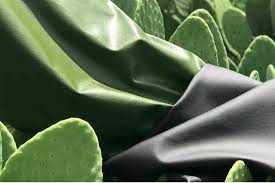
Origin of a green idea with nopal leather
López (automotive sector) and Cásares (fashion) were seeking an alternative to traditional leathers, responsible for significant CO₂ emissions and deforestation due to intensive livestock farming.
“You have to deforest to make room for cattle, which emit a lot of CO₂,” explains Adrián. The nopal, a Mexican national symbol, emerged as a solution: it captures 9,000 tons of carbon annually in its crops, requires only 20% of the water needed for corn or wheat, and is harvested twice a year in arid lands.
 Mexican nopal used, through an innovative process, to obtain nopal leather[/caption>
Alliance with the Mexican countryside
The production involves farmers like Don Francisco in Zacatecas, whose organic nopal cultivation has been certified for 15 years.
The collaboration, however, faced cultural challenges: “We asked for seismic and security alarms, but in the countryside, there are no earthquakes,” Adrián recounts.
The process takes advantage of natural conditions: the nopales are crushed using local technology, dried in the sun for four days, and pulverized. The resulting powder is sent to factories in Guadalajara and Italy to be turned into leather, with plans to open a plant in Asia to reduce the logistical footprint.
Innovation facing challenges with nopal leather
Although the material avoids dyes (using organic pigments) and is produced without harming animals, Desserto faces skepticism. “There is a misconception that plant-based automatically means sustainable,” warns López, citing cotton as a counterexample.
The designer Cristina Alfaro, a collaborator of the brand at Casa Mandarine (Mexico City), highlights its advantages: “Physically, it resembles leather a lot,” although she admits technical difficulties: “It cannot be thinned like other skins.”
Their products, under the brand OCA, attract especially tourists willing to pay more for sustainable items.
 Nopal leather in the fashion industry
Towards a cleaner industry
Next steps include optimizing processes: they are researching the use of nopal waste in biodigesters to generate energy in their factories. Adrián emphasizes that sustainability “should not only sound nice but be a reality.”
With prices higher than synthetic leather but lower than animal leather, they aim to scale up production without increasing costs: “We adapt our patented recipe to existing processes to be accessible.”
Nopal leather demonstrates that innovation can unite luxury, tradition, and planetary respect. Its success redefines the future of fashion, turning a Mexican icon into global hope.



