



Did you know that a **simple drop of water could generate electricity**? Piezoelectricity and triboelectric nanogenerators (**TENG**) have opened the door to a form of [renewable energy](https://noticiasambientales.com/energia/alemania-implementa-el-uso-de-capsulas-solares-con-calefaccion-para-dar-refugio-a-las-personas-sin-hogar/), rain energy, or **”blue energy”**.
Even though the amount of energy generated by a drop is minimal, **scientific advances are transforming** this idea into a viable technology for specific devices.
## Technological Advances: From Theory to Practice
“Piezoelectricity” studies the **electric current generated by materials** when they deform due to the impact of water drops.
The initial studies on **rain energy in the 2010s** faced the challenge of generating a significant electric current. However, the development of triboelectric nanogenerators (TENG) in 2012 marked a turning point.
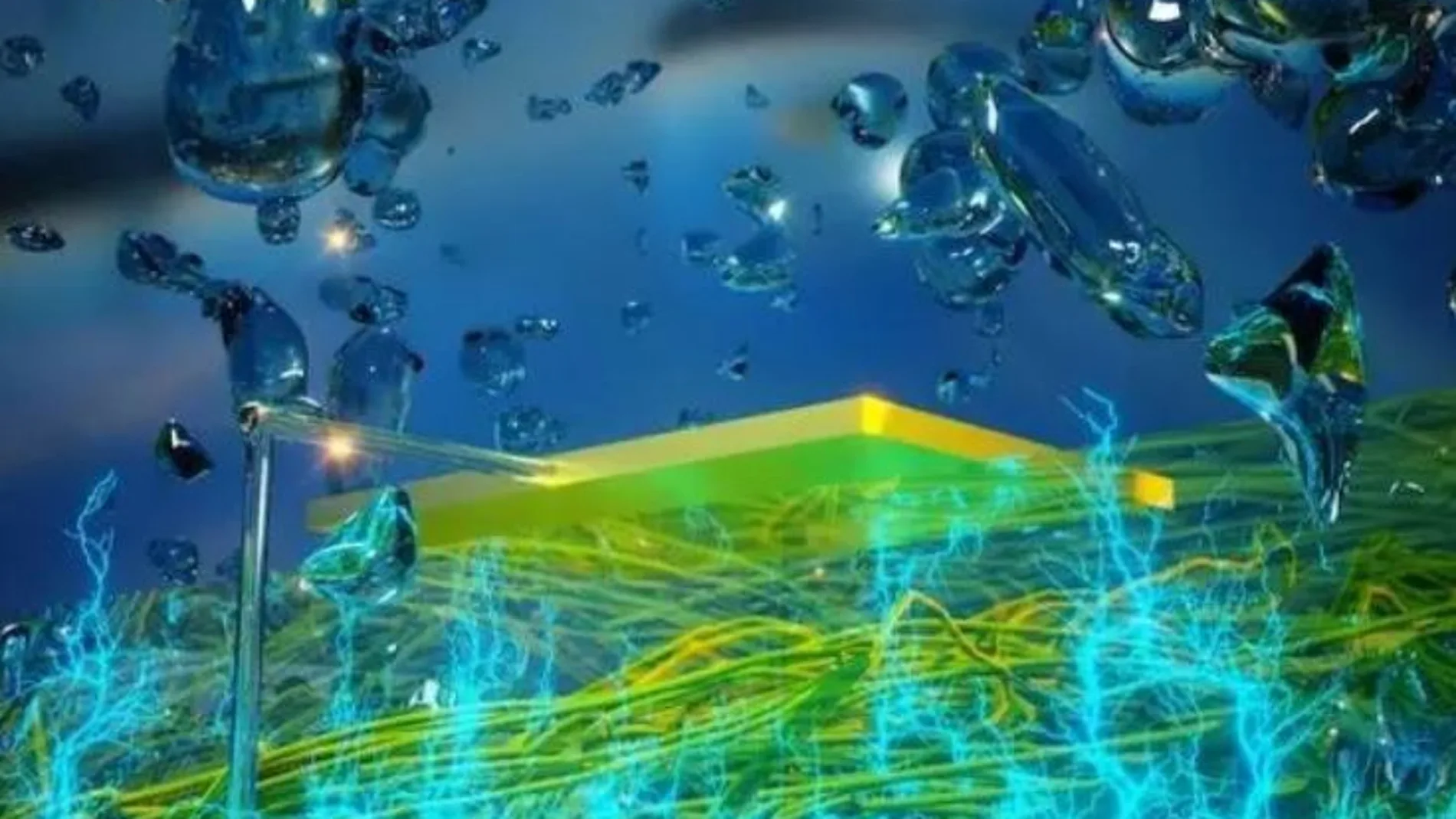
These devices harness triboelectrification, an exchange of electric charges that occurs when a water drop impacts and separates from a special surface.
Researchers achieved significant milestones:
– Scientists from [City University of Hong Kong](https://www.cityu.edu.hk/) created a generator that, with a single drop, lit up 100 LED bulbs.
– A physicist from the **University of Twente (2020)** devised a mechanism that produces stable electric charges for months, a crucial advancement for storing this energy.
## The Uses of Rain Energy and the Combination Proposed by Spanish Scientists

Despite these advances, it is unlikely that this **energy will replace solar power or charge a cell phone**. The energy contained in rain is **less than 0.1% of [solar energy](https://noticiasambientales.com/energia/el-sol-como-motor-el-quemado-impulsa-un-cambio-energetico-con-el-parque-solar-mas-grande-del-pais-en-mendoza/)**. Its true potential lies in **powering low-consumption devices**. Blue energy could be the solution for:
– Environmental sensors and wearable devices.
– Systems in pipes and rivers that do not require batteries.
– Internet of Things (**IoT**) technologies and smart cities.
Now, an ambitious project led by Spanish researchers from the **Institute of Materials Science of Seville**, called **3DScavengers**, aims to **create transparent solar panels** that also generate electricity from rain. These **hybrid solar-rain panels** would be a constant source of energy, regardless of the weather.
They are also working on the **DropEner project for which they have developed thousands of small minigenerators called Trecxels**, which are smaller than a drop. Indium tin oxide makes them transparent so they can be placed on panels, windows, or roofs without being intrusive.
Although they face challenges such as drop speed, these innovations demonstrate the potential of an energy source that does not require fuels and is completely self-sufficient.


