



The capital of Finland is implementing artificial intelligence and remote monitoring to improve the efficiency of urban maintenance of green spaces and reduce environmental costs.
During the summer, the city of Helsinki launched a pilot project that combines satellite data and artificial intelligence to manage its parks and green areas more efficiently.
This initiative aims to reduce resource usage, improve operational planning, and move towards a model of sustainable urban development.
Three axes of intelligent monitoring
Lawn, invasive species, and fertilization guided by historical data.
The pilot focused on:
- Supervision of lawn condition
- Identification of invasive plants
- Guidance for fertilization based on previous summer data
One of the goals was to estimate the length of the lawn to avoid unnecessary mowing and inspection visits that consume time, personnel, and fuel.
Technology applied to urban landscape
Satellite monitoring allows detecting problems without direct intervention.
The selected parks were large and treeless, which facilitated the analysis of plant growth. This condition also allowed identifying concentrations of lupins, an invasive species that alters local ecosystems due to its ability to fix nitrogen and displace native flora.
“Controlling lupins at the right time and place improves the efficiency of eradication measures,” explained the technical team.
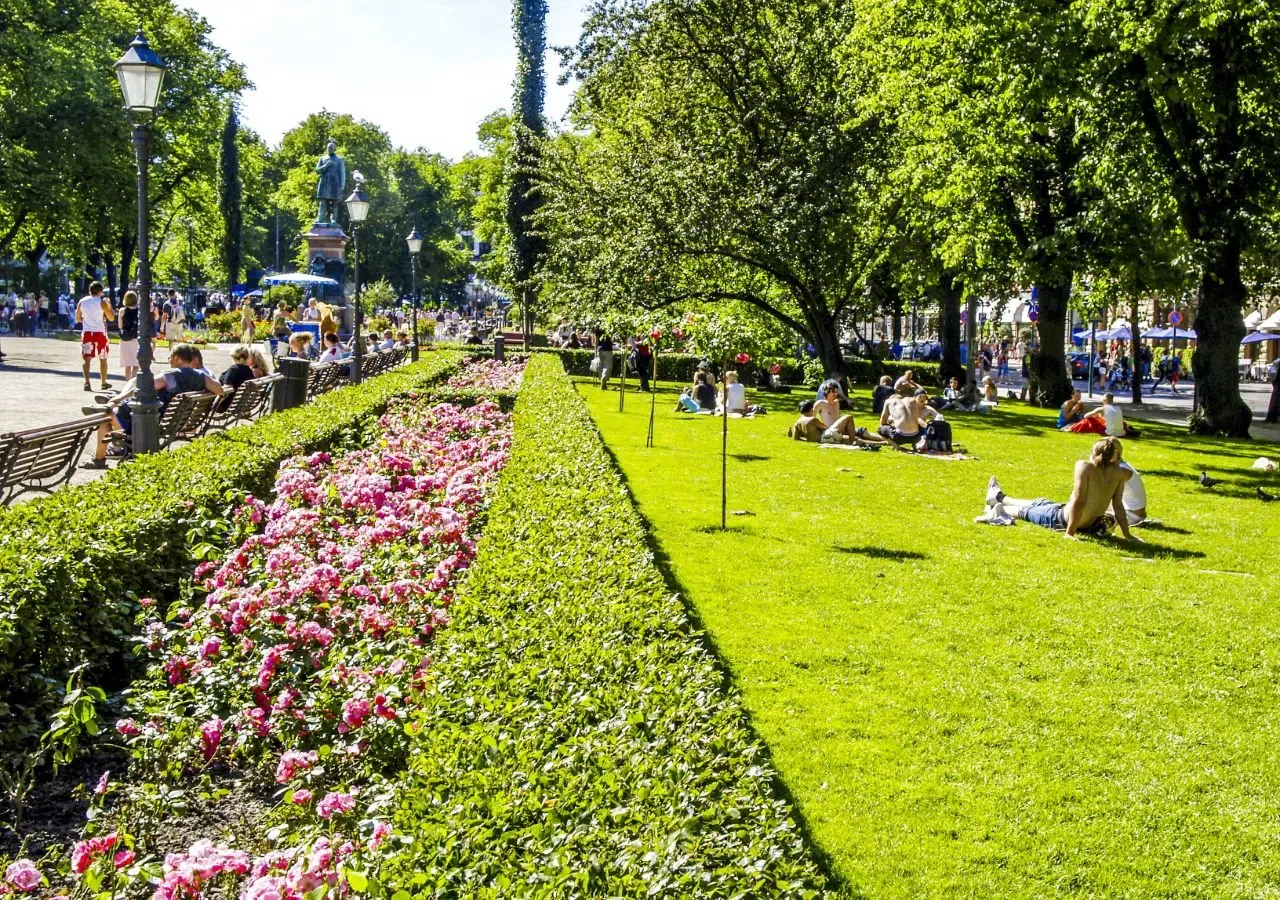 The Finnish city of Helsinki has been testing how artificial intelligence (AI) can improve green spaces.
Field validation and report improvement
The Metropolia University of Applied Sciences verified the data through on-site measurements.
Field visits allowed to adjust the system’s accuracy, correcting issues such as insufficient report frequency and the delay between satellite capture and result delivery.
This prevented decisions based on outdated data, such as mowing grass that was already too tall.
Green spaces: pillars of a sustainable city
Urban green spaces offer multiple benefits:
- Improve air quality by absorbing pollutants and releasing oxygen
- Regulate the microclimate, reducing temperature and increasing humidity
- Manage water, preventing floods and recharging aquifers
- Preserve biodiversity, offering habitats for flora and fauna
Physical, mental, and community well-being
Parks promote health and strengthen social bonds.
- Promote physical activity and combat sedentary lifestyles
- Reduce stress and improve mood
- Stimulate socioemotional development in children
- Enhance social cohesion as community meeting points
Green technology for resilient cities
The integration of data and nature is key to addressing climate change.
“Innovations like this are essential for sustainable urban development,” stated Mirka Råberg, director of the Pilot Green project.
Green spaces act as carbon sinks, mitigators of extreme events, and climate adaptation strategies, consolidating their role as vital infrastructure for urban resilience.



