



By: Nasha Cuvelier
Creating a comprehensive summary of the conference is a task that will inevitably remain incomplete considering that the COP brought together more than 50,000 participants and over a hundred official documents were discussed.
In general terms, the organization and logistics proved highly challenging for numerous delegations: exorbitant prices in accommodations, extreme temperature and humidity conditions inside and outside the official areas, tropical rains that leaked into the main tent affecting stands, and even a small fire (quickly controlled) whose images circulated widely.
In terms of procedures and ambition, different countries reported that the results were insufficient. During the final plenary, the objections raised by Colombia and Uruguay (on behalf of other delegations) were not incorporated into the adopted text.
Despite these limitations, from Sustentabilidad Sin Fronteras we consider it important to highlight the following points:
A challenging context
This COP was not exempt from the international context. Simon Stiell, president of the UNFCCC, said at the closing “We knew this COP would take place in a stormy political context. Denialism, division, and geopolitics have dealt hard blows to international cooperation this year.” However, it is worth noting that after the United States withdrew from the Paris Agreement, that act did not echo and the remaining 194 member states stood firm.
Although the outcome of the negotiations is not up to what the best available science suggests would be the safest and most sensible, it is also true that without these spaces we would likely be much worse off. Before the signing of the Paris Agreement, the projected increase in global temperature by the end of the century was 4°C, and today it is closer to 2°C. However, the organization Climate Action Tracker published its latest projection of global warming according to the level of ambition of the NDCs. The estimate remains at 2.6 °C for 2100, indicating that there has been “little or no measurable progress” in the last four years.
With all its challenges, multilateral diplomacy and the United Nations spaces have proven beneficial in the search for peaceful solutions to complex global problems.
The abandonment of fossil fuels, no roadmap
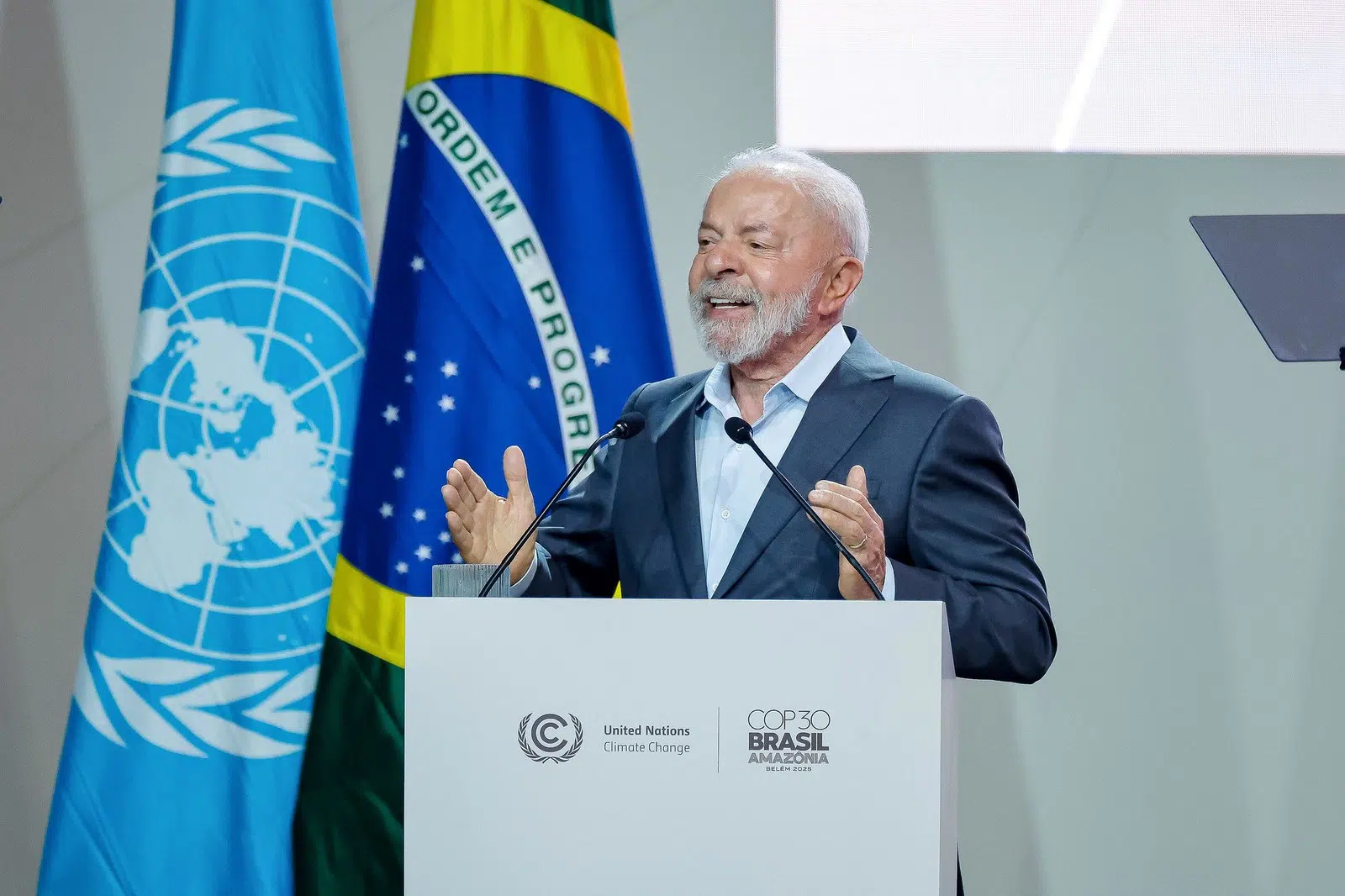
The proposal to create a “roadmap” to move away from fossil fuels marked much of the discussion at COP30, although it was not part of the official agenda. President Lula publicly pushed the idea by calling for a global plan to overcome the dependence on oil, gas, and coal. In the early days of the COP, several countries supported the proposal along with various civil society organizations. As negotiations progressed, support grew to about 80 countries, including producing nations like Colombia, Australia, Norway, and Guyana.
Despite the political momentum, there was uncertainty about whether the roadmap would be integrated into the negotiated text or handled separately. An initial draft of the main agreement (“global mutirão”) included options to mention it, but with weak formulations. Many ministers called for strengthening it. Meanwhile, a large group (also estimated at about 80 countries) expressed rejection, including petro-states like Saudi Arabia and Russia. However, that list was never made public. The EU added its support later and proposed its own language.
Even so, subsequent drafts removed all references to the roadmap. Several countries sent letters warning they could not support a text without that mention.
On Friday, 24 countries signed the “Belém Declaration on the Just Transition away from Fossil Fuels” and Colombia and the Netherlands announced they will organize the first international conference on energy transition in Santa Marta in April 2026.
At the closing, the president of COP30 admitted that some countries wanted greater ambition and announced that the presidency will develop two parallel roadmaps (one on fossil fuels and another on deforestation) to be presented at the next COP, outside the formal process.
Adaptation, advances, and frustrations
COP30 was presented as the “COP of adaptation.” The main outcome was the adoption of 59 indicators to measure progress in the Global Goal on Adaptation (GGA), far below the 100 initially proposed. A two-year process (“Belém–Addis”) was also agreed upon to continue refining them.
The central debate revolved around financing for adaptation. The final text of the mutirão calls for efforts to triple financing by 2030 (compared to 2025), although without clear amounts or an official baseline. This dilutes firmer requests from vulnerable countries, which demanded tripling funds by 2030. Current financing is very insufficient: in 2023, USD 26 billion was delivered, far from the USD 310 billion annually estimated by UNDP.

New fund for tropical forests
Personally driven by Lula, the “Tropical Forests Forever Fund” (TFFF) was launched. Its goal is to pay countries for keeping their tropical forests standing, combining public and private financing. It seeks to raise USD 25 billion from donor countries and philanthropies and attract another USD 100 billion from the financial market. At its launch, it received USD 6.6 billion from Norway, Brazil, Portugal, France, the Netherlands, and Germany. It was supported by 53 countries.
The mechanism could benefit 74 forest countries, including those in the Amazon and the Congo. However, experts question complex requirements to access the funds (such as transparent financial management and allocating 20% to indigenous peoples) and warn that conservation should not depend on financial volatility. More than 150 indigenous and civil society organizations criticized the initiative for not addressing the structural causes of deforestation or prioritizing local communities.
Financing
Financing was not the central theme of COP30, but it influenced almost all discussions. India, the Arab countries, and other developing countries managed to include a new work program on climate financing and the goal of tripling financing for adaptation in the mutirão.
Most of the debates were linked to the new global goal agreed upon in 2024: USD 300 billion annually by 2035 and a broader goal of USD 1.3 trillion, considered insufficient by many developing countries. Recent estimates indicate that to meet the goals of the Paris Agreement, much larger investments are required: between USD $6.3 and 6.7 trillion per year by 2030, and USD$7 to 8.1 trillion per year by 2035. Donor countries (EU, UK, Japan) resisted more ambitious targets, citing internal fiscal pressures.
Developing countries insisted that public financing is mandatory under Article 9.1 of the Paris Agreement, while developed countries advocated for a broader interpretation that includes private capital. A 2-year program was adopted that reaffirms the goal of mobilizing 1.3 trillion dollars annually by 2035, but without execution and control mechanisms, and includes a commitment to triple adaptation financing compared to recent levels.
Regarding the USD 1.3 trillion goal, the “Baku–Belém” roadmap (which primarily foresees private financing) was mentioned only as a reference, although the final text calls for “urgently advancing” towards that scale of financing by 2035.
New Just Transition mechanism
The work program on just transition (JTWP) concluded with what many organizations consider a victory for civil society: the creation of an institutional just transition mechanism. Inspired by the proposal of the “Belém Action Mechanism” (BAM), this new space will provide technical support, coordination, and assistance to countries to advance in just transitions in a more structured and accessible way. Its approval came despite resistance from countries like Norway and the United Kingdom, which argued duplication of efforts and lack of financing, and the EU’s alternative proposal for a less ambitious action plan.
After two weeks of intense negotiations, countries managed to agree on a formal mechanism and not just a plan, something that was received with applause in the final plenary. Although the text was weakened in other areas (with no references to fossil fuels, critical minerals, or trade measures), this mechanism marks a historic milestone: for the first time, a COP decision explicitly incorporates labor rights, human rights, free, prior, and informed consent, and the inclusion of marginalized groups as pillars to accelerate a just transition globally.
Information integrity
For the first time, the integrity of information is being officially addressed. An international declaration was presented to combat climate disinformation and promote scientific and reliable information. The document, initially supported by ten countries, is based on human rights and the principles of the Paris Agreement.
Lula, Guterres, and the director of UNESCO highlighted that disinformation, denialism, and attacks on journalists and scientists threaten climate action and social stability.
The Declaration commits countries to strengthen informative integrity, protect those who research and communicate about the climate, strengthen diverse media, ensure equitable access to accurate information, and integrate these principles into the Action for Climate Empowerment agenda.

Indigenous peoples
Indigenous peoples represent only about 5% of the world’s population, but they conserve a very significant portion of the terrestrial ecosystems and have been presented as the “guardians of biodiversity.” Although there was historic participation from indigenous representatives (estimated at over 3,000), much of it was symbolic: only a fraction accessed the decision-making spaces.
In a text during COP30, the executive secretariat of the UNFCCC recognized that the health of the land, water, and sky is inseparable from the health of communities, emphasizing that indigenous peoples must have real participation in decision-making, not just visibility.
Although some symbolic advances were made (such as designating territories, incorporating indigenous rights in official documents, and opening spaces for public dialogue), these advances are still insufficient to guarantee a just climate transition, inclusive and respectful.
The role of subnationals
Before the formal start of COP30, within the framework of the Local Leaders Forum, the Pact presented the publication “The strength of cities: Latin America’s call to action at COP30”, which brings together more than 100 climate projects already underway in cities across Latin America.
With this initiative, subnational governments seek to demonstrate that climate action does not wait: many cities are already implementing mitigation, adaptation, energy transition, food security, citizen participation, and social inclusion measures.
The goal is to give visibility to local leadership, positioning mayors, governors, and regional authorities at the center of the global climate agenda, and connecting these concrete actions with the international debates of COP30.
The forum functioned as a multilevel governance platform, bringing together Summits and Forums (such as the C40 Cities mayors summit, the Amazon Cities Forum, the Global Summit of States and Regions, among others) to coordinate, share experiences, and mobilize local solutions towards global objectives.
In a context of growing climate denialism at national/federal levels, the role of subnational governments becomes even more relevant as they keep climate policy alive and implement local solutions.
Argentina at COP30
Argentina participated in COP30 with a minimal delegation, consisting of only three representatives: two technicians and a single political authority, the director of Environmental Affairs of the Foreign Ministry.
The country did not present the update of its climate commitments (NDC 3.0), scheduled for this summit, and lacked a clear roadmap in terms of mitigation, adaptation, and rights protection.
In key negotiations (including energy transition, gender, human rights, and climate justice) Argentina adopted restrictive positions, in evident contrast to the global demands for greater ambition and coherence with climate science.
However, the participation of subnational governments stood out with the participation of 9 provinces and several municipalities.
Conclusion
Evaluating the results of COP30 in binary terms (success or failure) would be inaccurate and insufficient; it is not entirely accurate to evaluate progress year by year but as a process. The summit left slight and moderate advances on various fronts, including adaptation, financing, forest protection, and just transition, all in a context marked by unprecedented geopolitical challenges where the rise of far-right movements and questioning of multilateralism stand out. In this reality, it is significant that international diplomacy spaces remain active and that the 194 States Parties to the Paris Agreement continue to be committed to this process.
However, the science is clear, and reality shows us day by day, the current ambition and implementation of what has been committed is widely insufficient to set the world on a development path compatible with a safe climate. The results of this COP can be measured based on what we do from now until 2030, and that path is defined today in the concrete decisions made by governments, companies, and civil society to accelerate a just transition aligned with science.


