



By: Nasha Cuvelier, co-founder of Sustainability Without Borders
The meeting of the parties to the United Nations Framework Convention will take place from November 10 to 21 in Belém, Brazil. It has been 170 years since the first scientific document on CO2 and Global Warming thanks to the work of Eunice Newton and 33 years since the signing of the convention, and the results are still not up to the circumstances.
The concentration of CO2 in the atmosphere reached a concentration of 430 PPM in May 2025, far from the 350 PPM established as the limit for a safe climate.

What to expect?
Considering the history of the COPs, if the expectation is that in Belem Climate Change will be resolved, it is not understanding the complexity of the problem and the long-term vision required. Likewise, if the expectation is that everything necessary will happen for us to be on a emission reduction trajectory aligned with what the best available science recommends, we will also be disappointed. The same United Nations Secretary Antonio Guterrez confirmed that the 1.5°C target is unfeasible to achieve by 2030.
That said, it should be noted that emissions have reduced their rate of increase since the signing of the Paris Agreement.

Energy & Climate Intelligence Unit. (2025). Ten years after Paris: the growth of global emissions in sharp slowdown. Retrieved from https://ca1-eci.edcdn.com/reports/10-Years-Post-Paris-Emissions.pdf?v=1758746633
The main conclusion we must take from this graph is that multilateralism “works” and it is desirable for global leaders and their governance institutions to meet, reach consensus, and develop aligned strategies towards a safe climate for humanity.
So, what can we expect from COP30 in Belém 2025? To begin with, that Climate Change continues to be seriously discussed at the highest levels of global governance in a context where the election of denialist leaders is growing.
Furthermore, last year the global balance was presented, which is the five-year evaluation of the Paris Agreement that measures where we are and what is missing. Its conclusion was forceful, we are not on a 1.5°C trajectory and emission cuts of 43% by 2030 (compared to 2019), 60% by 2035, and neutrality by 2050 are needed, in addition to tripling renewables and doubling energy efficiency this decade, and transitioning away from fossil fuels in a fair and orderly manner. New announcements are expected within and outside the framework of the convention of countries and coalitions aligned with these objectives.
Regarding financing, the new collective long-term goal adopted at COP29 must be implemented, suggesting a floor of USD 300 billion per year by 2035 and a roadmap to mobilize up to USD 1.3 trillion annually from all sources, led by developed countries. It is worth noting that these amounts are on paper, and much remains to be done to effectively mobilize these funds. Additionally, it is worth noting that from civil society and academia, it has been pointed out that these amounts are insufficient to address climate change on its three fronts: mitigation, adaptation, and loss and damage.
Furthermore, in 2024 the pending rules of Article 6 were closed, which introduces market and non-market mechanisms, such as the trade of certified emission reductions (known as carbon credits) and voluntary cooperation between States to transfer mitigation outcomes. This year the focus will be on implementation with integrity, transparency, and traceability, seeking to avoid paper credits.
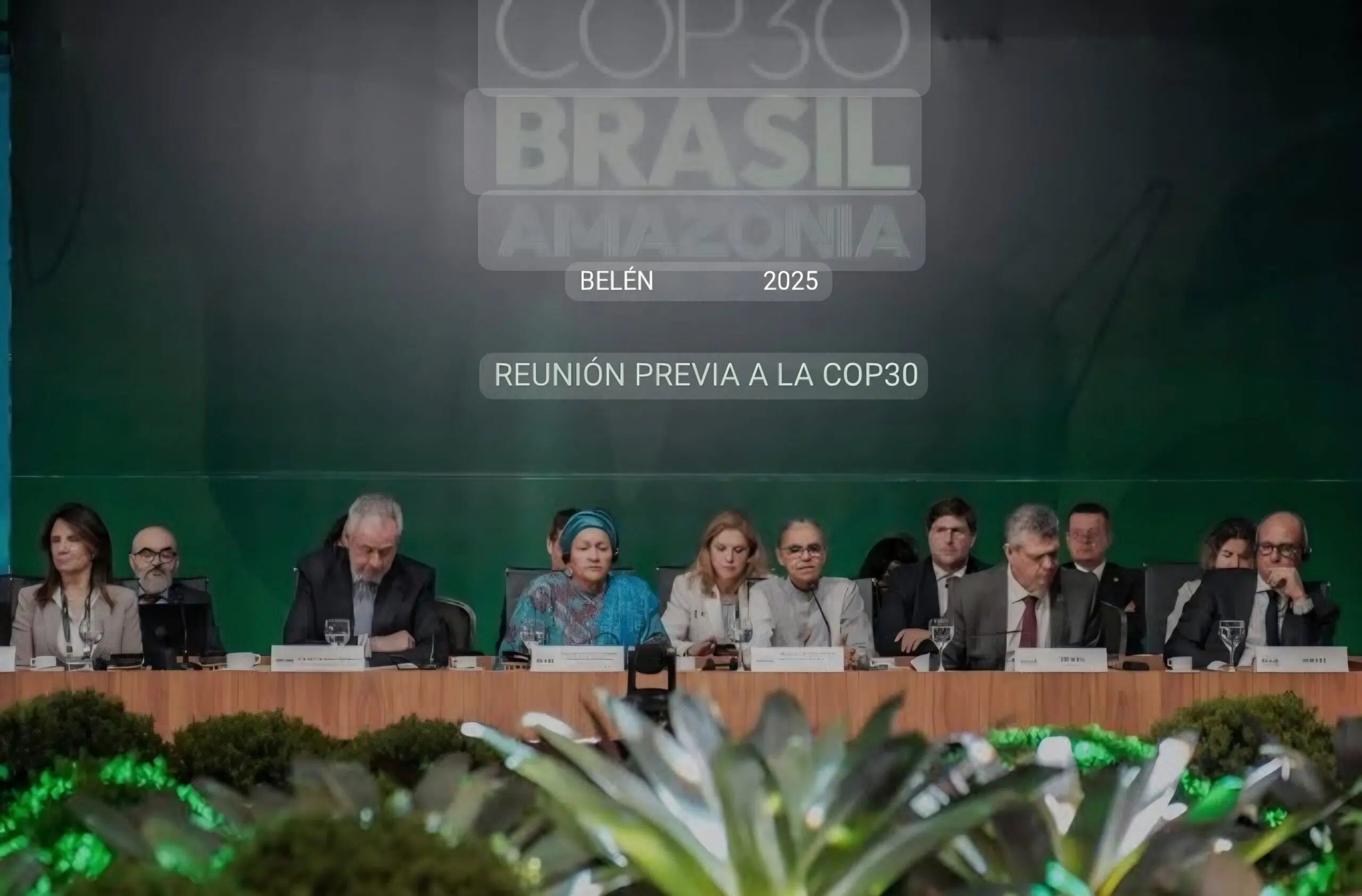
Presidency Priorities
Lula calls at COP30 to separate geopolitical conflicts from climate urgencies. Brazil pushes a narrative anchored in just transition, forests, and indigenous peoples, with the Amazon as the stage and symbol. The idea is to connect climate goals with real productive development (not just promises) and organize instruments that bring investment to the conservation of tropical forests and the technological reconversion of intensive sectors.
Additionally, one of the priorities for the presidency is to increase the levels of commitment to the climate change adaptation agenda. “Without adaptation, climate change becomes a multiplier of poverty,” states COP 30 President André Aranha Corrêa do Lago in a new letter sent to delegates traveling to Belém.
Argentina’s Participation
Beyond the questionable participation of national government officials, Argentina will be present with representatives from subnational governments, academia, the private sector, journalists, and NGOs.
It is worth noting that in the national context of climate denialism, leadership will fall more heavily on subnational governments. Environmental authorities from at least nine provinces are confirmed: Entre Ríos, La Pampa, Santa Fe, Jujuy, Misiones, Chaco, Buenos Aires, Córdoba, and San Luis. At the national level, presence is expected through Foreign Affairs, which would return to the COP after the early departure in Baku.
The national government announced the presentation of its NDC 3 on Monday, November 3, in a virtual event. The content comes with reservations, as there was no public participation process or call to the external advisory council created by the National Climate Change Law (Law 27.520), raising questions about ambition, governance, and monitoring mechanisms.
As a reference for the debate, from Sustainability Without Borders (SSF) we coordinate a National Climate Action Observatory that shows that 73% of 100 national objectives surveyed are at high risk of non-compliance by 2030. This highlights the urgency of landing policies and budgets in the territory.
A Less Inclusive COP in Belém
Belém faces strained logistics that raised costs and tested the participation of delegations and civil society. The host’s measures alleviate but do not resolve a risk of exclusion that also weighs on the legitimacy of the process, a problem that tends to repeat in COPs, but here threatens to be one of the most exclusionary.
Conclusions
The COP30 could represent progress if it leaves a clear path between objectives, financing, and local execution in a complex international context. The standard is concrete: updates of the NDCs with sectoral targets for 2035, schedules, and responsibilities; rules that align financial flows with climate action and allow measuring disbursements and results; operational steps for loss and damage that enable projects in the short term; and a clear roadmap for Article 6 with verifiable environmental integrity.
From Sustainability Without Borders we seek to influence to contribute to the establishment of stable rules, traceable data, and coordination between different levels of national, provincial, and municipal government. Denying climate change will not erase its consequences. We must continue to work seriously on mitigation, adaptation, and loss and damage, translating commitments and papers into improving the quality of life for all people.


