



A study published in *Scientific Reports* by **Martin Ebert and Martina Kölbl-Ebert** revealed a **frozen-in-time extraordinary event**: exceptionally preserved fossils from the **Solnhofen region, Bavaria** show various Jurassic fish of the genus **Tharsis** with remains of **fossil squids** (**belemnites**) stuck in their mouths and gills.
The outcome was fatal: the fish died from suffocation after attempting to feed on what were **floating corpses covered in algae and bacteria**, mistaking them for live prey.
## The scene: oxygen-deprived lagoons and intact fossils
Solnhofen is renowned for its lagoon conditions from the **Late Jurassic**, which combined high salinity, low oxygen, and fine sediments. This environment allowed for the **almost intact preservation of dead animals**, capturing exceptional moments of prehistoric ecological behavior.
– **More than 4,200 Tharsis fossils** were reviewed
– **At least four documented cases** of fish with embedded belemnites were identified
– Some specimens come from collections like the **[Carnegie Museum](https://carnegiemnh.org/)** in Pittsburgh and the **Bergér Museum in Germany**
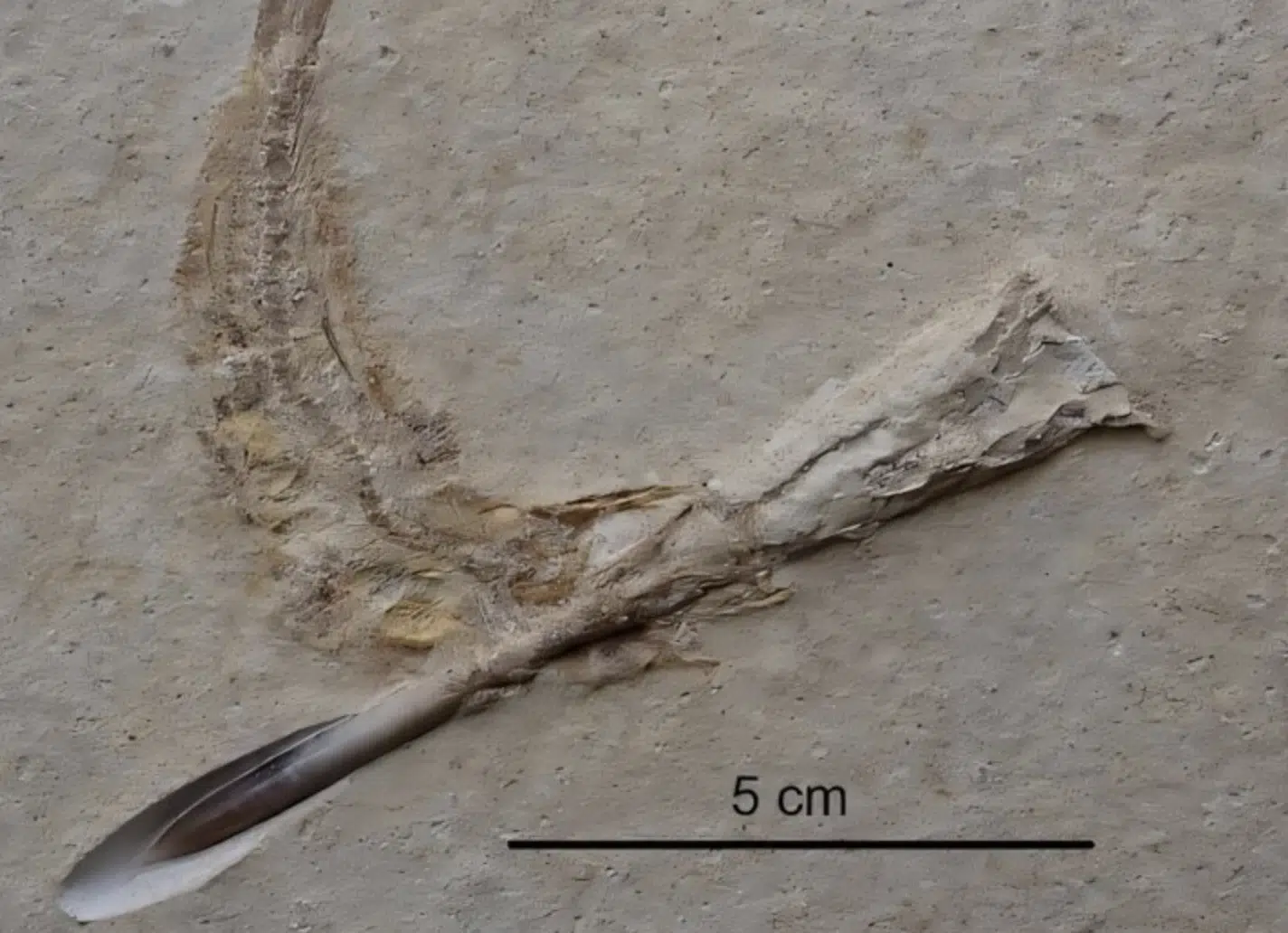
## Belemnites: floating deadly traps
The **belemnites**, cephalopods with a **hard, pointed rostrum**, were common in these seas. Upon death, their bodies floated for a while, covered by **biofilm and bacteria** that likely emitted odors resembling food. The Tharsis fish, measuring only **27 cm in length**, tried to suck them in as part of **their plankton diet**.
“Once the rostrum was sucked into the mouth, they couldn’t get rid of these deadly objects,” the authors described.
The **anatomic widening of the rostrum**, called **phragmocone**, prevented it from passing completely through the mouth, becoming a **lethal plug**. The subadult fish were trapped in a fatal cycle: they tried unsuccessfully to expel the object through the gills, blocking the water flow and **dying from suffocation**.
## Ecology of error: parallels with the present
The discovery not only reconstructs an **accidental trophic interaction from the past** but also offers a **disturbing parallel** with current issues:
– Today, it is known that **marine plastic covered in biofilm** emits odors that **attract fish and seabirds**, which mistake it for food
– The case of the Tharsis demonstrates that **lethal feeding errors** are not exclusive to the present but are part of ecological evolution
Furthermore, the abundance of Tharsis and the relative scarcity of belemnites suggest that the event was **rare but significant**, and that **the chain of anatomical and environmental coincidences** that allowed it makes it an **authentic time capsule**.
## Science, behavior, and conservation of Jurassic fish
This type of fossil documentation, so rare in its detail, **enriches our knowledge of Jurassic ecosystems** and reveals how the **shape of prey**, the **hunter’s behavior**, and **environmental conditions** can converge towards an unexpected outcome.
“It was not about hunting but about error,” the authors conclude, reminding us that **understanding the past** also helps **prevent ecological tragedies in the present**.
*Cover photo: Muy Interesante*


