



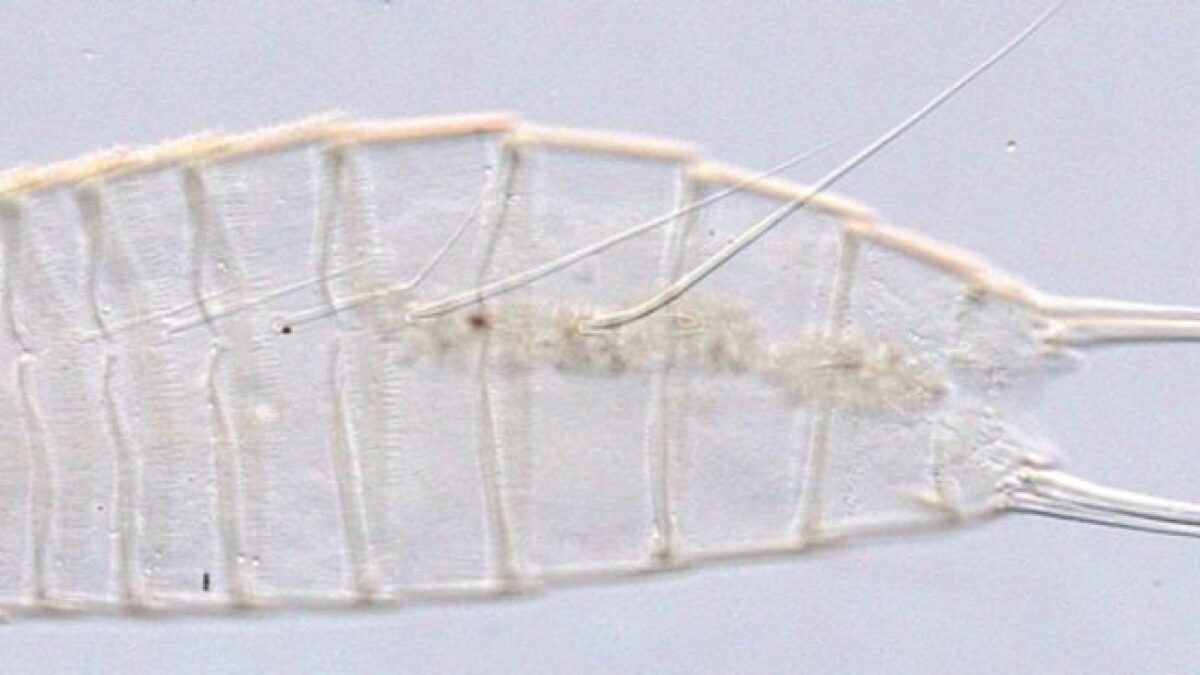
A group of researchers, led by the Complutense University of Madrid (UCM), identified a **new species of kinorhynch** in the South Pole, more specifically in the Southern Ocean’s [Orcadas del Sur Trench](https://noticiasambientales.com/medio-ambiente/cual-es-el-oceano-mas-pequeno-del-mundo/), at a depth of 6,000 meters.
This discovery expanded the knowledge about **biodiversity in hadal ecosystems**, those that exceed such depth.
The species, named **Echinoderes australis sp. nov.**, was added to a small group of kinorhynchs documented in hadal habitats. Before this discovery, only **two species of this type were known** at those depths, so the record increased by 33%.
These organisms, measuring between 100 micrometers and 1 millimeter, are part of the meiofauna, a key community for the [ecological balance of marine ecosystems](https://noticiasambientales.com/animales/por-que-las-ballenas-jorobadas-son-claves-para-los-ecosistemas-marinos/).
## The challenge of researching in the South Pole and international collaboration
The study, published in Zoologischer Anzeiger, described the new species in a challenging environment due to the **technical complexities of its exploration**.
For the sample collection, carried out in December 2019, the sediment was extracted in one-centimeter-thick layers down to five centimeters deep. Then, the specimens were separated using a **flotation method** and stained with a special pigment to **facilitate their identification**.
The kinorhynchs’ analysis was conducted at the **University of Southern Denmark**, where techniques of **optical microscopy and scanning electron microscopy** were employed, in addition to interactive keys and specialized bibliography.
The research results provided valuable information for the taxonomy of these invertebrates and for the understanding and conservation of **deep-sea marine ecosystems**.
The study involved collaboration from institutions such as the Federal University of Rio Grande (Brazil), the Japanese Agency for Marine-Earth Science and Technology, the French Institute for Research and Exploration of the Sea, as well as the UCM and the University of Southern Denmark.
Have you checked out our YouTube channel? Subscribe now!


