



A walk on the beach ended in an unexpected find on the coast of Santa Clara del Mar. Two tourists found fossil remains belonging to a huge prehistoric sloth that inhabited the region approximately 400,000 years ago.
The discovery occurred during a tour of the coastal cliffs. There, an orange sphere protruding from the sediment wall caught the attention of the visitors and sparked their curiosity.
As hours passed and the tide moved, the object became increasingly exposed. Faced with the possibility that it was not a simple rock, they decided to photograph it and consult specialists.
Subsequently, the material was analyzed by researchers from the Museo Municipal de Ciencias Naturales Lorenzo Scaglia, who confirmed that it was a fossil belonging to the megafauna that inhabited the Pampas region during the Pleistocene.
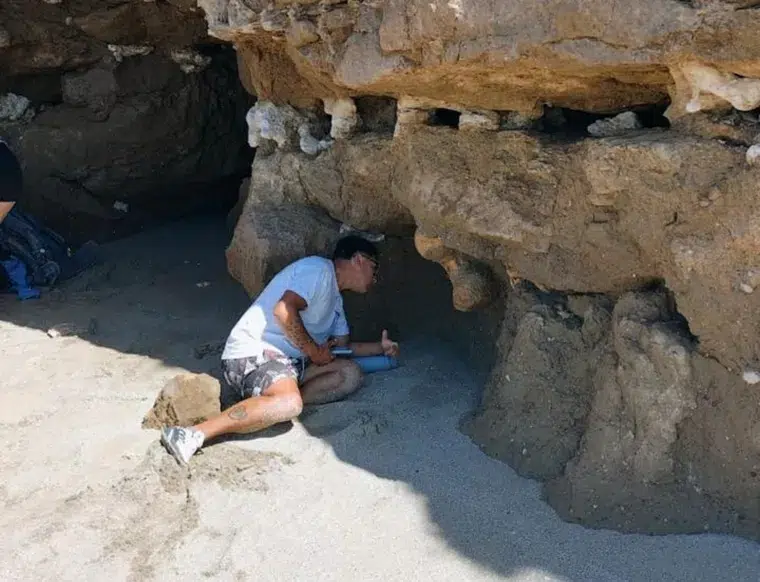
An exceptional fossil of the gigantic ground sloth
After examining the piece, specialists identified the bone as the right femur of a Megatherium americanum, one of the most imposing species of the South American megafauna.
The recovered fossil measures about 80 centimeters long and about 50 centimeters wide. Due to its state of preservation, researchers consider it could be the best-preserved specimen found on the southeastern Buenos Aires coast.
The characteristic orange color of the bone is explained by the geological conditions of the terrain where it remained buried for thousands of years. In that environment, humid sediments with presence of iron oxides predominated, impregnating the bone material.
This enormous ground sloth could reach up to six meters in length, about three meters in height, and an approximate weight of five tons, making it one of the largest animals that inhabited South America.
The rescue of the fossil against cliff erosion
Once the find was confirmed, the team from the museum’s paleontology laboratory organized an operation to extract the fossil before natural erosion or tides could damage it.
The coastal cliffs of the region are subject to a constant process of wear by the action of wind and sea. For this reason, many fossil remains become exposed and require quick interventions for their preservation.
During exploration tasks, researchers detected that inside the cliff there might be part of the animal’s pelvis. However, its extraction presents risks due to the possible instability of the terrain.
After the rescue, the fossil will be cleaned, prepared, and studied in the museum’s laboratories in Mar del Plata. It will then be transferred to the Museo de Ciencias Naturales Pachamama for exhibition.
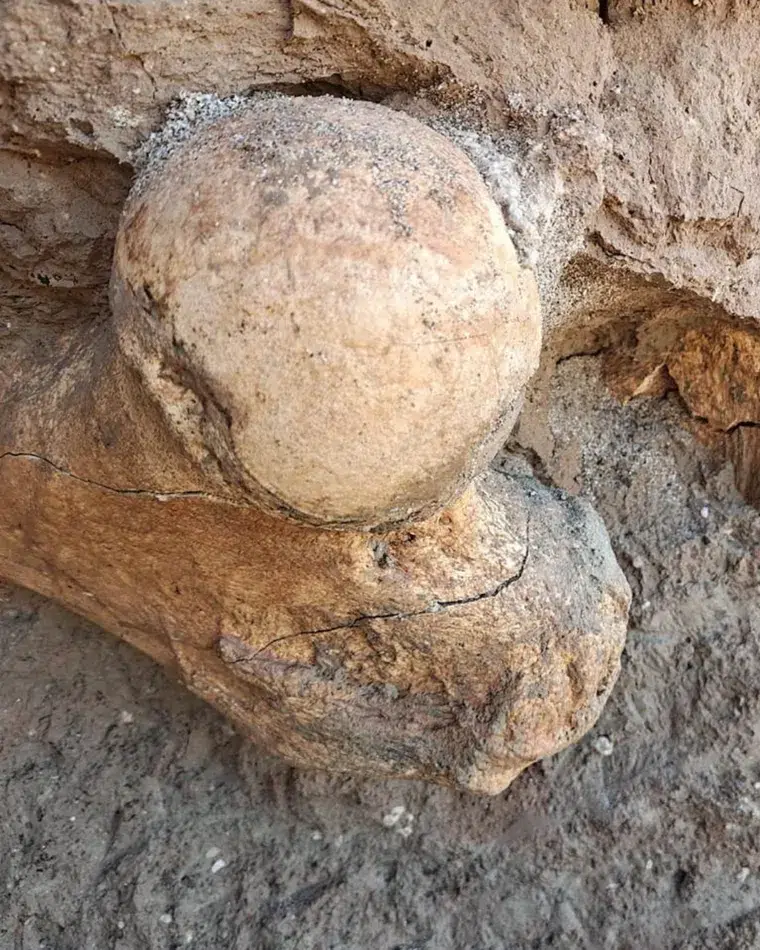
The scientific and environmental implications of the discovery
The find provides key information to reconstruct the ecosystems that existed in the Pampas region during prehistory. The megafauna remains allow understanding what the natural environments were like before the climatic and geological changes that transformed the landscape.
Additionally, the study of the fossil will help to know more precisely the anatomy and evolution of these giant herbivores. The exceptional preservation of the bone opens the possibility of conducting detailed analyses on its structure and growth.
On the other hand, such discoveries reinforce the importance of protecting coastal cliffs, which function as true natural archives of the planet’s history. Each recovered fossil contributes to understanding how ecosystems evolved and how they responded to environmental changes over thousands of years.
Finally, the find also highlights the paleontological heritage of the Buenos Aires coast. The dissemination of these discoveries strengthens environmental awareness and underscores the need to preserve the natural sites where vestiges of the past remain hidden.



