



The National University of La Plata (UNLP) was selected to be part of the Artemis II mission by NASA, scheduled to launch in April 2026.
This means that a new Argentine satellite will soon be in outer space. This milestone marks the first time astronauts will fly over the Moon since 1972.
Argentina’s contribution to this historic expedition will come from ATENEA, developed by students and researchers from the Faculty of Engineering at UNLP.
What is the Argentine satellite ATENEA and its mission
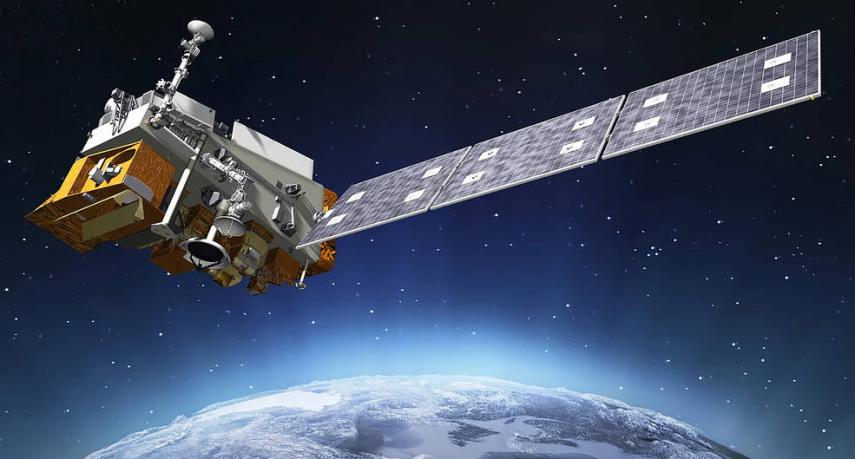 An Argentine satellite will soon be in space.
ATENEA is a CubeSat-type microsatellite of class 12U, with dimensions of approximately 30x20x20 cm.
Its main objective is to validate key technologies for future space missions, such as measuring radiation in high orbits, collecting GPS data, and long-range communication tests.
This mission is part of the SARE program of the National Commission on Space Activities (CONAE).
The development of ATENEA is based on the experience gained with USAT 1, the first university CubeSat built in Argentina. This precedent was crucial for CONAE to choose UNLP to participate in this international mission, alongside satellites from Germany, South Korea, and Saudi Arabia.
An interdisciplinary team
The ATENEA project is carried out by an interdisciplinary team from UNLP, made up of engineers and scholarship students from the Faculty of Engineering.
The dean of the Faculty and director of the Aerospace Technological Center (CTA), Marcos Actis, highlighted the importance of this achievement: “NASA includes us thanks to the path we started with our own resources. ATENEA is four times more complex than USAT 1.”
The team includes professionals such as engineer Sonia Botta, leading the systems engineering; Frida Alfaro, in charge of requirements and orbital engineering; Gaspar Ramírez, responsible for manufacturing; Aldana Guilera, in charge of thermal and integration; and Joaquín Brohme and Eric Molina, working on the structures.
 The university team that worked on the project. (Photo: UNLP).
On the part of the Electronic Systems for Navigation and Telecommunications (SENyT) group, engineer Ramón López La Valle coordinates the electronic subsystems, including communications, onboard computer, and GPS receiver.
A milestone for Argentine science
UNLP’s participation in the Artemis II mission represents a significant advancement in Argentine space science and technology.
This project not only highlights the technical and scientific capacity of the university but also strengthens international collaboration in the field of space exploration.
The Artemis II mission is part of NASA’s Artemis program, which aims to establish a sustainable human presence on the Moon and pave the way for future crewed missions to Mars.
This ambitious project involves the participation of various countries and international organizations, consolidating a global effort for space exploration.


