



For decades, science avoided attributing structured language to animal species. However, a new generation of research is demonstrating that animal communication could be much more sophisticated than previously believed.
Within the framework of the Coller Dolittle Challenge, promoted by the University of Tel Aviv and entrepreneur Jeremy Coller’s foundation, the most significant advances in this field are awarded with USD 100,000 annually to the best project and USD 10 million to the first team that successfully deciphers interspecies communication.
## Sepias, titis, and nightingales: gestures, names, and vocal flexibility
Researcher Sophie Cohen-Bodénès, from the University of Washington in St. Louis, discovered that common cuttlefish use at least four tentacular gestures —”up,” “lateral,” “roll,” and “crown”— that function as a gestural signaling system.
The “crown” gesture, accompanied by intense colors and backward movements, seems to express unease in the face of environmental changes.
On the other hand, David Omer’s team, from the Hebrew University of Jerusalem, documented that titis emit unique calls for each group member, suggesting the use of proper names. This phenomenon has also been observed in African elephants and dolphins, which use distinctive whistles as acoustic signatures.
## Artificial intelligence and dolphins: the winning project of the year
The team led by Laela Sayigh, from the Woods Hole Oceanographic Institution, studies a community of 170 bottlenose dolphins in Sarasota Bay, Florida, spanning six generations. Using artificial intelligence, they identified 22 shared whistles, including one that seems to express surprise at the unexpected and another, more abrasive one that serves as a warning.
Unpublished research suggests that dolphins could refer to absent individuals using their characteristic whistles, implying a form of referential communication.
## Whales and sperm whales: acoustic patterns with linguistic structure
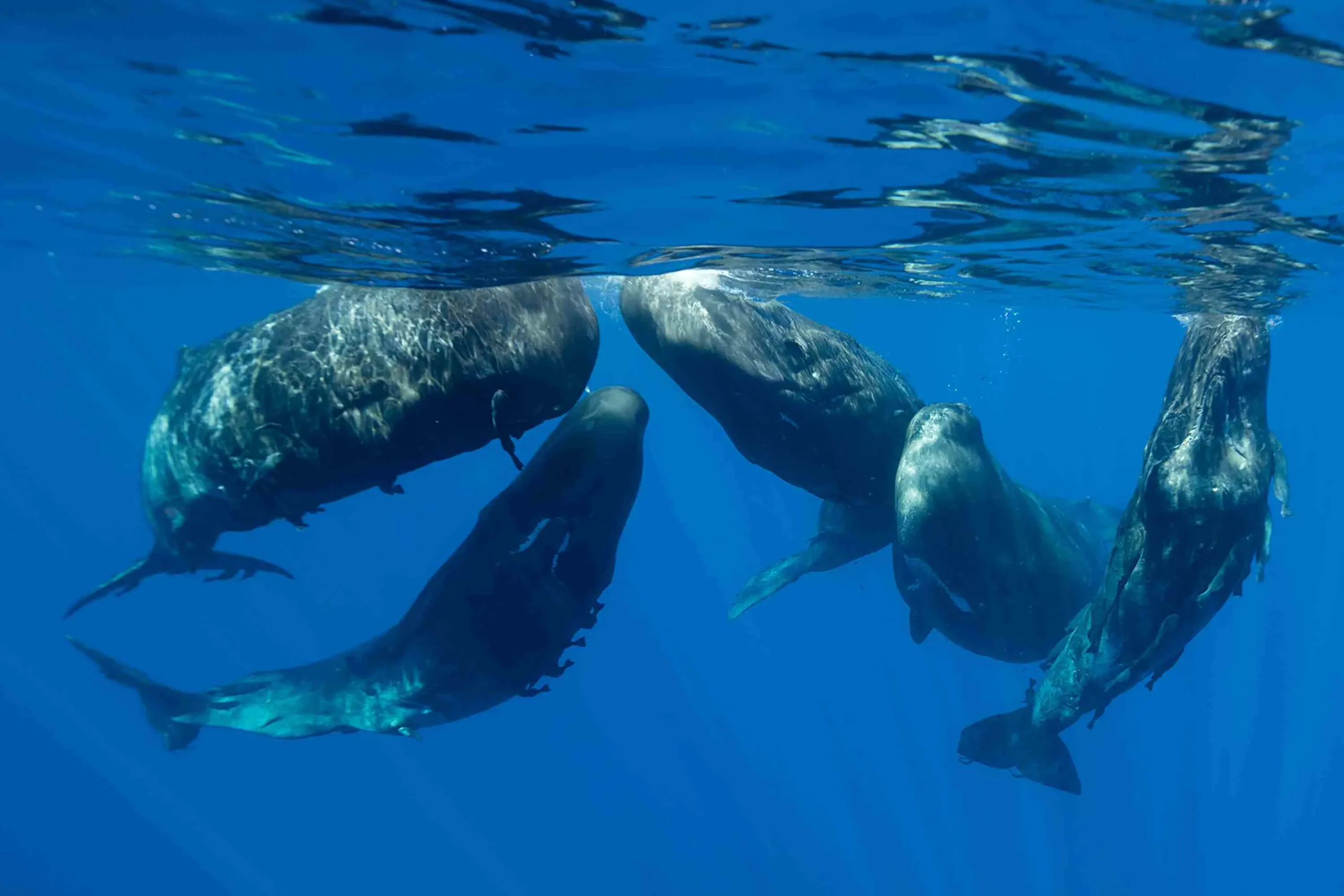
Humpback whales exhibit statistical patterns in their songs similar to human language. Sperm whales, on the other hand, adjust the tempo of their clicks during social interactions.
The CETI Project has identified 156 phonetic patterns that make up a “click alphabet,” with acoustic similarities to human vowels.
## Social birds: the most accessible candidates for complete deciphering
According to Yossi Yovel, president of the Coller Dolittle Challenge, social birds could be the first to have their communication fully deciphered. “Working with dolphins is very difficult. The first animal will be easier to study, probably a species of bird that lives in groups and vocalizes to coordinate,” he says.
Budgerigars show brain maps of vocal sounds similar to humans, while Japanese great tits modify the order of notes to alter the complete meaning of their messages.
## A technological and ethical revolution underway
Deciphering animal language could transform our perception of the natural world.
The ability to massively process acoustic, gestural, and contextual data is opening a new era in the understanding of non-human intelligence. “Anything we learn about animals makes us appreciate them more,” says Yovel. “Studies on communication probably lead many people to think, ‘Wow, they are like us!'”
If scientists manage to decipher the first animal language, we could access new ways of perceiving reality, redefining the boundaries between species and expanding our understanding of shared cognition.



