



The Antarctic sea ice extent has once again fallen well below historical values. The area covered by ice was nearly 900,000 square kilometers below the 1981-2010 average, according to the National Snow and Ice Data Center (NSIDC).
This difference reveals an accelerated change in the dynamics of the planet’s southernmost region. The behavior adds to the extraordinary lows recorded in 2023 and 2024. The trend confirms a cycle of extreme variability with no previous records in the white continent.
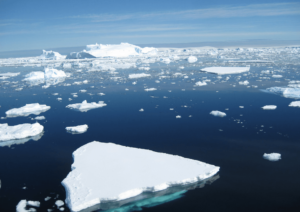
The retreat is clearly observed in satellite images showing large open areas of the ocean. The loss of ice impacts essential climate processes.
It affects the ability to reflect solar radiation, the stability of continental platforms, and marine life. From small organisms like krill to penguins and mammals depend on this seasonal ice.

What is driving the ice retreat
Ocean warming is one of the most influential factors. The presence of warmer waters at depth reduces the sea’s ability to freeze even in mid-winter. This favors a scenario of persistent thawing.
Atmospheric changes also have an impact. Alterations in wind patterns affect the formation and compaction of new ice. This variability favors the presence of warmer surface waters.
The region is experiencing a feedback loop. Less ice means less solar reflection and more heat absorption by the ocean. The result is a warming that accelerates year after year.
Global consequences of a transforming south
A warmer Southern Ocean can alter deep currents that regulate the global climate. The modification of these flows introduces uncertainties about the stability of global climate patterns. It is a critical point for the balance of the Earth’s system.
The retreat of sea ice does not by itself raise sea levels. However, it reduces the natural protection of continental ice shelves. When these structures weaken and collapse, they do contribute to ocean rise.
The Antarctic ecosystems also suffer immediate impacts. The reduction of ice affects krill, the base of the Southern Ocean’s food chain, as the birds, mammals, and key species for global fishing depend on its abundance.
The direct consequences of sea ice loss
The warming of the Southern Ocean accelerates the loss of seasonal ice. This process favors the expansion of open areas that previously remained frozen, leaving the region more exposed to storms, waves, and abrupt temperature changes.
In turn, the ecosystems become more vulnerable. The decrease in krill alters the distribution and survival of iconic animals. These transformations affect both predators and species that support fishing activities.
The global climate is also impacted. The deep ocean currents may slow down or shift. This could intensify extreme weather events in different parts of the world.


