



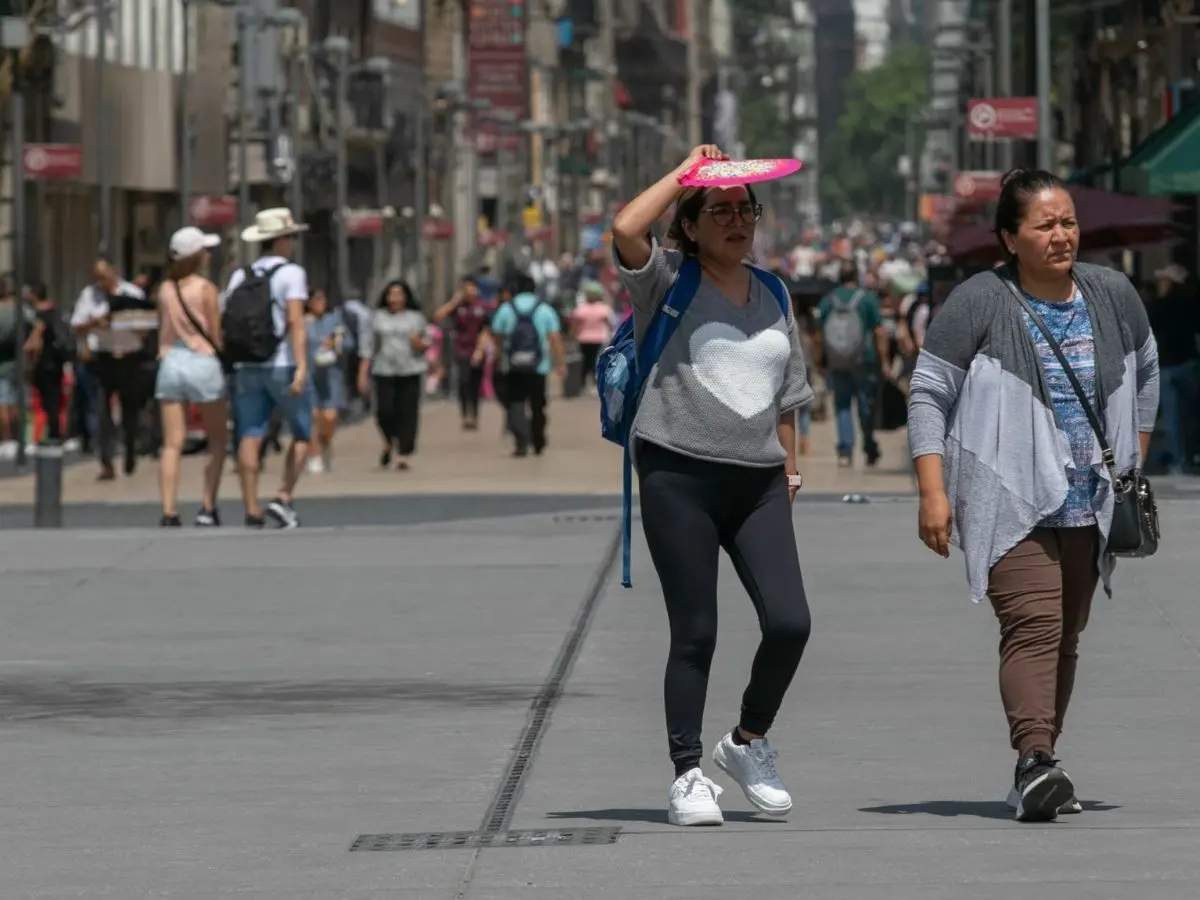
Researchers from the National Autonomous University of Mexico warned that extreme heat is increasing the concentration of tropospheric ozone, a highly irritating gas for the respiratory tract.
According to researcher Jorge Zavala Hidalgo, for every additional degree Celsius, the ozone concentration increases by 4.7 ppb.
The year 2024 was the warmest recorded nationally and globally, explaining the increase in episodes of environmental contingencies in the Metropolitan Area of the Valley of Mexico.
Critical ozone season
The so-called “ozone season” extends from February to June, with May being the month with the highest number of contingencies due to high temperatures and intense solar radiation.
- As of May 13, 2024, as many contingencies had already been recorded as in the entire previous year.
- The last alert was declared on April 26.
Impacts on health and ecosystems
Ozone is a secondary pollutant formed by photochemical reactions between nitrogen oxides and volatile organic compounds (VOCs) in the presence of solar radiation.
- Health effects: irritation in eyes and throat, damage to the respiratory system.
- Environmental impacts: reduction in agricultural yield and impact on ecosystems.
Dr. Michel Grutter emphasized that ozone should be understood as a symptom of chronic air pollution, beyond specific episodes.
Factors favoring its formation
Dr. Elizabeth Vega Rangel explained that the dynamics of ozone formation depend on:
- High temperatures.
- Low wind speed.
- Valley topography, which favors the accumulation of pollutants.
- Diverse emission sources: vehicles, industries, use of LP gas, forest fires, and biogenic emissions.
Recent studies show that LP gas contributes significantly during critical ozone episodes.
Recommended strategies
UNAM specialists proposed measures to address the problem:
- Reduce car use and promote public transportation.
- Decrease industrial emissions and vehicular emissions.
- Regulate VOCs present in paints, solvents, and fuels.
- Maintain and expand atmospheric monitoring systems.
- Promote public policies for emission control.
- Information and prevention campaigns for the population.
- Strengthen scientific studies and environmental forecasts.
- Build resilient and healthy cities with clean air as a priority.
Beyond ozone
Dr. Iván Hernández Paniagua reminded that ozone is not the only relevant pollutant: PM2.5, ultrafine particles, polycyclic aromatic hydrocarbons, and carcinogenic VOCs also coexist. Programs like Hoy No Circula help, but are insufficient without a comprehensive strategy that includes:
- Modernization of transportation.
- Electrification of mobility.
- Control of industrial emissions.
- Sustainable urban planning.
Extreme heat is accelerating the photochemical reactions that produce ozone, generating more environmental contingencies in the Valley of Mexico.
Scientific evidence shows that the problem is not only seasonal but structural: it requires comprehensive public policies, strict emission regulation, and a social commitment to build cleaner and healthier cities.



