



A scientific study reveals that the species Leptuca leptodactyla, fiddler crabs microplastics has the ability to fragment plastic particles, facilitating their entry into the deeper levels of the food chain.
A joint investigation led by specialists from the University of São Paulo (Brazil) and the University of Salento (Italy) has shed light on a biological phenomenon that has been little documented until now: the active interaction of fiddler crabs with microplastics.
These crustaceans, which primarily inhabit mangrove areas, are not only ingesting these pollutants, but their digestive systems are capable of reducing them to even smaller particles.
The study focused specifically on the species Leptuca leptodactyla. Scientists observed that these animals, when feeding on sediment, inadvertently process the microplastics present in the environment.
Through a mechanical and chemical process in their digestive tract, fiddler crabs transform microplastics into nanoplastics, smaller-sized particles that present even greater analytical and ecological challenges.
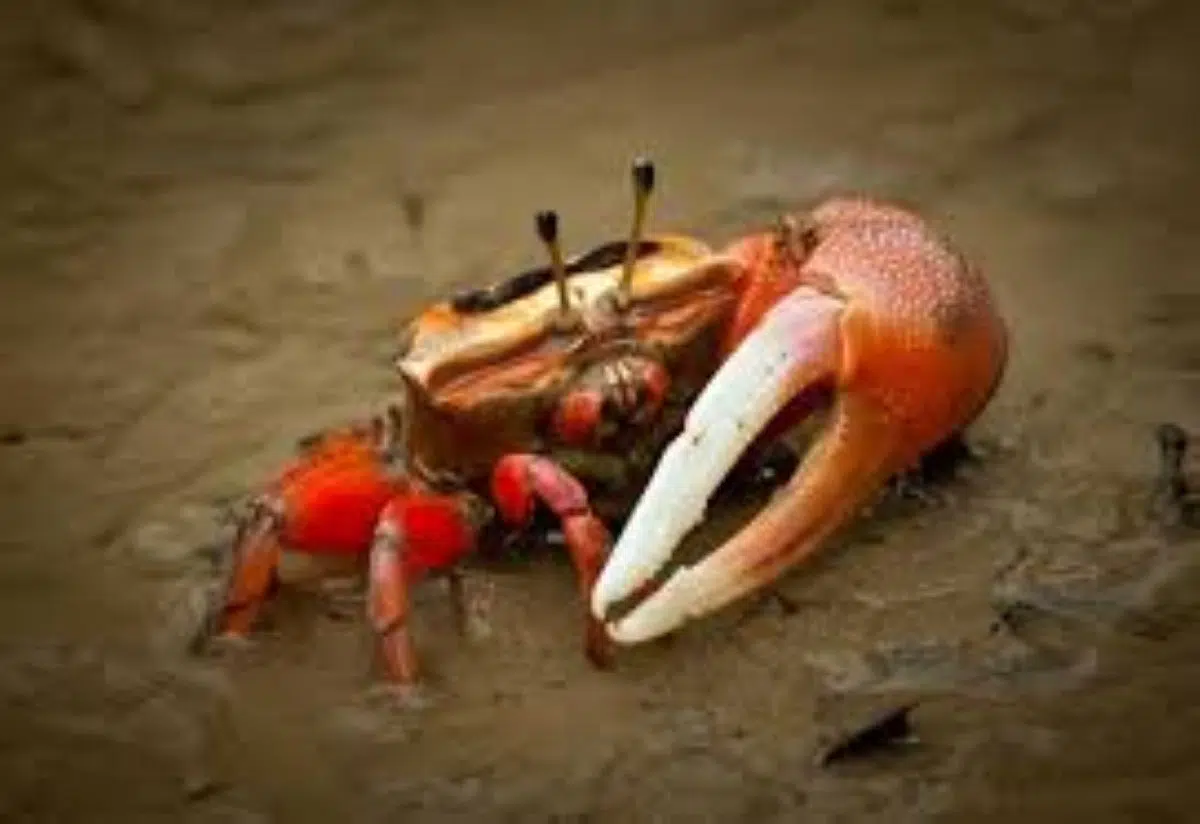
The biological fragmentation mechanism of fiddler crabs microplastics
The ability of these crustaceans to alter the structure of polymers lies in their complex oral morphology and digestive system.
According to the technical report, the process of mechanical crushing, combined with the action of gastric enzymes, accelerates the physical degradation of the synthetic material.
This finding is crucial, as it demonstrates that fauna is not just a passive victim of pollution, but acts as an agent that modifies the way plastic persists in the ecosystem.
Laboratory analyses conducted in Brazilian mangroves confirmed that the feces of these crustaceans contain a significant concentration of nanoplastics after the ingestion of larger fragments. This phenomenon of “mechanical biodegradation” alters the availability of the pollutant in the aquatic environment.
A threat to marine food security
Although the decomposition capacity might seem like an elimination pathway, experts warn about the negative consequences of this finding.
By reducing the size of plastics, fiddler crabs facilitate microplastics to be ingested by smaller filtering organisms and predators that could not consume larger fragments.
This process increases the bioavailability of toxins, allowing nanoplastics to penetrate the cellular tissues of various marine species, which could eventually scale up the food web to reach human consumption.
The research underscores the urgency of rethinking waste mitigation strategies, as the biological activity of species like the fiddler crab is accelerating the dispersion of invisible pollutants in the world’s oceans.



