



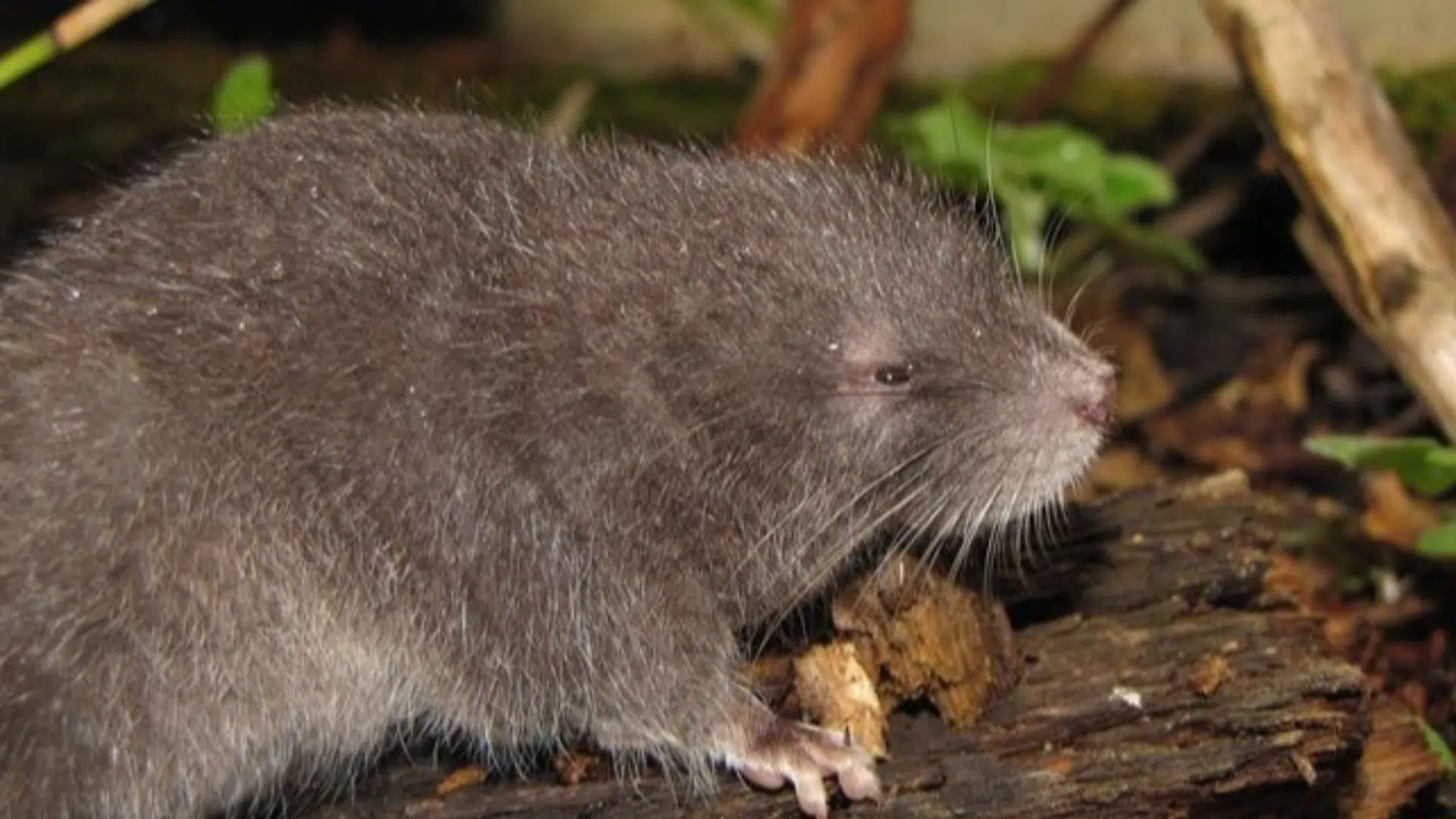
An international team of researchers discovered a new species of semi-aquatic rodent in the forests of the eastern slope of the Peruvian Andes.
Named Incanomys parviauris, the species was described in the scientific journal American Museum Novitates and represents a key contribution to the knowledge of Andean biodiversity.
The discovery confirms that high mountain ecosystems still harbor unknown fauna and underscores the importance of conserving the country’s protected natural areas.
Distinctive characteristics
The Incanomys parviauris exhibits unique morphological traits:
- Small ears hidden by fur.
- Four pads on the hands.
- Incisors and skull with unique features.
- Grayish dorsal fur and silver ventral fur.
These physical particularities were essential for its formal identification.
Genetic relationship with another Andean species
Genetic analyses confirmed that the Incanomys parviauris is a sister species to Incanomys mayopuma, described in June 2025 in the Historic Sanctuary of Machu Picchu.
This link provides new data on the diversification of the genus in mountain ecosystems and opens research lines on the evolution of semi-aquatic rodents in the region.
Conservation areas where it inhabits
Currently, the species is protected in four conservation units:
- National Sanctuary Cordillera de Colán (Amazonas).
- Private Conservation Area Copallín (Amazonas).
- National Park of Río Abiseo (San Martín).
- Regional Conservation Area Montane Forest of Carpish (Huánuco).
These areas are fundamental for conserving high mountain habitats and enabling scientific research that reveals endemic species.
Importance of the discovery
Sernanp highlighted that the presence of this new species reinforces the need to maintain and strengthen the management of protected areas as refuges of unique biodiversity. Additionally, it underscores the urgency of continuing systematic studies and monitoring in mountain ecosystems, where species unknown to science still exist.
Authors of the study and conclusions
The discovery was led by an international team of specialists:
- Pamela Sánchez-Vendizú (Universidad Austral de Chile and Universidade Federal do Pará, Brazil).
- Edson F. Abreu (Angelo State University, USA).
- Víctor Pacheco (Museum of Natural History, Universidad Nacional Mayor de San Marcos, Peru).
- Silvia E. Pavan (California State Polytechnic University, USA).
The finding of Incanomys parviauris expands the map of Andean biodiversity and demonstrates that high mountain ecosystems remain fertile territory for scientific discoveries.
The protection of these areas not only ensures the survival of unique species but also strengthens the knowledge of the evolution and adaptation of fauna in extreme environments.



