



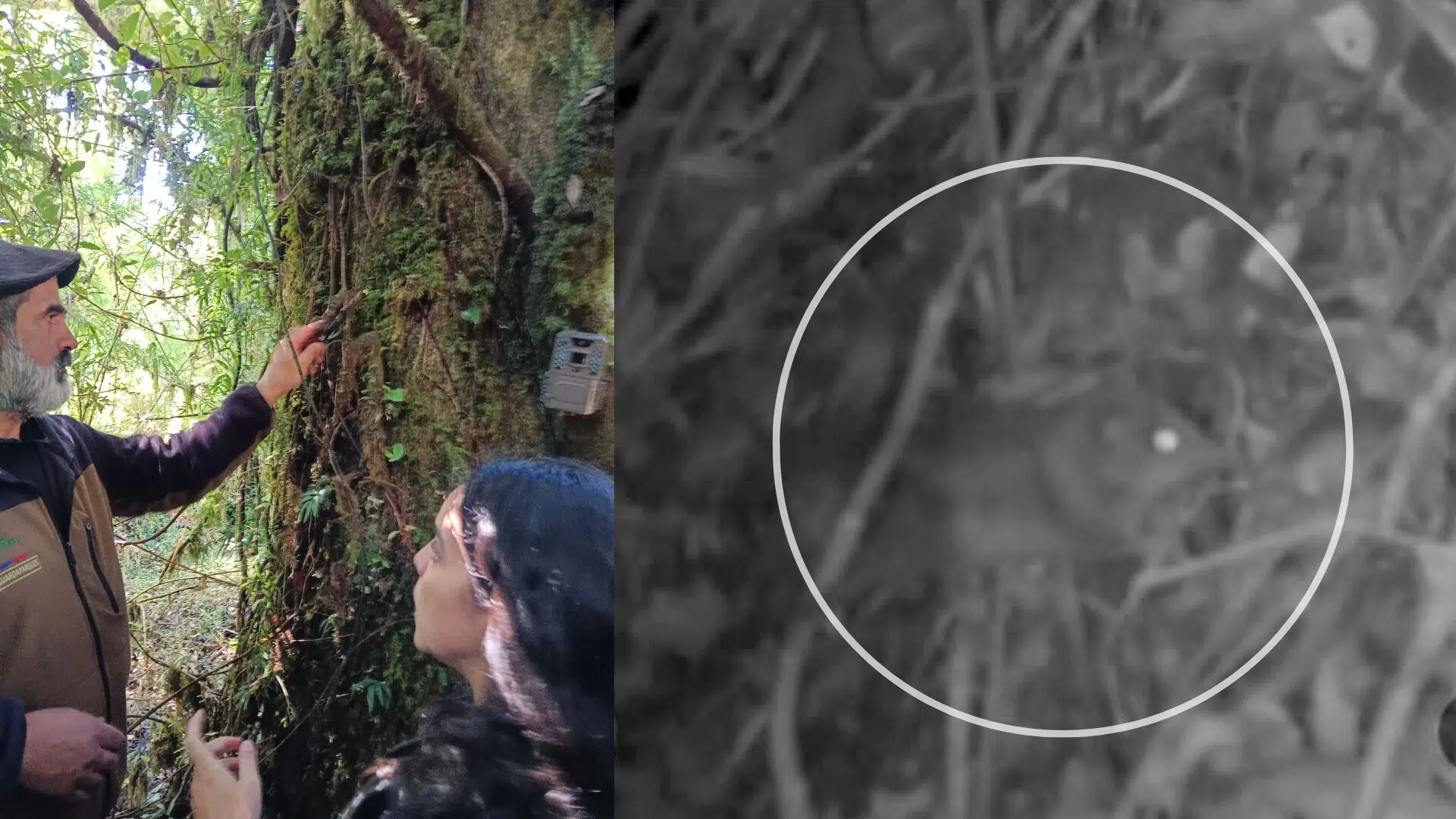
A new record confirmed the presence of the monito del monte in the Queulat National Park, in the Aysén Region, Chile.
The discovery was made in the Angostura sector and represents a positive sign for the biodiversity of the area, as it is an endemic species of the temperate forests of southern Chile and considered to have conservation issues.
A living fossil
The monito del monte is a small nocturnal marsupial, unique in its evolutionary lineage, considered a “living fossil” due to its genetic links closer to species from Australia than to those from the American continent.
Its presence is an indicator of well-preserved ecosystems, as it depends on ancient forests and dense undergrowth to survive.
Monitoring methodology
The discovery is part of a study by CONAF with support from the Patagonia Ecosystem Research Center (CIEP). To confirm its presence, a system of camera traps was implemented, strategically installed in its microhabitat. These tools allow recording species without disturbing their environment and have been fundamental in expanding knowledge about the distribution of the monito del monte.
Ecological importance
The detection of this species reaffirms the relevance of Queulat National Park as a biodiversity refuge. The monito del monte is extremely sensitive to habitat fragmentation and undergrowth loss, so its presence indicates a healthy ecosystem.
According to Andrea Bahamonde, head of the Department of Protected Wild Areas, this finding is an ecosystem health indicator and reinforces the need to conserve the temperate rainforests.
The Queulat National Park
Created in 1983, the park protects more than 154,000 hectares of temperate rainforest, fjords, and glaciers. Its importance lies in:
- Conservation of unique ecosystems: Patagonian Andean forest, evergreen forest, and peatlands, essential for carbon capture and water regulation.
- Biodiversity: home to species such as the pudú, the guiña, the puma, the black woodpecker, and now confirmed the monito del monte.
- Tourist value: hosts the iconic Hanging Glacier, one of the main attractions of the Austral Highway.
- Cultural and scientific heritage: protects ancestral areas of the Chono people and acts as a natural laboratory to study the effects of climate change on glaciers.
- Water resources: includes water bodies such as Lake Risopatrón and the Ventisquero and Cisnes rivers.
The confirmation of the presence of the monito del monte in Queulat National Park is a milestone for conservation in Chile. It not only expands knowledge about the distribution of this unique species but also reinforces the importance of the park as a biodiversity refuge and as a key space for scientific research.
This finding reminds us that the protection of temperate rainforests is essential to ensure the survival of highly vulnerable species and to maintain the health of Patagonian ecosystems.


