



After twelve years of dedicated work in genetic improvement, a team of researchers from INTA San Juan has presented a new variety of quinoa called Morrillos INTA. This cultivar stands out for its remarkable adaptability to various conditions, high productivity, and excellent suitability for human consumption.
Superior Characteristics and Adaptability of the New Quinoa
Morrillos INTA was developed to offer greater versatility in planting and significantly higher yields compared to other similar varieties.
Lucas Francisco Guillén from the Rural Extension Agency (AER) Calingasta in San Juan, highlights these advantages: “Morrillos INTA is a much more versatile and adaptable variety of quinoa to different crop and soil conditions.”
He also emphasizes its productivity: “It has a higher yield, making it a more productive variety with a potential of up to 2000 kilograms per hectare.”
Another key feature is its short cycle, allowing for two annual harvests in the province of San Juan, one in spring and one in autumn.
Although specifically developed for the agroclimatic conditions of the region, Guillén points out that “it is being tested, with good results compared to other quinoa varieties, in different provinces.”
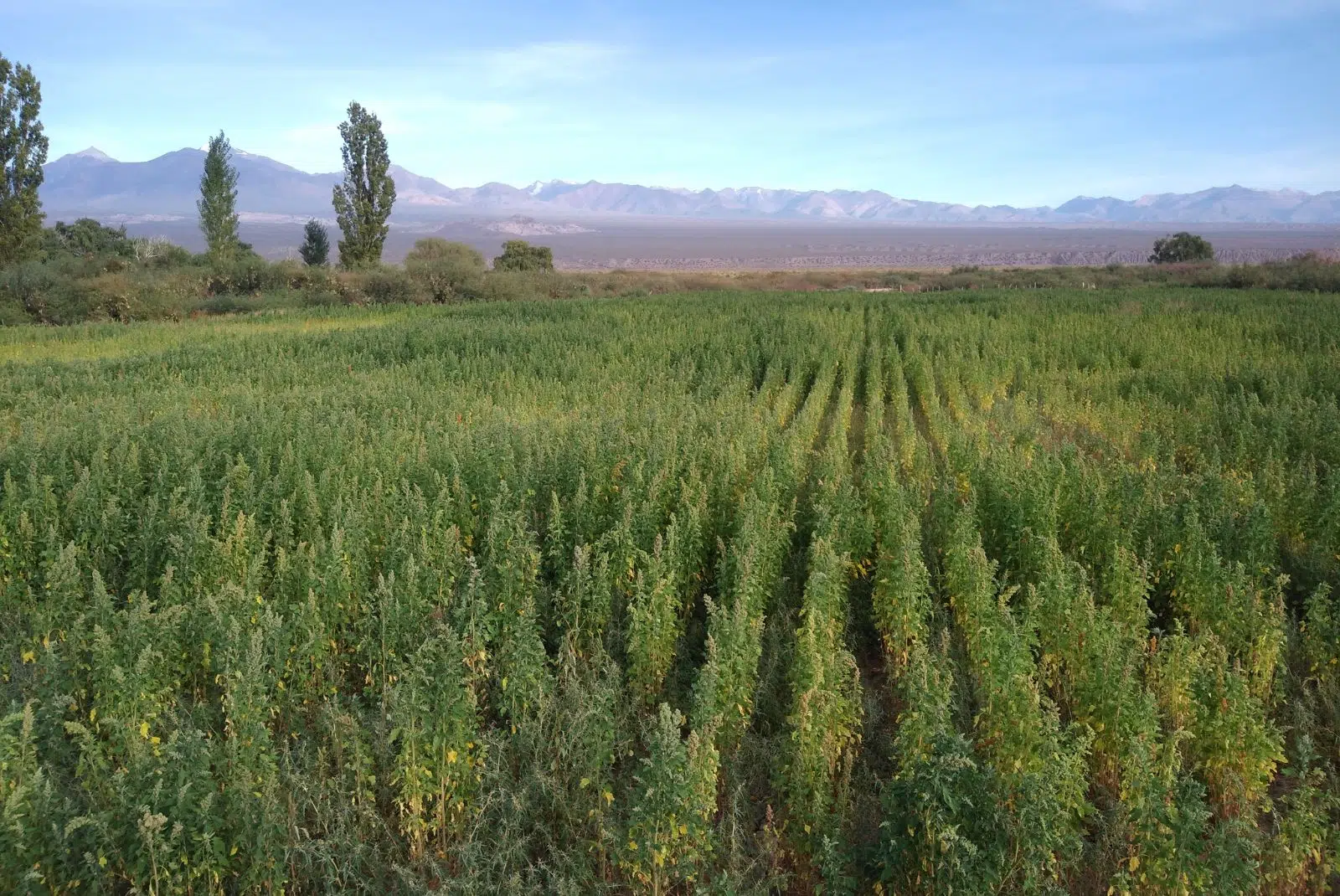
A Resilient Crop with Multiple Uses
Like most quinoas, Morrillos INTA shares the characteristic tolerance to saline soils, droughts, and frosts, significantly expanding its cultivation range.
Its use is very versatile. The grain, once de-saponified (a process to remove its bitter taste), is suitable for human consumption in a myriad of gastronomic menus. On an industrial level, it can also be processed for the production of high-quality flours and protein-rich beverages.
Impact on the National Production of Quinoa Variety
The development of this variety represents a significant boost for regional and national agriculture. “This quinoa variety contributes to production in Argentina and helps diversify agricultural production to create new opportunities for producers,” stated Guillén.
The expert also highlighted its nutritional value, indicating that, “due to its high quality, it has great potential, as quinoa is an excellent source of proteins, fiber, and minerals.” This project also serves as a driving force for the San Juan economy.
A Milestone in Genetic Improvement of Quinoa Variety
INTA began its work for the reintroduction of quinoa in San Juan in 2013, aiming to find more profitable productive alternatives to traditional crops. The result of this effort is Morrillos INTA, the second quinoa variety registered in Argentina, an achievement reached after years of rigorous field trials and data analysis to meet all requirements of the National Cultivar Registry.


