



Researchers from the Norwegian University of Science and Technology (NTNU) have found that PFAS (perfluoroalkyl and polyfluoroalkyl substances), known as “forever chemicals”, can alter the genetic expression in duck embryos, compromising their survival and reproduction.
The finding, published in Science Advances, reinforces global concerns about the impact of these persistent compounds on the environment and animal health.
What are PFAS?
PFAS are characterized by their extreme resistance to degradation, earning them the name “forever chemicals.” They are used in hundreds of everyday products:
- Non-stick pans.
- Waterproof clothing.
- Food packaging.
- Firefighting foams.
Their widespread use has led to their detection in drinking water and in environments as diverse as ski slopes, where they were part of ski wax. Although some PFAS have already been banned due to their toxicity, thousands of variants remain in circulation and their impact is global.
The study on duck embryos
The team led by Anne-Fleur Brand and Professor Veerle Jaspers focused on two recently emerged PFAS:
- PFECHS, used as an anti-corrosive agent in aircraft hydraulic systems, found near airports.
- PFDoDS, whose industrial use is still unclear, but already detected in environmental samples and wildlife.
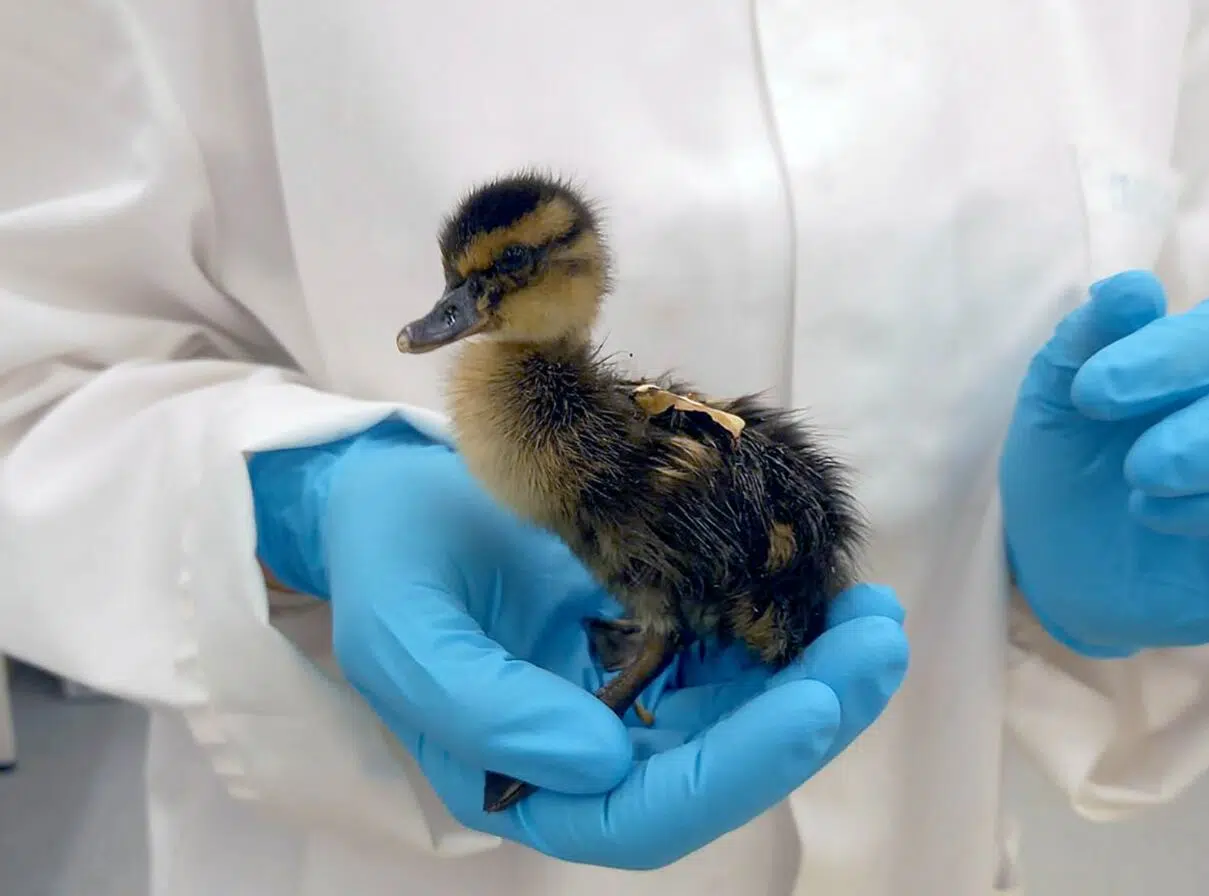
For the experiment, the researchers injected PFECHS, PFDoDS, and PFOS (the latter already banned) into farm-sourced duck eggs, simulating the natural transfer of contaminants from mother to egg. After four weeks of incubation, they analyzed the newly hatched ducks.
Results: metabolic and immunological alterations
The scientists collected samples from three organs: liver, heart, and bursa of Fabricius (an avian-specific organ crucial for immune development).
- Liver: alterations were observed in genes responsible for fat metabolism. According to Brand, “ducks need to store and use fat following a precise schedule that coincides with breeding and migration seasons. If this metabolism is altered, their chances of survival or reproduction may decrease.”
- Heart: no significant changes were recorded, although other PFAS have shown effects on cardiac development in various species, including humans. Researchers do not rule out that effects may appear at later stages.
- Bursa of Fabricius: an increase in the activity of a gene linked to viral infection detection was detected, which could indicate greater immune preparedness or, conversely, unnecessary immune system stress.
Implications and regulatory debate
The results show that even recently emerged PFAS can cause effects similar to compounds already banned like PFOS. Therefore, the European Union is considering banning all PFAS as a group, given the similarity of their structures and potential danger.
“Our findings support the demand to regulate all forms of PFAS. Banning them one by one is costly and slow,” stated Jaspers.
The scientific community insists that more studies simulating real natural conditions are needed before making definitive regulatory decisions.
A threat from the earliest stages of life
The persistence of PFAS in the environment implies that their effects can manifest from the earliest stages of life, increasing the urgency of their regulation and control.
The NTNU study demonstrates that “forever chemicals” not only contaminate the environment but also alter animal biology before birth, posing a critical challenge for species conservation and global public health.


