



A recent prehistoric discovery on the Argentine Atlantic coast has generated great interest in the scientific community. A group of researchers confirmed the discovery of remains of a juvenile glyptodont on the cliffs of San Eduardo del Mar.
The locality is located a few kilometers from Mar del Plata, in the province of Buenos Aires. The fossil was identified as Neosclerocalyptus paskoensis, an extinct species of this animal that inhabited South America during the Pleistocene, more than 10,000 years ago.
The discovery represents a valuable addition to the study of prehistoric South American megafauna.
Glyptodont remains: a serendipitous prehistoric find
The discovery was made in February by Mariano La Venia and his family, who during a recreational walk observed bone fragments protruding from the ground and notified the Paleontology Laboratory of the Municipal Museum of Natural Sciences in Mar del Plata.
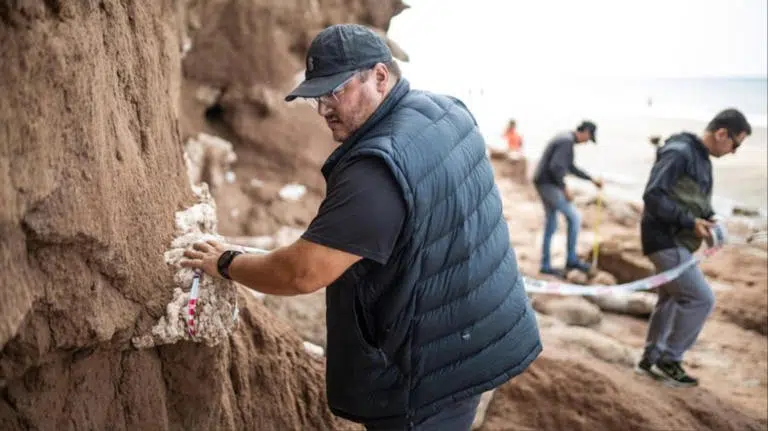 The discovery was made in February by Mariano La Venia and his family.
Specialists confirmed that it was a juvenile glyptodont specimen, with parts of the tail and dorsal shell remarkably preserved. This degree of preservation allowed the analysis of unique morphological features of a young individual, a type of record that is uncommon in this kind of fossils.
What are glyptodonts and why are they so important to history
As explained by the museum to the newspaper La Capital of Mar del Plata, glyptodonts were large armored mammals, related to current armadillos. Their bodies were covered by a cephalic shield, a rigid dorsal shell, and a tail protected by bony rings, providing them with natural defense against predators.
Their weight and dimensions varied depending on the species: some adult specimens exceeded 2500 kilos, while others reached 450 kilos, establishing them as protagonists of the Pleistocene megafauna.
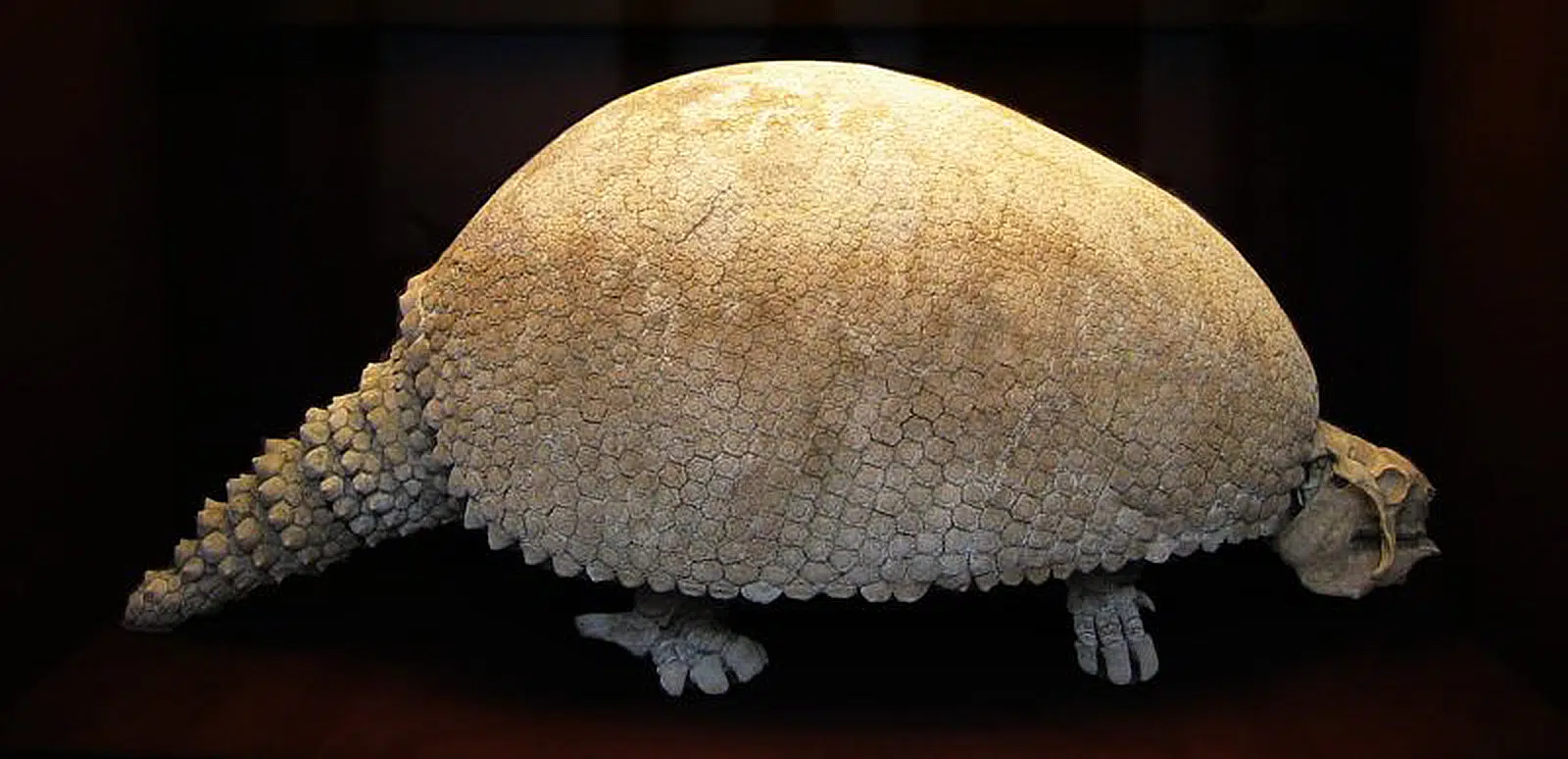 What glyptodonts looked like. (Photo: Wikipedia).
These animals inhabited vast regions of South America, including territories that now correspond to Argentina, Brazil, Uruguay, Paraguay, Bolivia, and Peru.
The discovery in San Eduardo del Mar adds to other important findings in the Chapadmalal region, where remains of species like Eosclerocalyptus and Eleutherocercus have been recovered, dating back to the Pliocene (5.6 to 2.6 million years ago) and the Holocene (from 11,700 years ago, after the last glaciation).
The paleontological wealth of this Buenos Aires area makes it a key point for the study of prehistoric fauna and its evolution.
A “animal print” from prehistory
One of the most striking aspects of this juvenile specimen is that it allowed the observation of unique details such as the ornamentation of the dermal plates, a sort of natural “animal print” that distinguished each individual.
These bony structures, according to experts, are part of the most valuable record to understand how these armored colossi grew and developed.



