



One of the most urgent issues in the fight against pollution is the presence of microplastics, tiny particles of less than 5 millimeters that hide in oceans, rivers, lakes, and even in drinking water. Invisible to the human eye, these plastic fibers and fragments pose a technological and environmental challenge as they require expensive and slow methods to be detected, leading to the creation of a new ecological tool.
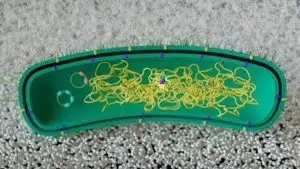
Faced with this scenario, a biotechnological advance marks a turning point: genetically modified bacteria capable of emitting green fluorescence when they come into contact with plastics. This system, known as a “bacterial biosensor,” is fast, economical, and sensitive, making it an unexpected ally in the fight against pollution.
The development was tested in real waters, demonstrating its effectiveness in just three hours. The bacteria can identify different types of polymers, such as polyacrylamide, polycaprolactone, and methylcellulose. Moreover, they have the advantage of remaining viable for up to three days when stored at 4 °C, allowing for their transportation and application in different contexts.
Beyond being a technological novelty, this method opens the possibility of conducting large-scale environmental monitoring, something that was previously inaccessible to many countries and communities due to the high costs of traditional techniques.
Microplastics: a silent threat
Microplastics come from various sources: tire wear, the degradation of plastic waste, fibers shed from synthetic clothing during washing, or the presence of microbeads in cosmetics. Their persistence in aquatic ecosystems makes them a global threat, as they not only pollute but also transport toxic substances and pathogenic bacteria.
The ecological risk is evident: marine species ingest these particles without distinguishing them from their food, affecting their health and disrupting entire food chains. In the long term, microplastics also reach humans through the food chain and drinking water, raising concerns about their potential health impacts.
In this context, having rapid and cost-effective tools for their detection is essential. The bacterial biosensor not only allows for the localization of microplastics but also provides key information to design more effective environmental policies and better-targeted cleanup actions.
Bacteria serving the environment
The operation of the biosensor is based on two genes incorporated into the Pseudomonas aeruginosa bacterium, a non-infectious strain. The first one activates a protein when detecting plastic particles, while the second one triggers the green fluorescence that makes them visible. This simple and efficient mechanism represents a revolution compared to methods like Raman or infrared spectroscopy, which require sophisticated equipment and long hours of analysis.
The portability of this technique is another advantage. Not depending on large-scale laboratories, it can be applied in wastewater treatment plants, vulnerable coastal areas, and even in citizen monitoring campaigns. This opens the door to participatory science, where local communities can get involved in the detection and monitoring of pollutants.
Furthermore, its low implementation cost makes it a accessible resource for developing countries, where plastic management issues are often more severe and environmental budgets more limited.

A transformative potential
Beyond its technical effectiveness, the use of bacteria for environmental purposes poses a transformative potential. These tools allow for mapping pollution hotspots with greater precision, reducing research times and costs. They also facilitate environmental transparency, as data can be generated and shared by multiple actors, from scientific institutions to citizen organizations.
The educational impact is equally relevant: the possibility of directly observing how microplastics “shine” thanks to bacteria helps raise awareness in society about the magnitude of the problem. This strengthens environmental awareness and motivates changes in habits regarding the consumption of plastics.
On a global scale, integrating these biosensors into international projects could accelerate early detection of pollution and improve mitigation strategies. Initiatives such as the European Plastics Strategy or ocean mapping expeditions would find in this biotechnology a practical and scalable tool.
Biotechnology applied to environmental care shows that science and innovation can come together to tackle global challenges. These fluorescent bacteria, symbolically named “Green Lantern,” not only represent a technical advancement but also a tangible hope that it is possible to protect aquatic ecosystems with creative, accessible, and sustainable solutions.



