



For the first time, a study developed in Sweden managed to analyze genetic material associated with cellular activity of an extinct animal. The discovery marks a decisive advance: it is not just about sequencing the genome, but accessing a functional reading of the biology of extinct species.
The research, published in Genome Research and led by Marc R. Friedländer from Stockholm University, focused on the thylacine or Tasmanian tiger, a predatory marsupial that disappeared in the 20th century after decades of intensive hunting and habitat loss. The last specimen died in 1936 and part of its body is preserved in the Swedish Museum of Natural History.
Beyond DNA: The Value of RNA
Unlike DNA, which reveals what genes exist, RNA reflects which genes were active in a specific tissue. This approach allows understanding how the cells of an extinct animal functioned when it was alive.
Until now, it was thought that RNA could not survive so long outside an organism, but the study shows that dry preservation can slow its chemical degradation.
Authenticity and Strict Controls
One of the main challenges was to demonstrate that the RNA truly belonged to the thylacine and not to modern contaminants. To this end, the team applied rigorous controls in laboratories specialized in ancient molecules.
The results confirmed that most of the sequences matched the thylacine genome, while human traces were minimal and consistent with the historical handling of the specimen.
The use of metatranscriptomics allowed separating fragments belonging to the animal from those originating from microbes or the environment, reinforcing the authenticity of the data.
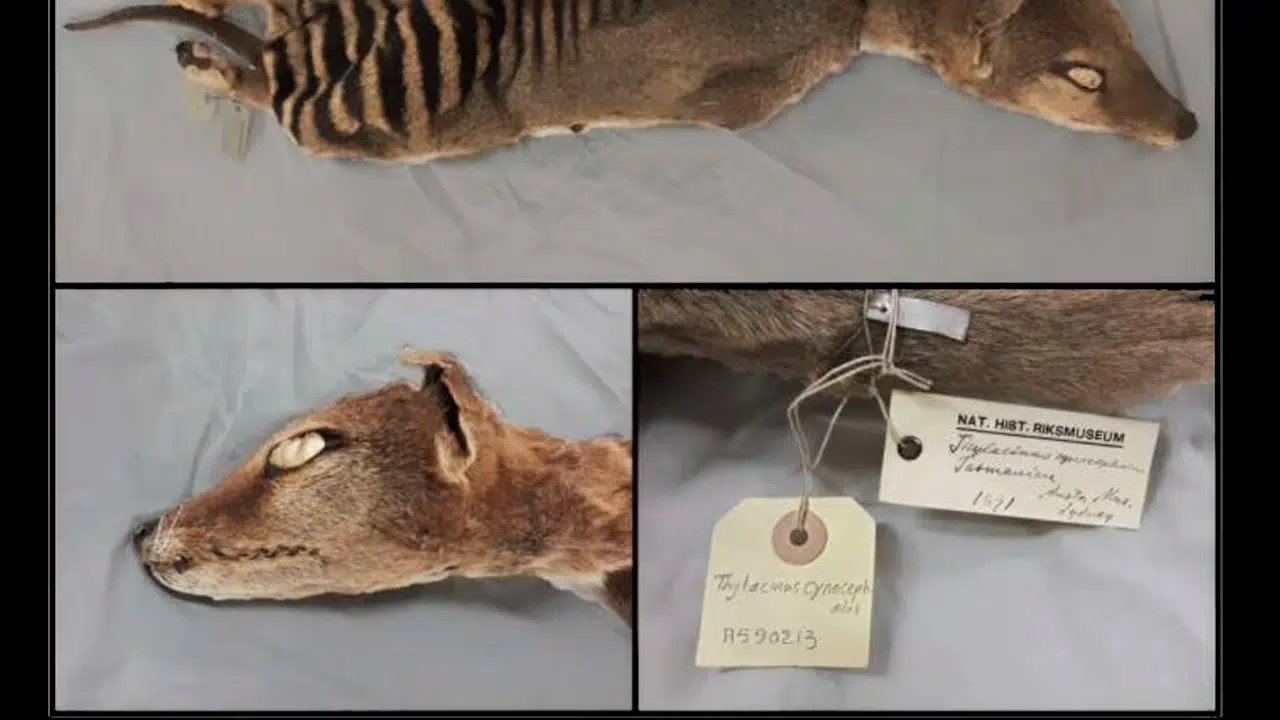
Findings in Muscle and Skin
The study analyzed samples of muscle and skin:
- Muscle: genes related to contraction and energy use, typical of slow muscle fibers, were detected.
- Skin: genes linked to keratin predominated, along with remnants of hemoglobin RNA, suggesting the presence of blood at the time of specimen preparation.
Despite the skin’s exposure to external contamination, thylacine sequences remained predominant.
MicroRNA and New Perspectives
One of the most relevant aspects was the identification of microRNA, small regulatory molecules that influence protein production. The study expanded the known catalog of the thylacine and identified a species-specific variant, impossible to confirm with DNA alone.
Additionally, the data allowed for improved genome annotation of the extinct animal, locating previously unnoticed regions and facilitating more reliable comparisons with current species.
Indications of Ancient Viruses
The analysis also detected signals of ancient RNA viruses, although the authors caution that more studies are needed to confirm these findings. If validated, museums could become unexpected archives of viral evolution.
This advance demonstrates that molecular studies of extinct animals are not limited to genetic past. RNA analysis opens the door to a more complete view of their biological functioning, offering new tools to understand lost evolution and diversity.



