



For decades, the ozone layer was a major concern. Its deterioration was advancing rapidly, and the scientific community warned that if this trend continued, life on Earth would be in danger.
The ozone hole allowed harmful ultraviolet rays to pass through, affecting humans and ecosystems, caused by chemical compounds present in aerosols and other products that remained in the atmosphere for years.
The Montreal Protocol: an international success
The current improvement is largely due to the Montreal Protocol of 1987, an international agreement that established the gradual elimination of substances that damage the ozone.
Thanks to this pact, 99% of the compounds responsible for its deterioration have been eliminated, demonstrating that coordinated global action can reverse environmental damage.
Recent advances
In 2025, the ozone hole closed more quickly, marking the earliest closure since 2019. Additionally, it was relatively small for the second consecutive year, in contrast to the larger and more persistent holes observed between 2020 and 2023.
- In September, it reached its maximum size: 20 million km², remaining until October.
- Although it continues to appear each year, its impact is much smaller than in the 1990s and early 2000s.
Scientists estimate that the ozone layer could fully recover by the middle of this century. In Antarctica, total recovery is expected by 2066, although current results confirm that the path is correct.
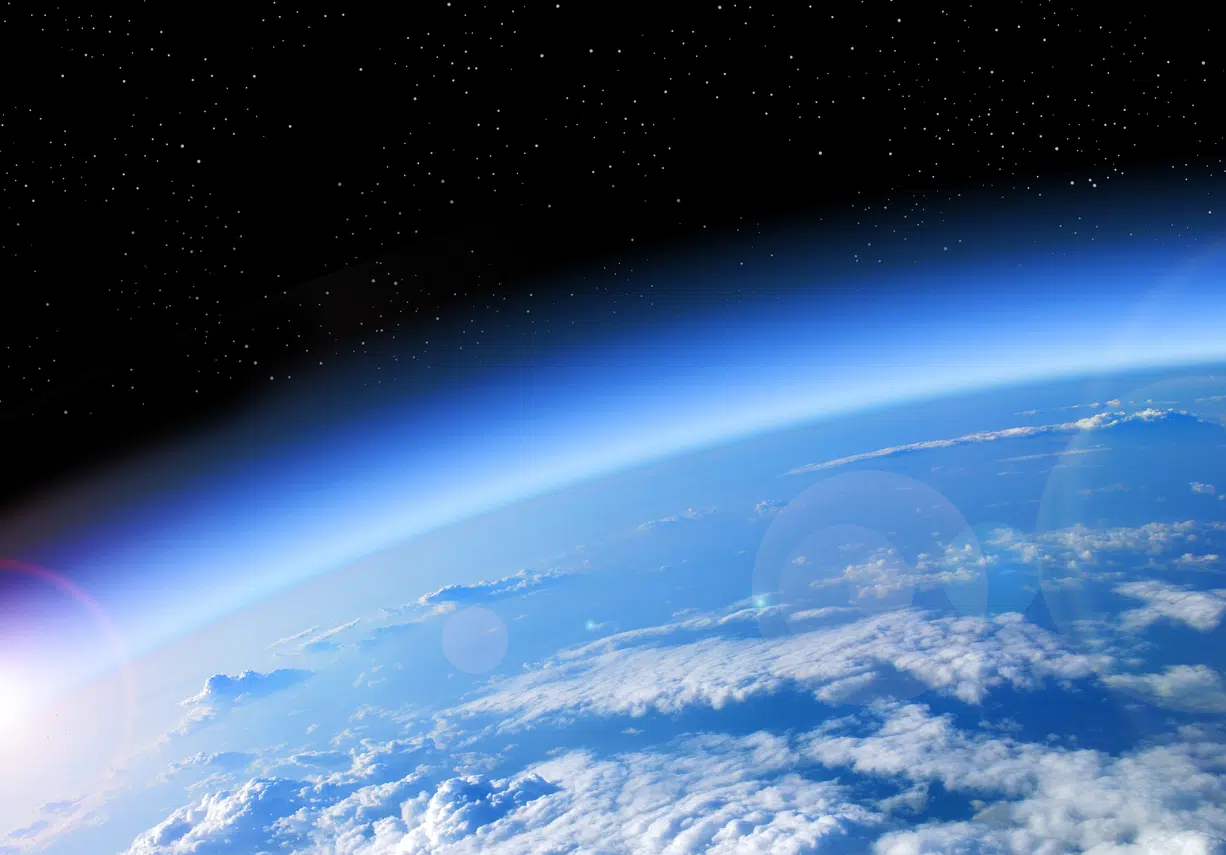
Key importance of the ozone layer
- Protection against UV radiation: absorbs 97% of UV-B radiation, the most dangerous.
- Human health: prevents skin cancer, cataracts, premature aging, and weakening of the immune system.
- Ecosystems: protects photosynthesis in plants and marine organisms, the base of food chains.
- Climate regulation: influences atmospheric circulation and rainfall patterns; its destruction would release greenhouse gases.
- Reservoir of elements: stores carbon and nitrogen essential for life.
Consequences of its thinning
- Health damage: increased incidence of skin and eye diseases.
- Ecological impact: reduction in agricultural and marine productivity.
- Climatic effects: contribution to global warming, as CFCs are potent greenhouse gases.
Solutions and recovery
The significant reduction in the production and use of ozone-depleting substances has allowed a recovery process to begin. The case of the ozone layer is an example of how international cooperation can reverse an environmental crisis and protect life on the planet.
The ozone layer remains a vital shield for Earth. Its recovery confirms that global policies can be effective against environmental threats and reinforces the need to maintain international commitments to ensure a sustainable future.



