



On August 2, 2027, the longest solar eclipse of the century will occur, when the Moon will completely cover the solar disk for more than six minutes, marking an astronomical milestone that will not be repeated with such magnitude until the next century.
The astronomical calendar of the coming decades has an exceptional date marked: August 2, 2027. On that day, the longest solar eclipse of the century will occur, an event with unique characteristics that will plunge various regions of the planet into absolute twilight.
Unlike other similar phenomena that usually last just a couple of minutes, this total eclipse stands out for its extraordinary temporal extension, allowing a detailed observation of the solar corona as rarely seen in modern history.
The totality phase, the moment when the Earth’s natural satellite completely blocks the Sun’s light, will reach a maximum duration of 6 minutes and 23 seconds.
According to the path published with data from NASA, this peak of darkness will occur specifically near Luxor, Egypt, turning this archaeological area into the world’s astronomical epicenter.
The magnitude of this event is such that specialists indicate there will be no other phenomenon of comparable duration until the year 2114, making it a once-in-a-lifetime opportunity for researchers and enthusiasts.
The trajectory of the shadow, known as the path of totality, will cross a privileged geographical strip. The path will begin over the Atlantic Ocean and cross the Strait of Gibraltar, affecting the south of Spain, Morocco, and Algeria.
Subsequently, the darkness will move through Tunisia, Libya, and Egypt, then continue towards Saudi Arabia and Yemen, ending its path over the Indian Ocean.
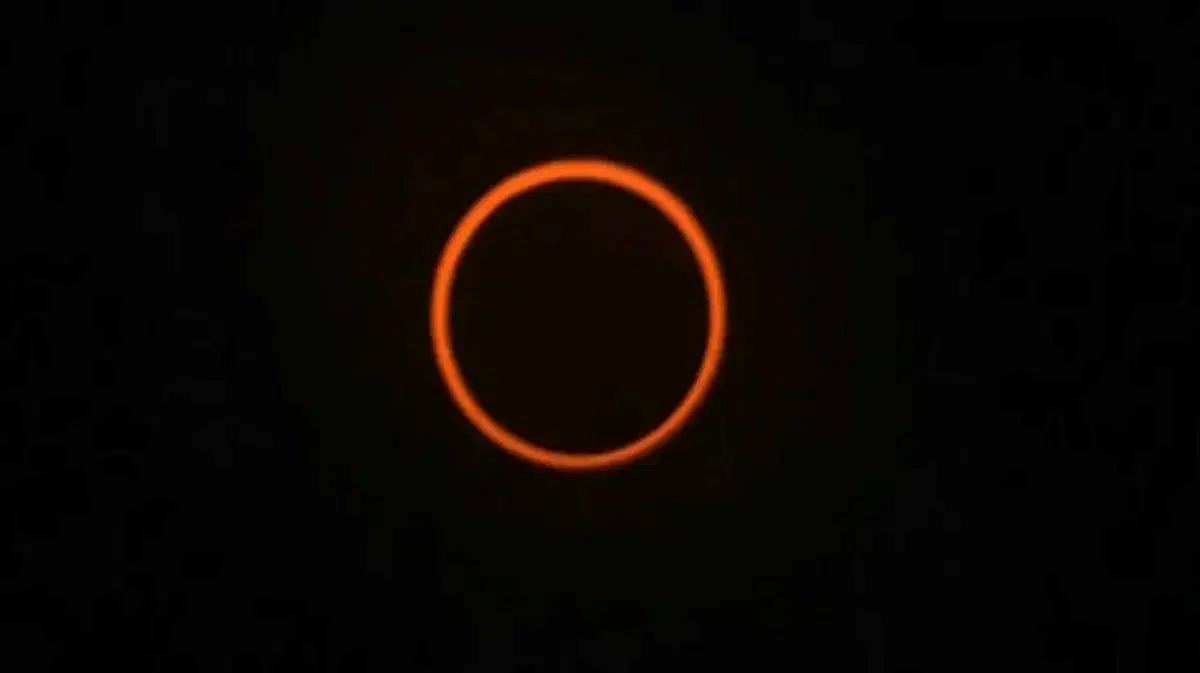
It is estimated that approximately 88 million people will be directly under the path of totality, a massive number that anticipates an unprecedented logistical and touristic deployment in the affected countries.
From a scientific standpoint, the longest solar eclipse of the century represents a critical window of opportunity to study the outer atmosphere of the Sun.
The prolonged duration of the total phase will facilitate experiments that require longer exposure times, something impossible in shorter eclipses.
However, authorities and experts are already starting to disseminate safety recommendations, reminding that despite the spectacularity of the event, direct observation without the protection of certified filters can cause irreversible ocular damage.
This phenomenon stands out not only for its scientific value but also for the visual impact it will generate by turning day into night so extensively.
The combination of a geographical location with mostly clear skies —like the Egyptian desert— and a record duration guarantees that the 2027 eclipse will position itself as the most documented and studied astronomical event of the millennium so far.



